
More details
Collapse details
Date Published:
Filesize:
- May 1, 2023
This report describes results from vessel surveys and visual species verifications conducted at the Jacksonville Shallow Water Training Range (JSWTR) in the Jacksonville Operating Area (OPAREA).
- 7,883.00 KB
More details
Collapse details
Date Published:
Filesize:
- May 1, 2022
This report describes results of vessel surveys from a multi-institutional monitoring project intended to provide information on the species composition, population identity, density, and baseline behavior of marine mammals and sea turtles present in United States (U.S.) Navy range complexes along the U.S. Atlantic Coast.
- 10,366.95 KB
More details
Collapse details
Date Published:
Filesize:
- July 4, 2015
This report documents the findings of a pilot study conducted in 2013 to investigate the efficacy of ground-based surveys as a potential alternative to, or in supplementation of, aerial surveys in detecting strandings of marine mammals and sea turtles (MM/ST) on remote shorelines, in this case the island of Ni‘ihau. In this study, aerial (helicopter) and ground-based (vehicle and horseback) shoreline surveys were conducted concurrently in order to compare the efficacy of each method. Observers scanned the shorelines of Kauai and Ni‘ihau, adjacent to PMRF, for stranded and near-stranded marine mammals and sea turtles within one week after an SCC training event that involved mid-frequency active sonar in August 2013.
- 11,018.81 KB
Effects of Pile Driving on Marine Mammal Behavior in Puget Sound, Washington, USA.
ESOMM - 2014 5th International Meeting on the Effects of Sound in the Ocean on Marine Mammals .
More details
Collapse details
Date Published:
Filesize:
- September 7, 2014
Marine mammal (MM) monitoring was conducted during in-water pile driving (PD) at Hood Canal, Washington, during fall 2011. Monitoring was performed on construction days, during active-construction (“AC”, defined as 30 minutes prior to, during, and 30 minutes after PD) and non-construction (“NC”, downtime) periods. Baseline surveys were also conducted throughout Hood Canal on days when no PD occurred. Monitoring and baseline surveys occurred over 53 days. Marine Mammal Observers (MMOs) recorded 1,207 sightings totaling 2,269 individual MM.
- 1,481.12 KB
Mapping marine mammal activity in and near U.S. Navy training areas..
Esri User Conference .
More details
Collapse details
Date Published:
- July 10, 2017
- 8,776.79 KB
Estimation of In-Water Density and Abundance of Harbor Seals.
Journal of Wildlife Management. 2021.
1–7
More details
Collapse details
Date Published:
Publication:Ocean:Region:Species:Methods:
- February 22, 2021
Ecologists and managers require accurate population estimates of marine mammals to assess potential anthropogenic threats to these animals. We present estimates of in-water density and abundance of a distinct stock of harbor seals (Phoca vitulina richardii) in Hood Canal, Washington, USA. We used aerial line-transect survey data collected from 2013 to 2016 to directly estimate harbor seal density and abundance in the waters of Hood Canal, a deep-water fjord in the Salish Sea. We estimated a correction factor for trackline detection probability from dive and surface time data gathered from regional seal tagging studies, and applied this factor to correct for seals missed on the trackline during surveys.
More details
Collapse details
Date Published:
Filesize:
- March 1, 2020
Status report for the acoustic and visual survey for cetaceans in Behm Canal and Southern Clarence Strait, Alaska, FY22.
- 1,227.95 KB
North Atlantic right whale sightings and group composition in the VA/NC Mid-Atlantic: 2018–2023.
North Atlantic Right Whale Consortium Annual Meeting, 24-25 October 2023, Halifax, Nova Scotia, Canada .
More details
Collapse details
Date Published:
- October 24, 2023
- 1,607.74 KB
More details
Collapse details
Date Published:
Filesize:
- August 1, 2016
The objective of this project under the U.S. Navy’s Marine Species Monitoring Program is to establish baseline information on occurrence and behavior of humpback whales near Naval Station Norfolk and within the Virginia Capes Operational Area (VACAPES OPAREA) by addressing the following questions: • What age classes (juveniles, sub-adults, adults) are utilizing the waters within and adjacent to the mouth of the Chesapeake Bay? • Do humpback whales exhibit site fidelity over periods of days to years? • Do humpback whales congregate in specific high-traffic and/or high-use U.S. Navy training areas? • Do humpback whales spend significant time within or move through areas of U.S. Navy live-fire and mine neutralization exercise (MINEX) training (Year 2 and Year 3)?
- 9,464.70 KB
More details
Collapse details
Date Published:
Filesize:
- May 1, 2025
A total of 23 nearshore and mid-shelf vessel surveys were completed during the 2023/24 field season. In total, 43 baleen whale sightings, including 33 sightings of humpback whales (Megaptera novaeangliae) composed of 43 individuals, 6 sightings of North Atlantic right whales (Eubalaena glacialis) composed of 9 individuals (1 deceased), 3 sightings of minke whales (Balaenoptera acutorostrata) composed of 3 individuals, and 1 sighting of a fin whale (Balaenoptera physalus) composed of 1 individual occurred during the 2023/24 field season.
- 3,198.45 KB
More details
Collapse details
Date Published:
Filesize:
- June 29, 2015
This work builds upon and complements longer-term studies of movements and site fidelity of both Cuvier’s beaked whales (Ziphius cavirostris) and short-finned pilot whales (Globicephala macrorhynchus) off the North Carolina coast using photo-identiThe objective of this project under the U.S. Navy’s Marine Species Monitoring Program is to establish baseline occurrence and behavior data for humpback whales in the Hampton Roads mid-Atlantic region by addressing the following questions: • What age classes (juveniles, sub-adults, adults) are utilizing the waters within and adjacent to the mouth of the Chesapeake Bay? Do humpback whales exhibit site-fidelity over periods of days to years? Do humpback whales congregate in specific high-traffic and/or high-use U.S. Navy training areas? Do humpback whales spend significant time within or move through areas of U.S. Navy live-fire and MINEX training (Year 2)? What are the relative sound levels humpback whaication (photo-ID)
- 2,036.61 KB
More details
Collapse details
Date Published:
Filesize:
- August 1, 2017
The objective of this multi-year project under the U.S. Navy’s Marine Species Monitoring Program has been to establish baseline information on occurrence and behavior of humpback whales near Naval Station Norfolk and within the Virginia Capes (VACAPES) Operating Area by addressing the following questions: What age classes (juveniles, sub-adults, adults) are utilizing the waters within and adjacent to the mouth of the Chesapeake Bay? Do humpback whales exhibit site fidelity over periods of days to years? Do humpback whales congregate in specific high-traffic and/or high-use U.S. Navy training areas? Do humpback whales spend significant time within or move through areas of U.S. Navy live-fire and mine neutralization exercise (MINEX) training?
- 20,099.67 KB
More details
Collapse details
Date Published:
Filesize:
- July 1, 2019
The objective of this multi-year project under the U.S. Navy’s Marine Species Monitoring Program has been to establish baseline information on occurrence and behavior of humpback whales near Naval Station Norfolk and within the Virginia Capes (VACAPES) Operating Area by addressing the following questions: What age classes (juveniles, sub-adults, adults) are utilizing the waters within and adjacent to the mouth of the Chesapeake Bay? Do humpback whales exhibit site fidelity over periods of days to years? Do humpback whales congregate in specific high-traffic and/or high-use U.S. Navy training areas? Do humpback whales spend significant time within or move through areas of U.S. Navy live-fire and mine neutralization exercise (MINEX) training?
- 8,603.37 KB
More details
Collapse details
Date Published:
Filesize:
- May 1, 2020
The objective of this multi-year project under the U.S. Navy’s Marine Species Monitoring Program has been to establish baseline information on occurrence and behavior of humpback whales near Naval Station Norfolk and within the Virginia Capes (VACAPES) Operating Area by addressing the following questions: What age classes (juveniles, sub-adults, adults) are utilizing the waters within and adjacent to the mouth of the Chesapeake Bay? Do humpback whales exhibit site fidelity over periods of days to years? Do humpback whales congregate in specific high-traffic and/or high-use U.S. Navy training areas? Do humpback whales spend significant time within or move through areas of U.S. Navy live-fire and mine neutralization exercise (MINEX) training?
- 8,657.33 KB
More details
Collapse details
Date Published:
Filesize:
- November 25, 2013
Navy Marine Species Observers (MSOs) monitored UNDET training exercises at the Pu‘uloa Underwater Range, located west of the Pearl Harbor entrance channel, on 2 and 4 April 2013. The intent of the exercises was to provide training in precision cutting for harbor clearance or salvage. The primary purpose of the MSO presence was to monitor mitigation measures conducted by Mobile Diving and Salvage Unit 1 (MDSU-1); however, visual surveys were also conducted opportunistically.
- 3,893.15 KB
More details
Collapse details
Date Published:
Filesize:
- March 1, 2015
The HDR Monitoring Team is tasked to initiate a monitoring project that will provide quantitative data and information on the seasonal occurrence, distribution, and density of protected species (marine mammals and sea turtles) in Chesapeake Bay waters near Naval Air Station (NAS) Patuxent (PAX) River, roughly from Drum Point, south to Smith Point along the western shore and over to the coastal waters of the eastern shore.
- 1,163.40 KB
Humpback whale affinity for shipping channels near the mouth of the Chesapeake Bay can prove fatal.
6th International Bio-logging Science Symposium .
More details
Collapse details
Date Published:
- September 25, 2017
- 5,778.32 KB
Humpback whale presence and habitat-use in high-traffic areas off Virginia.
21st Biennial Conference on the Biology of Marine Mammals .
More details
Collapse details
Date Published:
Filesize:
- December 13, 2015
The endangered North Atlantic humpback whale (Megaptera novaeangliae) migrates from six northern feeding grounds in the Gulf of Maine, the Gulf of St. Lawrence, Newfoundland/ Labrador, western Greenland, Iceland, and Norway to Caribbean Sea waters during the winter months (Katona and Beard 1990, Christensen et al. 1992, Palsbøll et al 1997). Understanding the occurrence and behavior of humpback whales in the vicinity of United States (U.S.) Navy training and vessel-transiting activities off the coast of Virginia is important in mitigating potentially harmful impacts on the species.
- 9,464.70 KB
More details
Collapse details
Date Published:
Filesize:
- July 7, 2026
A total of 22 nearshore and mid-shelf vessel surveys were completed during the 2024/25 field season. In total, 60 baleen whale sightings, including 40 sightings of humpback whales (Megaptera novaeangliae) totaling 59 individuals, 10 sightings of North Atlantic right whales (NARWs; Eubalaena glacialis) totaling 22 individuals, 7 sightings of fin whales (Balaenoptera physalus) totaling 14 individuals, and 3 sightings of individual minke whales (Balaenoptera acutorostrata), occurred during the 2024/25 field season. A total of 24 aerial surveys were flown during the 2024/25 field season in association with this effort and the Offshore Cetacean Study (OCS) (A. Engelhaupt et al. 2026); see Ozog and Engelhaupt 2026 for additional details regarding the aerial surveys. Baleen whale sightings from the aerial surveys included humpback (n=45), NARWs (n=8), fin (n=11), and minke (n=3) whales (Ozog and Engelhaupt 2026). During the OCS surveys, baleen whale sightings included fin whales (n=12), humpback whales (n=7), a blue whale (Balaenoptera musculus; n=1), a minke whale (n=1), and an NARW (n=1) (A. Engelhaupt et al. 2026). Across this project and the OCS effort, satellite-linked telemetry tags were deployed on one humpback whale, one fin whale, and one NARW. Customized Animal Tracking Solution tags were deployed on two NARWs and two humpback whales. One biopsy sample was collected from the satellite-tagged humpback whale.
- 9,528.24 KB
Currents (Navy's Environmental Magazine). 2011.
Fall 2012
More details
Collapse details
Date Published:
Publication:Ocean:Region:Species:Methods:
- September 1, 2011
In May 2011, a rare occurrence took place off the Southern California coast. For the first time since U.S. Navy-funded aerial surveys began in the area in 2008, a group of 20 sperm whales, including four calves, was seen—approximately 24 nautical miles west of San Diego.
Comparison of blue and fin whale behavior, headings, and group characteristics in the Southern California Bight during summer and fall 2008-2010.
19th Biennial Conference on the Biology of Marine Mammals .
More details
Collapse details
Date Published:
Filesize:
- November 27, 2011
Baseline undisturbed behavior and social patterns of blue (Balaenoptera musculus) and fin whales (B. physalus) are not well described and are needed to identify and understand potential effects of anthropogenic activities. Behavioral data for blue and fin whales were collected during line-transect and focal-follow effort. Initially observed behavior state, heading, and minimum and maximum interindividual dispersal distance were recorded during line-transect sampling. Focal groups were circled for 10-60+ minutes and videotaped from outside Snell’s sound cone to avoid disturbance. During 24,736 km of survey effort, 51 fin whale sightings (85 individuals) and 49 blue whalesightings (81 individuals) were seen. Over 7 hours of video was collected for16 blue and 15 fin focal follows. During the summer seasons, blues (n=48) were seen more commonly than fins (n=35); in fall, fins (n=16) were seen significantly more frequently than blues (n=1). Mean group size was 1.7 whales for both species. Initially observed blue behavior was usually travel (85%) or mill (11%). Observed fin whale behavior was also mostly travel (90%), mill (4%), or surface-active travel (4%). Both species were seen socializing in fall but not summer; foraging was observed in summer through fall. Mean initial dispersal for blues and fins was 9.1 and 14.2 body lengths, respectively. In summer, blues were most frequently (26%) seen headed S; in fall (n=2), they were headed only inshore (E). In summer, fin whales were most commonly headed SSW (26%) or WNW (26%); in fall, they were headed mostly NE (38%) or WSW (38%). Dive/respiration/behavioral event rates were also collected. Both species may directly compete for food based on observations of inter-specific maneuvering for a bait ball. Data represent the most extensive record of systematic undisturbed behavior on these species in SOCAL and include social interactions not previously documented in this region.
- 146.36 KB
Comparison of blue and fin whale behavior and group characteristics in the Southern California Bight (SCB) 2008-2012.
27th Conference of the European Cetacean Society .
More details
Collapse details
Date Published:
Filesize:
- April 8, 2013
Baseline undisturbed behavior and social patterns of blue (Balaenoptera musculus) and fin whales (B. physalus) are not well described and are needed to identify and understand potential effects of anthropogenic activities in the SCB. In 2008-2012, 72,467 km of aerial line transect and focal-follow effort was conducted in the SCB. Initially observed location, group size, behavior state, heading, and minimum and maximum inter-individual dispersal distance were recorded. Focal groups were circled for 10-60+ minutes and videotaped from outside the plane’s sound cone to avoid disturbance. A total of 122 fin whale sightings (208 individuals) and 65 blue whale sightings (104 individuals) were made. Behavior, occurrence and distribution were related to season, location, bathymetry, and time of day. Blue whales were seen only from summer-fall and concentrated primarily close to shore (
- 3,180.74 KB
Comparison of Blue and Fin Whale Behavior, Headings and Group Characteristics in the Southern California Bight during Summer and Fall 2008-2010.
10th Annual Pathways Student Research Symposium, Galveston, TX .
More details
Collapse details
Date Published:
Filesize:
- November 9, 2011
Baseline undisturbed behavior/social patterns of blue/fin whales are not well described and are needed to identify and understand potential effects of anthropogenic activities. Behavioral data were collected during aerial effort. Initially observed behavior state, heading, minimum/maximum inter-individual dispersal distance were recorded during line-transect sampling. During the summer seasons, blues were seen more than fins; in fall, fins were seen more. Initially observed blue behavior was usually travel or mill. Observed fin behavior was mostly travel, mill, or surface-active travel. Both species were seen socializing in fall but not summer; foraging was observed in summer through fall. In summer, blues were seen headed S; in fall, headed inshore. In summer, fins were headed SSW or WNW; in fall, they were headed NE or WSW. Data represent the most extensive record of systematic undisturbed behavior on these species in SOCAL and include social interactions not previously documented in this region.
- 238.87 KB
Comparison of blue and fin whale behavior, headings and group characteristics in the Southern California Bight during Summer and Fall 2008-2010.
Southern California Marine Mammal Workshop 2012 .
More details
Collapse details
Date Published:
Filesize:
- February 3, 2012
Baseline undisturbed behavior and social patterns of blue (Ba/aenoptera musculus) and fin whales (8. physa/us) are not well described and are needed to identify and understand potential effects of anthropogenic activities. Behavioral data for blue and fin whales were collected during aerial survey line-transect and focal-follow effort. Initially-observed behavior state, group size, heading, and minimum and maximum inter-individual dispersal distance were recorded during line-transect sampling and / or subsequent verification circling by the aircraft. Focal groups were circled for 3- 60+ minutes and videotaped from outside Snell's sound cone to avoid disturbance. During 24,736 km of survey effort, 51 fin whale sightings (86 individuals) and 49 blue whale sightings (84 individuals) were seen . Over 7 hours of video was collected for 16 blue and 15 fin focal follows. During the summer, blues (n=48) were seen more commonly than fins (n=35); in fall, fins (n=16) were seen much more frequently than blues (n= 1 ). Mean group size was 1. 7 whales for both species. Initially observed blue behavior was usually travel (85%) or mill (11%). Observed fin whale behavior was also mostly travel (87%), mill (6%), or surface-active travel (3%). Both species were seen socializing (e.g., touching) in fall but not summer; foraging was observed in summer through fall. Mean initial dispersal for blues and fins was 8 and 16 body lengths, respectively. In summer, blues were most frequently (26%) seen headed S; in fall (n=2), they were headed only inshore (E). In summer, fin whales were most commonly headed SSW (26%) or WNW (26%); in fall, they were headed mostly NE (38%) or WSW (38%). Both species directly compete for food based on observations of inter-specific maneuvering for a bait ball. Data represent the most extensive record of systematic undisturbed behavior on these species in SOCAL and include social interactions not previously documented in this region. Dive / respiration / behavioral event rates were also collected and are currently being analyzed. Bacon, C., M.A. Smultea, B. Wursig, K. Lomac-MacNair, and J. Black.
- 1,075.32 KB
Mixed-species associations seen in the Southern California Bight during aerial surveys 2008-2012.
Southern California Marine Mammal Workshop 2013 .
More details
Collapse details
Date Published:
Filesize:
- February 1, 2013
Fifteen aerial surveys (72,647 km) occurred during 2008-2012 to monitor occurrence, abundance, and behavior of marine mammals in the Southern California Bight (SCB) on behalf of the U.S. Navy. Thirty-six (2%) of 2,151 total sightings of at least 11 species were mixed-species associations (i.e., at least two different species swimming together/interacting). Little is known about these associations. Risso’s dolphins were most frequently associated with another marine mammal species (19 [7%] of 238 total Risso’s sightings) as follows: with sperm whales (1x), California sea lions (CaSL) (3x), and bottlenose (7x), northern right whale (NRWD) (4x), long-beaked common (1x), unidentified (1x), and common dolphin sp. (2x). Up to 3 species occurred together on 3 different occasions: (1) sperm whales/Risso’s/NRW dolphins, (2) Risso’s/unidentified dolphins/CaSL, and (3) Pacific white-sided/common dolphins with CaSL. The most unusual mixed species sighting was 24 sperm whales (including 4 calves) with 11 Risso’s and ~50 NRW dolphins: Risso’s repeatedly charged adult sperm whales’ heads who responded by dropping their lower jaw, perhaps related to kleptoparasitism. Potential reasons for mixed-species associations include increased protection from predators via dilution, increased prey detection/consumption, and “play” (i.e., fin whale calf touching NRWD). Data include interactions not previously documented in the SCB among these socially complex animal groups.
- 2,082.37 KB
Behavior and group characteristics differ in mixed-species associations (MSA) of cetaceans in the Southern California Bight.
Southern California Marine Mammal Workshop 2014 .
More details
Collapse details
Date Published:
Filesize:
- January 31, 2014
Effects of mixed-species associations (MSA [at least two different species swimming together and / or inte racting]) on cetacean behavior rarely have been quantified, but are important for identifying and differentiating potential anthropogenic impacts . Baseline marine mammal behavior was assessed during 83 ,005 km of U.S. Navy supported aerial line-transect surveys in the Southern California Bight during 2008-2013.
- 1,649.75 KB
Behavior and group characteristics differ in mixed-species associations of cetaceans in the Southern California Bight.
20th Biennial Conference on the Biology of Marine Mammals .
More details
Collapse details
Date Published:
Filesize:
- December 9, 2013
Effects of mixed-species associations (MSA [at least two differentspecies swimming together and/or interacting]) on cetacean behavior rarely have been quantified, but are important for identifying and differentiating potential anthropogenic impacts. Baseline marine mammal behavior was assessed during 77,390 km of U.S. Navy supported aerial line-transect surveys in the Southern California Bight during 2008-2013. Multinomial logistic regression was used to assess effects of MSA on group size, maximum nearest neighbor distance (a “cohesion” index, in body lengths), behavior state, and heading. Two percent (43) of 2,330 sightings were MSA involving 13 species (5 baleen whales, 7 toothed whales, 1 pinniped). Behavior and group size of some species differed significantly in MSA vs. non-MSA. MSA were predominated by Risso’s dolphins (44%; 19 of 43 MSA). Risso’s dolphins were most frequently associated with bottlenose dolphins (37% of 19 Risso’s MSA groups) followed by northern right whale dolphins (NRWD; 3% of 19). Risso’s dolphins tended to change headings more often in MSA (p
- 1,649.75 KB
Mixed-species associations of marine mammals in the Southern California Bight, with emphasis on Risso’s dolphins (Grampus griseus).
Aquatic Mammals. 2017.
43:177-184
More details
Collapse details
Date Published:
Publication:Ocean:Region:Species:Methods:
- January 1, 2017
This study investigates mixed-species associations among marine mammals in the Southern California Bight, focusing specifically on Risso's dolphins (Grampus griseus). Over a six-year period, aerial surveys were conducted to record the frequency and nature of these associations, revealing that Risso's dolphins were the most commonly observed species in mixed interactions. The results indicate a significant decline in the proportion of Risso's dolphins involved in such associations compared to historical records, possibly due to an increase in their relative abundance. The findings underline the importance of monitoring mixed-species associations to understand marine mammal dynamics and ecological interactions.
Incorporating telemetry information into capture-recapture analyses improves precision and accuracy of abundance estimates given spatiotemporally biased recapture effort.
Methods in Ecology and Evolution. 2024.
15:1847–1858.
More details
Collapse details
Date Published:
- February 13, 2024
- 2,529.56 KB
More details
Collapse details
Date Published:
Filesize:
- February 13, 2020
As part of the long-term United States (U.S.) Navy-funded Marine Species Monitoring Program, from 16–24 August 2022, Cascadia Research Collective (CRC) carried out a vessel-based field effort in conjunction with passive acoustic monitoring undertaken by U.S. Navy (Navy) scientists on and around the underwater hydrophone ranges of the Pacific Missile Range Facility (PMRF).
- 2,743.90 KB
More details
Collapse details
Date Published:
Filesize:
- November 30, 2023
As part of the long-term United States (U.S.) Navy-funded Marine Species Monitoring Program, from 5-13 August 2023, Cascadia Research Collective (CRC) carried out a vessel-based field effort in conjunction with passive acoustic monitoring undertaken by U.S. Navy (Navy) scientists on and around the underwater hydrophone ranges of the Pacific Missile Range Facility (PMRF).
- 2,846.35 KB
More details
Collapse details
Date Published:
Filesize:
- February 13, 2022
As part of the long-term United States (U.S.) Navy-funded Marine Species Monitoring Program, from 1-14 August 2021, a combination of boat-based field effort and passive acoustic monitoring was carried out on and around the underwater hydrophone ranges of the Pacific Missile Range Facility (PMRF).
- 4,288.46 KB
More details
Collapse details
Date Published:
Filesize:
- February 1, 2011
Movements and Spatial Use of Satellite‐tagged Odontocetes in the Western Main Hawaiian Islands: Results of Fieldwork Undertaken off O‘ahu in October 2010 and Kaua‘i in February 2011
- 1,236.87 KB
More details
Collapse details
Date Published:
Filesize:
- June 7, 2012
Although considerable information is available on residency patterns and spatial use of odontocetes in the eastern half of the Hawai‘i Range Complex (HRC), much less is known about odontocetes in the western half of the HRC. In the second year of a three-year effort in the western main Hawaiian Islands we undertook surveys off Kaua‘i and Ni‘ihau in July/August 2011, to examine spatial use and residency patterns using satellite tags, to provide visual verification of acoustically-detected odontocetes on the Pacific Missile Range Facility (PMRF), and to obtain individual identification photographs and biopsy samples for assessment of population identity and structure.
- 3,048.07 KB
More details
Collapse details
Date Published:
Filesize:
- November 8, 2013
Here we combine results of field efforts funded through the U.S. Navy’s Living Marine Resources Program (through a three-year grant from the Naval Postgraduate School) as well as additional field time in the study area in 2011 and 2012 funded through the Pacific Islands Fisheries Science Center and Commander, Pacific Fleet. We also utilize results from research efforts in the eastern main Hawaiian Islands, off Lāna‘i, Maui, and Hawai‘i Island, to help interpret results from photo-identification and satellite tagging.
- 2,159.00 KB
More details
Collapse details
Date Published:
Filesize:
- December 16, 2013
A joint project in February 2013 of the Pacific Missile Range Facility (PMRF) combined passive acoustic monitoring and boat-based field efforts. There were 1,010 kilometers (km) (55.9 hours [hr]) of small-vessel field effort over the course of the 8-day project. Of the 55.9 hr of survey effort, 64.2 percent was spent within the PMRF instrumented hydrophone range boundaries, and 14.8 percent of the effort was in depths greater than 1,000 meters (m).
- 2,028.91 KB
More details
Collapse details
Date Published:
Filesize:
- June 7, 2019
As part of a long-term U.S. Navy-funded marine mammal monitoring program, in August 2018 a combination of vessel-based field effort and passive acoustic monitoring was carried out on and around the Pacific Missile Range Facility (PMRF) Kaua‘i prior to a Submarine Commander Course scheduled for mid-August 2018. The purpose of the monitoring effort was to assess the spatial movement patterns and habitat use of cetaceans that are exposed to mid-frequency active sonar and how those patterns influence exposure and potentially responses.
- 10,036.77 KB
More details
Collapse details
Date Published:
Filesize:
- February 1, 2021
As part of a long-term U.S. Navy-funded marine mammal monitoring program, in February 2020 a combination of vesselbased field effort and passive acoustic monitoring was carried out on and around the Pacific Missile Range Facility (PMRF) off Kaua‘i prior to a Submarine Command Course scheduled for mid-February 2020. The purpose of the monitoring effort was to assess the spatial movement patterns and habitat use of cetaceans that are exposed to midfrequency active sonar and how those patterns influence exposure and potentially responses. Results from this effort were compared with previous Cascadia Research Collective (CRC) survey effort and photo-identification and tag data from Kaua‘i, based on surveys in 11 different years since 2003.
- 4,010.56 KB
Effects of Navy sonar on whales and dolphins in the Hawaiian Islands: some data, some speculation, some gaps..
Presentation to the Hawaiian Islands Humpback Whale National Marine Sanctuary Advisory Council (virtual event) .
More details
Collapse details
Date Published:
- September 15, 2020
- 5,898.74 KB
Using dolphins to catch tuna: Assessment of associations between pantropical spotted dolphins and yellowfin tuna hook and line fisheries in Hawai‘i.
Fisheries Research. 2020.
230:105652
More details
Collapse details
Date Published:
Publication:Ocean:Region:Species:Methods:
- October 1, 2020
In Hawaiian waters fishermen use the association between pantropical spotted dolphins (Stenella attenuata) and yellowfin tuna (Thunnus albacares) to catch tuna. Targeting fishing effort around or in spotted dolphin groups has the potential to lead to bycatch, and anecdotal reports of hooking dolphins exist. We recorded information on fishing vessels associated with spotted dolphin groups from 2008 through 2018 to inform discussions about potential bycatch. Associations occurred from Oʻahu to Hawaiʻi Island, but were most prevalent off Hawaiʻi Island, where 29.7 % of spotted dolphin groups had fishing vessels present
Odontocete cetaceans around the Main Hawaiian Islands: habitat use and relative abundance from small-boat sighting surveys.
Aquatic Mammals. 2013.
39(3):253-269
More details
Collapse details
Date Published:
- June 1, 2013
Combining association and movement analyses of short-finned pilot whales in the Hawaiian Islands: evidence for multiple populations within the Hawaiian Archipelago.
20th Biennial Conference on the Biology of Marine Mammals .
More details
Collapse details
Date Published:
Filesize:
- December 9, 2013
Currently a single stock of short-finned pilot whales is recognized in Hawaiian waters, with an estimated abundance of over 12,000 individuals in the EEZ. However, preliminary genetic results suggest that pilot whales around the main Hawaiian Islands are reproductively isolated from those elsewhere in the tropical Pacific. Since the type and extent of anthropogenic interactions varies both among the main Hawaiian Islands and offshore, we test the hypothesis that there is only a single stock of this species in Hawai‘i using a combination of association analyses of photo-identification data and movement/habitat use analyses from satellite tags. Photographs over 13 years included over 6,500 identifications of 868 distinctive individuals. Satellite tag data from 64 deployments averaged 37 days (max=228 days). Combining tag and association analyses indicate individuals do not mix freely among the islands and suggest the existence of three socially isolated but partially overlapping insular communities and an offshore population. The ranges of the three insular communities are from Ni‘ihau to western O‘ahu, from O‘ahu to Lana‘i, and primarily off Hawai‘i Island. Tagged individuals from these insular communities (n=61 deployments) remained an average of 57.5 km from their tagging location, with a grand mean of depth used and distance from shore of 1,564 m and 15.2 km, respectively. Evidence for an offshore population comes from three individuals tagged in two isolated social clusters with mean distances from their tagging locations of 249 km, with a grand mean of depth used and distance from shore of 4,336 m and 81.1 km (max=381 km) respectively. Anthropogenic interactions vary among the population ranges, with long-line fishing in offshore waters, Navy activities primarily off Ni‘ihau, Kaua‘i and O‘ahu, and vessel-based whale watching and swim-with operations primarily off Hawai‘i Island. As each community is exposed to different anthropogenic threats they should be managed independently.
- 5,597.02 KB
Fishery interactions for three populations of false killer whales in Hawai’i: Assessment using dorsal fin line injuries.
20th Biennial Conference on the Biology of Marine Mammals .
More details
Collapse details
Date Published:
- December 9, 2013
- 4,123.37 KB
Site fidelity, spatial use, and behavior of dwarf sperm whales in Hawaiian waters: using small-boat surveys, photo-identification, and unmanned aerial systems to study a difficult-to-study species.
Marine Mammal Science. 2021.
326-348
More details
Collapse details
Date Published:
Publication:Ocean:Region:Species:Methods:
- August 24, 2021
Dwarf sperm whales (Kogia sima) have been studied rarely at sea. We used photo-identification, boat- and drone-based behavioral observations, and citizen science photo contributions to examine site fidelity, spatial use, and behavior in Hawaiʻi. Sighting rates were highest in island slope (500–1,000 m) waters. Over 40% of photo-identified individuals were linked by association in the same social network. More than half of the very distinctive individuals were seen more than once, and 28.5% were seen in multiple years, with one individual seen 14 times over a 15-year span. Resighted individuals and those in the main cluster of the social network were found in significantly shallower water than individuals that were not resighted or that were in isolated clusters. Distances between resighting locations suggest small home ranges. This suggests an insular slope-dwelling population that overlaps with an offshore population. Evidence of unsuccessful predatory attempts by large sharks was recorded on four individuals, and linear wounds consistent with interactions with line fisheries were documented on three individuals. Surface and subsurface behavior recorded by drone revealed vigilance behavior likely to minimize predation risk. Lessons learned from this study can be applied elsewhere to increase knowledge of this poorly known and difficult-to-study species.
Recommended snapshot length for acoustic point-transect surveys of intermittently available Cuvier's beaked whales.
Journal of the Acoustical Society of America. 2021.
149(6):3830–3840
More details
Collapse details
Date Published:
Publication:Ocean:Region:Species:Methods:
- June 3, 2021
Acoustic point-transect distance-sampling surveys have recently been used to estimate the density of beaked whales. Typically, the fraction of short time “snapshots” with detected beaked whales is used in this calculation. Beaked whale echolocation pulses are only intermittently available, which may affect the best choice of snapshot length. The effect of snapshot length on density estimation for Cuvier's beaked whale (Ziphius cavirostris) is investigated by sub-setting continuous recordings from drifting hydrophones deployed off southern and central California. Snapshot lengths from 20 s to 20 min are superimposed on the time series of detected beaked whale echolocation pulses, and the components of the density estimation equation are estimated for each snapshot length. The fraction of snapshots with detections, the effective area surveyed, and the snapshot detection probability all increase with snapshot length. Due to compensatory changes in these three components, density estimates show very little dependence on snapshot length. Within the range we examined, 1–2 min snapshots are recommended to avoid the potential bias caused by animal movement during the snapshot period and to maximize the sample size for estimating the effective area surveyed.
Beaked whales and El Niño: evidence for ENSO effects on Blainville’s beaked and goose-beaked whale space use in Hawaiian waters.
Marine Ecology Progress. 2024.
751:189–209.
More details
Collapse details
Date Published:
- December 19, 2024
More details
Collapse details
Date Published:
Filesize:
- December 1, 2020
The overall goal of this study was to include the 2018 survey data in the previous 1991–2014 modeling dataset in order to improve SMDs for the CCE study area. Specific objectives included: Generating multi-year average density surfaces for the Navy and others to use in their long-term (2–7 year) environmental planning efforts; and Providing updated abundance and “minimum population size (Nmin)” estimates as defined in the Guidelines for Assessing Marine Mammal Stocks (National Oceanic and Atmospheric Administration 2016).
- 5,465.27 KB
Habitat-Based Density Models for Three Cetacean Species off Southern California Illustrate Pronounced Seasonal Differences.
Frontiers in Marine Science. 2017.
4:121. doi: 10.3389/fmars.2017.00121.
More details
Collapse details
Date Published:
Publication:Ocean:Region:Species:Methods:
- May 10, 2017
The objectives of our study were two-fold: (1) develop spatially-explicit density estimates for winter/spring to support management applications, and (2) compare model-predicted density and distribution patterns to previously developed summer/fall model results in the context of species ecology. We used a well-established Generalized Additive Modeling framework to develop cetacean SDMs based on 20 California Cooperative Oceanic Fisheries Investigations (CalCOFI) shipboard surveys conducted during winter and spring between 2005 and 2015.
Habitat-based density estimates for cetaceans within the waters of the U.S. Exclusive Economic Zone around the Hawaiian Archipelago.
NOAA technical memorandum NMFS PIFSC. 2021.
110. https://doi.org/10.25923/x9q9-rd73
More details
Collapse details
Date Published:
Publication:Ocean:Region:Species:Methods:
- January 1, 2021
The Hawaiian Islands Cetacean and Ecosystem Assessment Survey (HICEAS) 2017 was conducted in waters within the United States (U.S.) Exclusive Economic Zone (EEZ) around the Hawaiian Archipelago (henceforth “Hawaiian EEZ” for brevity) from 6 July through 1 December 2017 (Yano et al. 2018). The primary objective of this line-transect survey was to collect cetacean sighting data to support the derivation of cetacean density estimates using both design-based analyses and habitat modeling techniques.
Evaluating Seasonal vs. Spatial Extrapolation for Cetacean Distribution Models in the California Current.
Marine Mammal Science. 2025.
41(4):e70030
More details
Collapse details
Date Published:
Publication:Ocean:Region:Species:Methods:
- June 13, 2025
In this study, winter and spring density estimates for the entire CCE study area were made from SWFSC summer and fall model predictions (temporal extrapolation) and CalCOFI winter and spring model predictions (spatial extrapolation) for short-beaked common dolphin ( Delphinus delphis delphis ), Pacific white-sided dolphin ( Lagenorhynchus obliquidens ), Dall's porpoise ( Phocoenoides dalli ), and fin whale ( Balaenoptera physalus ).
Longitudinal comparisons of digital photography of marine mammals from aircraft and shore.
20th Biennial Conference on the Biology of Marine Mammals .
More details
Collapse details
Date Published:
Filesize:
- December 9, 2013
Rapid progress and affordability of photographic technology with increasing improvements in image resolution have facilitated advancements in efficiency and alternative approaches in data collection for marine mammals. We report these recent improvements by comparing marine mammal photographs taken during 2008-2013 aerial surveys of 16 marine mammal species in the Southern California Bight, shorebased studies of bottlenose dolphins (Tursiops truncatus) in Galveston Bay, Texas (2011-2013), and gray whales (Eschrichtius robustus) off Sakhalin Island, Russia (20042010). Various Canon and Nikon high-definition cameras ranging from 8.2-36.3 MP resolution and 70-1600 mm lenses with image stabilization were used during the studies. Results of these photographic comparisons demonstrate the evolution of digital photography advancements with the successful capture of individuals, as well as detailed information for behavioral ecology studies. For example, (1) individual identification of marine mammal species from aircraft not previously reported (Risso’s dolphins (Grampus griseus), killer whales (Orcinus orca), and blue and fin whales (Balaenoptera musculus and B. physalus)), (2) shore-based individual identification of bottlenose dolphins up to 500 m and of gray whales up to 2 km from shore, (3) instantaneous differentiation/confirmation of short-beaked vs. long-beaked common dolphins (Delphinus delphis and D. capensis) from 1,500-ft altitude with a 36 MP camera, (4) reduced proportion of “unidentified” dolphin and whale species, and (5) potential tracking of the behavior, social associations and durations, and relative position within the group of some individually identified delphinids and other species not previously studied in this manner. High- definition digital photography reduces costs and acquisition/processing time from earlier “tried and true” analog photography. This facilitates, advances, and compliments the efficacy of data collection for population and behavioral ecology studies on marine mammals, most recently allowing capture of individual identification images at distances of up to 2 km away.
- 1,436.95 KB
More details
Collapse details
Date Published:
Filesize:
- November 1, 2016
DDG P Atlantic Aug 2016
- 575.97 KB
More details
Collapse details
Date Published:
Filesize:
- November 1, 2017
DDG Q Atlantic Aug 2017
- 1,275.28 KB
Opportunistic Offshore Sighting of a Tricolored Bat (Perimyotis subflavus).
Southeastern Naturalist. 2023.
22(1):N9-N12
More details
Collapse details
Date Published:
Publication:Ocean:Region:Species:Methods:
- January 1, 2023
During a marine mammal vessel survey, a single Perimyotis subflavus (Tricolored Bat) was sighted 103.5 km off the coast of North Carolina. While we cannot determine whether the bat flew unaided from the mainland or stowed away on a ship, this is likely the furthest offshore sighting for the species. The possibility of Tricolored Bats flying offshore could have implications for wind-energy programs or other offshore industries.
More details
Collapse details
Date Published:
Filesize:
- August 1, 2014
CG C Atlantic Aug 2014
- 796.17 KB
Abundance Estimates of False Killer Whales in Hawaiian Waters and the Broader Central Pacific.
NOAA technical memorandum NMFS PIFSC. 2020.
104, 78
More details
Collapse details
Date Published:
Publication:Ocean:Region:Species:Methods:
- January 1, 2020
The abundance of two remote and broadly-distributed populations of false killer whales (Pseudorca crassidens) in Hawaiian waters was estimated using sighting data collected from ship-based, line-transect surveys conducted by NOAA Fisheries within the central Pacific between 1986−2017, including the three Hawaiian Islands Cetacean and Ecosystem.
Line-transect Abundance Estimates of Cetaceans in U.S. Waters around the Hawaiian Islands in 2002, 2010, and 2017.
NOAA technical memorandum NMFS PIFSC. 2021.
115. https://doi.org/10.25923/daz4-kw84
More details
Collapse details
Date Published:
Publication:Ocean:Region:Species:
- January 1, 2021
The Hawaiian Islands Cetacean and Ecosystem Assessment Survey (HICEAS) is a recurring ship-based, line-transect survey designed to estimate cetacean abundance in the entirety of the Hawaiian EEZ.
- Blue whale
- Bryde's whale
- Humpback whale
- Minke whale
- Sei whale
- Blainville's beaked whale
- Bottlenose dolphin
- Goose-beaked whale
- False killer whale
- Fraser's dolphin
- Killer whale
- Longman’s beaked whale
- Melon-headed whale
- Pygmy killer whale
- Risso's dolphin
- Rough-toothed dolphin
- Short-finned pilot whale
- Sperm whale
- Spinner dolphin
- Spotted dolphin
- Striped dolphin
Interactions Between Sperm Whales and Risso's and Northern Right Whale Dolphins off San Diego, CA.
Southern California Marine Mammal Workshop 2012 .
More details
Collapse details
Date Published:
Filesize:
- February 3, 2012
Aerial surveys provide a valuable platform to record and document behavior of marine mammals above and below the sea surface. This approach is advantageous in avoiding disturbance from the observational platform while circling outside the sound cone of the plane. Since 2008, the U.S. Navy has instituted a marine mammal monitoring program in southern California from several platforms, including aerial surveys, and has successfully captured previously undocumented behaviors and species interactions during the aerial effort. This included focal behavioral interactions between sperm whales, northern right whale dolphins, and Risso's dolphins on 14 May 2011, 24 nm west of San Diego, CA. This -1.5-hour encounter was documented in detail with high- definition digital photographs and video as the group traveled NE along the edge of a steep underwater drop-off. Risso's dolphins initiated charges towards the heads of the sperm whales on multiple occasions, followed by fast retreats. Sperm whale adults responded by displaying an open lower jaw. Risso's dolphins appeared to direct this behavior only toward adult sperm whales that had recently surfaced from long (> 20 min) dives; it was not directed toward the four calves in the group. Northern right whale dolphins intermingled with the Risso's dolphins and sperm whales, although they did not approach sperm whales as closely or abruptly as the Risso's dolphins. While similar apparently aggressive Risso's dolphin behavior has been documented toward other cetacean species, this is the first known occurrence of head-on charging by Risso's dolphins, accompanied by the elicited jaw display response from sperm whales. The interaction may be similar to aggressive pilot whales behavior towards sperm whales, and may function in acquiring regurgitated sperm whale food, or other needs by the Risso's dolphins.
- 1,074.61 KB
Site fidelity, population identity and demographic characteristics of humpback whales in the New York Bight apex.
Journal of the Marine Biological Association of the United Kingdom. 2022.
102(1-2):157-165
More details
Collapse details
Date Published:
Publication:Ocean:Region:Species:Methods:
- July 11, 2022
Humpback whales (Megaptera novaeangliae) exhibit maternally driven fidelity to feeding grounds, and yet occasionally occupy new areas. Humpback whale sightings and mortalities in the New York Bight apex (NYBA) have been increasing over the last decade, providing an opportunity to study this phenomenon in an urban habitat. Whales in this area overlap with human activities, including busy shipping traffic leading into the Port of New York and New Jersey. The site fidelity, population composition and demographics of individual whales were analysed to better inform management in this high-risk area. Whale watching and other opportunistic data collections were used to identify 101 individual humpback whales in the NYBA from spring through autumn, 2012–2018.
More details
Collapse details
Date Published:
Filesize:
- October 24, 2014
The present study provides new and current estimates of cetacean density for the six most commonly encountered cetacean species off southern California based on sighting data collected during 37 quarterly CalCOFI cruises from 2004 to 2013. The current study resulted from a high survey repetition rate that allowed for the examination of inter-annual and seasonal trends in density as well as temporal and spatial patterns of distribution for six common cetacean species off southern California: blue whales, fin whales, humpback whales, short-beaked common dolphins, Pacific white-sided dolphins, and Dall’s porpoise.
- 4,140.75 KB
More details
Collapse details
Date Published:
Filesize:
- February 1, 2014
Cetacean distribution, density and abundance in the Southern California Bight were assessed through visual and acoustic surveys during five California Cooperative Oceanic Fisheries Investigations (CalCOFI) cruises from August 2012-November 2013. Visual monitoring incorporated standard line-transect protocol during all daylight transits while acoustic monitoring employed a towed hydrophone array during transits and sonobuoys at oceanographic sampling stations. Visual effort included 584 observation hours covering 10,900 kilometers yielding 565 sightings of 15 identified cetacean species.
- 4,333.04 KB
More details
Collapse details
Date Published:
Filesize:
- December 1, 2012
Spatial and temporal distribution patterns, density and abundance of cetaceans in the southern California Bight were assessed through visual and acoustic surveys during five California Cooperative Oceanic Fisheries Investigations (CalCOFI) cruises from August 2011 – July 2012. Visual monitoring incorporated standard line-transect protocol during all daylight transits while acoustic monitoring employed a towed hydrophone array during transits and sonobuoys at oceanographic sampling stations.
- 4,929.65 KB
More details
Collapse details
Date Published:
Filesize:
- September 15, 2010
This report summarizes small boat based research conducted on cetaceans off southern California by the Scripps Institution of Oceanography (SIO) in collaboration with Southwest Fisheries Science Center (SWFSC) from August 2009 – July 2010. The primary objectives of this research were to use sighting, photo-identification, biopsy and acoustical sampling techniques to assess the occurrence, distribution and population structure of small cetaceans in a region that is subject to frequent naval exercises; this information is needed to evaluate possible effects from Mid Frequency Active Sonar (MFAS) trials and ultimately for the development of appropriate management protocols.
- 2,641.69 KB
Inter-annual and seasonal trends in cetacean distribution, density and abundance off southern California.
Deep-Sea Research. 2015.
112: 143-157
More details
Collapse details
Date Published:
Publication:Ocean:Region:Species:Methods:
- January 1, 2015
Trends in cetacean density and distribution off southern California were assessed through visual line-transect surveys during thirty-seven California Cooperative Oceanic Fisheries Investigations (CalCOFI) cruises from July 2004–November 2013. From sightings of the six most commonly encountered cetacean species, seasonal, annual and overall density estimates were calculated. Blue whales (Balaenoptera musculus), fin whales (Balaenoptera physalus) and humpback whales (Megaptera novaeangliae) were the most frequently sighted baleen whales with overall densities of 0.91/1000km2 (CV=0.27), 2.73/1000km2 (CV=0.19), and 1.17/1000km2 (CV=0.21) respectively. Species specific density estimates, stratified by cruise, were analyzed using a generalized additive model to estimate long-term trends and correct for seasonal imbalances. Variances were estimated using a non-parametric bootstrap with one day of effort as the sampling unit. Blue whales were primarily observed during summer and fall while fin and humpback whales were observed year-round with peaks in density during summer and spring respectively. Short-beaked common dolphins (Delphinus delphis), Pacific white-sided dolphins (Lagenorhynchus obliquidens) and Dall’s porpoise (Phocoenoidesdalli) were the most frequently encountered small cetaceans with overall densities of 705.83/1000km2 (CV=0.22), 51.98/1000km2 (CV=0.27), and 21.37/1000km2 (CV=0.19) respectively. Seasonally, short-beaked common dolphins were most abundant in winter whereas Pacific white-sided dolphins and Dall’s porpoise were most abundant during spring. There were no significant long-term changes in blue whale, fin whale, humpback whale, short-beaked common dolphin or Dall’s porpoise densities while Pacific white-sided dolphins exhibited a significant decrease in density across the ten-year study. The results from this study were fundamentally consistent with earlier studies, but provide greater temporal and seasonal resolution. Keywords: Cetaceans; Line transect; Density; Abundance; Distribution; Trends; Southern California; CalCOFI
More details
Collapse details
Date Published:
Filesize:
- June 20, 2018
Coral reef surveys were conducted at Farallon de Medinilla (FDM) September 27 – October 1, 2017 by Space and Naval Warfare (SPAWAR) Systems Center Pacific, Scientific Diving Services (SDS) to satisfy requirements of the Mariana Islands Training and Testing Area Biological Opinion (MITT BO) issued by the National Marine Fisheries Service in 2015 (NMFS 2015). The primary objectives of this survey were to quantify the abundance and location around the island of Endangered Species Act (ESA)-listed corals, quantify coral reef health (percent cover of living coral, coral species composition, and coral condition), and compile observations of ordnance impacts
- 7,446.41 KB
More details
Collapse details
Date Published:
Filesize:
- October 1, 2018
Coral reef surveys were conducted at Farallon de Medinilla (FDM) September 27 – October 1, 2017 by Space and Naval Warfare Systems Center Pacific (SSC Pacific), Scientific Diving Services (SDS) to satisfy requirements of the Mariana Islands Training and Testing Area Biological Opinion (MITT BO) issued by the National Marine Fisheries Service in 2015 (NMFS 2015). Two reports have been produced, based upon the field data obtained. The first report, entitled “Farallon De Medinilla 2017 Coral Reef Survey Report,” is dated May 2018 (Carilli et al. 2018). This document should be regarded as the second report of the 2017 survey results
- 6,300.50 KB
Coral bleaching variability during the 2017 global bleaching event on a remote, uninhabited island in the western Pacific: Farallon de Medinilla, Commonwealth of the Northern Mariana Islands.
Bulletin of Marine Science. 2020.
96(4), 785-802
More details
Collapse details
Date Published:
- January 1, 2020
Vocalizations of North Atlantic minke whales (Balaenoptera acutorostrata acutorostrata) with direct visual observation off Florida.
JASA Express Letters. 2026.
6 (4)
More details
Collapse details
Date Published:
- April 16, 2026
Marine mammal acoustic survey findings from Pagan Island, Commonwealth of the Northern Mariana Islands (CNMI).
21st Biennial Conference on the Biology of Marine Mammals .
More details
Collapse details
Date Published:
Filesize:
- December 13, 2015
Passive acoustic monitoring was conducted during a survey of marine mammals in nearshore waters surrounding Pagan Island, a remote volcanic island in the western tropical Pacific, part of the Commonwealth of the Northern Marianas Islands. The objective was to collect baseline information for Department of Defense's CNMI Joint Military Training Environmental Impact Statement. The primary effort was conducted over 11 days in August 2013. Visual/acoustic line-transect surveys were conducted using a towed hydrophone array system during daytime, and moored sonobuoys were deployed at night. Fourteen acoustic encounters occurred during line-transect surveys consisting of the following (subtotal in parentheses): bottlenose dolphin (1), spinner dolphin (1), beaked whales (4), and unidentified dolphins (8). Of this total, eleven were acoustic only encounters and three were concurrently sighted by observers. The four beaked whale acoustic encounters could not be classified in the field so data were post-processed resulting in the following classifications: Blainville's beaked whales (3) and Cuvier's beaked whale (1). Localization ranges (perpendicular to trackline) were between 0.3 and 2 km and varied by species/species groups. Sonobuoys were moored in depths of 30-50m at two sites located off sand beach areas on the west side of the island. Approximately 67 hours of recordings were made for an average recording duration of 7.4 hours per night. The majority of detection events (55) were of dolphins (undetermined species). Sperm whales were detected once by each sonobuoy. In summary, passive acoustic methods were able to detect delphinids, as well as deep diving species during both line-transect surveys and shallow water sonobuoy monitoring sites. Although brief in duration, this effort provided important information about the occurrence of several species of marine mammals documented for the first time at this remote island.
- 91.91 KB
Use of Passive Acoustic Monitoring to assess beaked whale distribution and habitat use in the Gulf of Alaska.
Southern California Marine Mammal Workshop 2014 .
More details
Collapse details
Date Published:
Filesize:
- January 31, 2014
Beaked whales are among the most poorly understood marine mammals. They are deep-diving odontocetes, spending most of their time submerged with infrequent, short surface intervals. Due to this behavior, they are difficult to study using visual observation methods alone . However, recent advancements in passive acoustic detection and survey techniques have shown to provide viable methods for stu dying beaked whales (Yack et al. 2013). In the Gulf of Alaska (GOA), there is little known abo ut beaked whale abundance and distribution.
- 1,726.45 KB
More details
Collapse details
Date Published:
Filesize:
- November 1, 2019
This project is intended to provide baseline information on the species composition, density, distribution, and basic behavior of marine mammals and sea turtles present within the United States (U.S.) Navy’s Virginia Capes (VACAPES) Operating Area (OPAREA). This study is part of a larger, multi-institutional, marine mammal and sea turtle monitoring program of U.S. Navy range complexes along the U.S. Atlantic Coast and Gulf of Mexico supporting Atlantic Fleet Training and Testing (AFTT)
- 4,083.79 KB
2012.
Master's Thesis, Duke University
More details
Collapse details
Date Published:
Ocean:Region:Species:Methods:
- May 31, 2012
Remote biopsy sampling is a common method used to obtain tissue samples from wild cetaceans. Using this technique, researchers typically obtain a small sample of skin and blubber using a biopsy tip fired from a crossbow or modified air rifle. Analysis of these tissues can provide important information on specific identity, sex, pollutant levels, diet, and reproductive status, which are critical to studies of free-ranging cetaceans. Biopsy sampling is generally considered to be a relatively benign procedure, but all prior attempts to evaluate its impact have been subjective assessments of the behavioral response of individuals at the surface. The goal of the present study is to provide a quantitative assessment of the immediate effects of biopsy attempts on the behavior of short-finned pilot whales (Globicephala macrorhynchus) equipped with digital acoustic recording tags (DTags) off Cape Hatteras, North Carolina. A biopsy attempt was defined as any instance of contact between a biopsy dart with an animal. A series of five metrics was examined to determine if behavior of whales was affected by a biopsy attempt, including: foraging behavior (number of dives, depth, and number of prey capture attempts); time spent within 3 m of the surface; fine-scale body orientation; fluke rate and amplitude; and group vocalization rate. The short-term reactions to biopsy attempts appear to be ephemeral and should not compromise the fitness of the animal, although the effects of increasing the group vocalization rate after a biopsy attempt should be examined further. The results of this analysis provide the first subsurface, quantitative assessment of the short-term effects of biopsy sampling on cetaceans.
More details
Collapse details
Date Published:
Filesize:
- February 28, 2022
The Pacific Marine Assessment Program for Protected Species (PacMAPPS) survey occurred from 1 August to 26 August 2021, beginning and ending in Kodiak, AK. Over the course of the survey, a total of 2,330 km of on-effort tracklines were surveyed in suitable weather conditions, and a total of 687 sightings of marine mammals were documented (including duplicates and resights).
- 2,637.82 KB
More details
Collapse details
Date Published:
Filesize:
- December 18, 2023
This survey implemented visual line transect and passive acoustic methods to assess the presence and distribution and to estimate density and abundance of cetaceans in Behm Canal and central Clarence Strait.
- 1,093.33 KB
Aerial Surveys for Protected Marine Species in the Jacksonville OPAREA: 2017 Annual Progress Report.
More details
Collapse details
Date Published:
Filesize:
- April 1, 2018
This report represents one facet of a collaborative multi-institutional monitoring project intended to provide information on the species composition, population identity, density and baseline behavior of marine mammals and sea turtles present in United States (U.S.) Navy range complexes along the U.S. Atlantic Coast.
- 16,812.91 KB
More details
Collapse details
Date Published:
Filesize:
- August 1, 2017
This report forms part of a multi-institutional monitoring project intended to provide information on the species composition, population identity, density, and baseline behavior of marine mammals and sea turtles present in United States (U.S.) Navy range complexes along the U.S. Atlantic Coast.
- 11,346.94 KB
More details
Collapse details
Date Published:
Filesize:
- August 1, 2017
This report forms part of a multi-institutional monitoring project intended to provide information on the species composition, population identity, density, and baseline behavior of marine mammals and sea turtles present in United States (U.S.) Navy range complexes along the U.S. Atlantic Coast.
- 6,962.02 KB
More details
Collapse details
Date Published:
Filesize:
- February 1, 2016
This report forms part of a multi-institutional monitoring project intended to provide information on the species composition, population identity, density and baseline behavior of marine mammals and sea turtles present in United States (U.S.) Navy range complexes along the U.S. Atlantic Coast
- 16,962.42 KB
More details
Collapse details
Date Published:
Filesize:
- September 1, 2015
This report forms part of a multi-institutional monitoring project intended to provide information on the species composition, population identity, density, and baseline behavior of marine mammals and sea turtles present in United States (U.S.) Navy range complexes along the U.S. Atlantic Coast.
- 26,430.91 KB
Sperm whale (Physeter macrocephalus) presence and behavior off the mid-Atlantic states of North Carolina and Virginia from 2011 to 2016.
SEAMAMMS (Southeast and Mid-Atlantic Marine Mammal Symposium) .
More details
Collapse details
Date Published:
- April 7, 2017
- 335.58 KB
Protected species monitoring in Onslow Bay, NC: January – December 2010.
SEAMAMMS (Southeast and Mid-Atlantic Marine Mammal Symposium) .
More details
Collapse details
Date Published:
Filesize:
- April 11, 2011
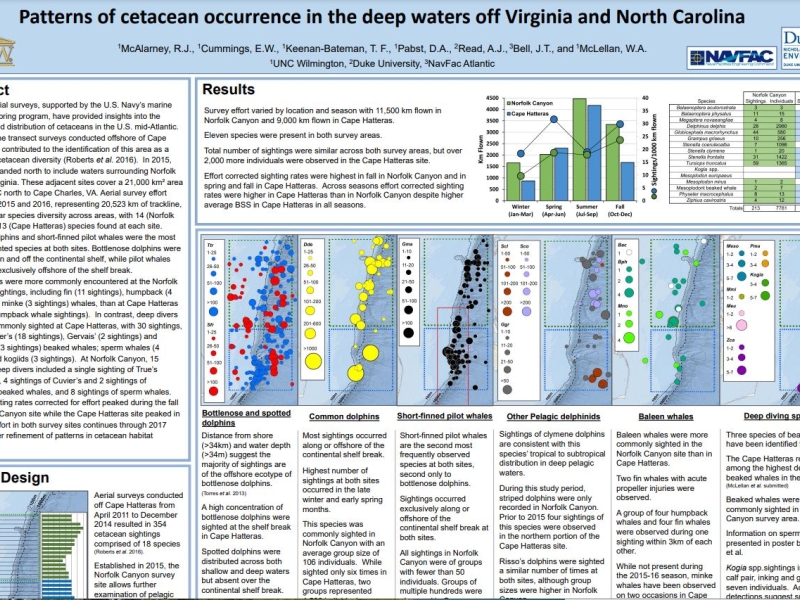
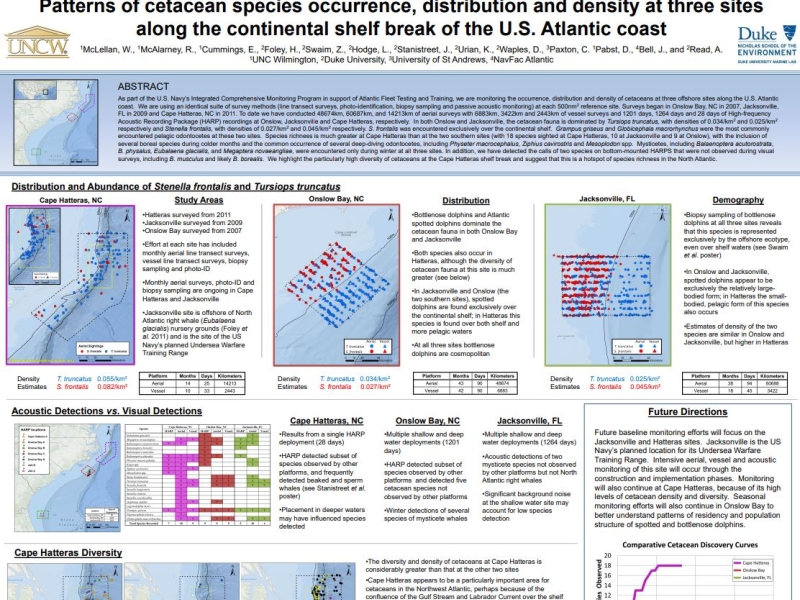
A protected species monitoring program was initiated in 2007 when the US Navy identified Onslow Bay, NC as a potential site for an Undersea Warfare Training Range. To estimate marine mammal density, distribution and seasonality, traditional visual line transect surveys from both aerial and vessel platforms have been augmented with passive acoustic monitoring techniques. In 2010, 20 aerial (10,939 km of trackline) and 14 vessel (958 km of trackline) survey days were completed. In order of decreasing frequency Tursiops truncatus, Stenella frontalis, Grampus griseus, Globicephala macrorhynchus, Delphinus delphis, and Balaenoptera physalus were sighted. T. truncatus and S. frontalis comprised most sightings in both aerial (85%) and vessel (100%) surveys. Approximately 1,000 digital images were taken for species and individual identification during vessel‐based surveys. To date, six T. truncatus and one S. frontalis have been re‐sighted across seasons and years, suggesting some degree of residency in the study area. Passive acoustic monitoring techniques include towing a four‐element hydrophone array during vessel surveys and deploying High‐frequency Acoustic Recording Packages (HARPs) on the sea floor. Analysis of towed array recordings suggests that visual surveys detect approximately half of the dolphin groups that were acoustically detected. Hundreds of vocal detections are present in the HARP data, which will provide insights into of diel and seasonal patterns of marine mammal vocalization. This project, now in its fourth year, is providing a valuable long‐term window into abundance and residency patterns of cetaceans in offshore waters of North Carolina.
- 129.32 KB
Vessel-based Humpback WhaleSurvey in and around Farallon de Medinilla: 29 January − 4 February 2020.
More details
Collapse details
Date Published:
Filesize:
- February 1, 2021
In order for the U.S. military to conduct readiness training with the Mariana Island Training and Testing Study Area (MITT), including the area around Farallon de Medinilla (FDM), the Navy is required to monitor potential impacts of these activities on Marine Mammal Protection Act and Endangered Species Act-listed species. Humpback whales belonging to the North Pacific population are known to use portions of the MITT seasonally for breeding activities, specifically Marpi Reef and shallow waters around Saipan. A small-vessel visual survey for humpback whales was conducted between 29 January 2020 and 1 February 2020 to better understand the use of shallow-water habitat around FDM
- 1,878.86 KB
More details
Collapse details
Date Published:
Filesize:
- March 24, 2013
In order to train with mid-frequency active sonar (MFAS), the United States (U.S.) Navy has obtained a permit from the National Marine Fisheries Service (NMFS) under the Marine Mammal Protection Act and Biological Opinion under the Endangered Species Act. The Mariana Islands Range Complex (MIRC) Monitoring Plan was developed with NMFS to comply with the requirements under the permits. The monitoring plan and reporting requirements provide science-based answers to questions regarding whether or not marine mammals are exposed to, and react to, Navy MFAS and explosives. As such, the Navy developed the MIRC Monitoring Plan to conduct activities that meet these monitoring goals.
- 2,561.29 KB
More details
Collapse details
Date Published:
Filesize:
- January 1, 2016
A shore-based platform, incorporating two high-powered 25 × 150-millimeter binoculars ("Big Eyes"), was evaluated as an alternative approach for surveying marine areas for protected species (marine mammals and sea turtles). During a pilot study at a test site on Oahu (278-meter [m] elevation), humpback whale (Megaptera novaeangliae) blows were visible through Big Eyes at 37 kilometers (km) away in Beaufort Sea State (BSS) 2. This suggests the approach could be effective at detecting baleen and sperm whales from long distances, priority species under the United States Department of the Navy's Marine Species Monitoring Program.
- 3,303.10 KB
More details
Collapse details
Date Published:
Filesize:
- June 1, 2017
Aerial shoreline surveys following U.S. Navy (Navy) training events were conducted in the Hawaii Range Complex to monitor for strandings and to document sightings of marine mammals and sea turtles in an effort to answer the monitoring question: “Do marine mammals strand along shorelines of the Main Hawaiian Islands (MHI) within 1 week following Navy training events?” This report summarizes marine mammal and sea turtle sighting data obtained during 67.5 hours of aerial survey effort over 16 days in the MHI between 2010 and 2014.
- 7,604.52 KB
Surveying marine mammals with high-powered "bigeye" binoculars from a shore-based platform.
21st Biennial Conference on the Biology of Marine Mammals .
More details
Collapse details
Date Published:
Filesize:
- December 13, 2015
A shore-based platform, incorporating high-powered 25×150mm binoculars ("bigeyes"), was evaluated as an alternative approach for surveying marine areas for protected species (marine mammals and sea turtles). During a pilot study at a test site on Oahu (273m elevation), humpback whale blows were visible through bigeyes 37km away in Beaufort Sea State (BSS) 2. This suggests the approach could be effective at detecting baleen and sperm whales from long distances, priority species under the U.S. Navy's Marine Species Monitoring Program. Systematic scans using bigeyes were performed in Guam over 20 days from a north-facing (193m) and a northeast-facing (157m) shore station in May 2014 and March 2015. These two sites were chosen because of mostly unobstructed views of the ocean, as well as generally high BSS that prohibit visual surveys from small vessels in this area. A SnapZoom digiscoping adapter, equipped with an iPhone or GoPro, was attached to the bigeye eyepiece allowing collection of photos and video, complementing supertelephoto (500-800mm) photography on a DSLR to assist with species confirmation. Observers recorded 33 odontocete sightings comprised of 4 confirmed species (spinner and bottlenose dolphins, pilot and melon-headed whales), but no baleen or sperm whales were observed. Several sightings were distant from shore, including two unidentified dolphins observed 9 km offshore in BSS 6, cued by diving birds, and a group of 160 melon-headed whales 14km offshore in BSS 5. The species observed and the sighting rate of 0.28 per hour, or 1.7 per day, were comparable to results from smallvessel surveys in Guam, suggesting an overall low density of marine mammals, and large whales in particular, during this time of year. These results demonstrate that shore-based surveys can provide an alternative means of surveying an area where use of other research platforms are impractical or cost prohibitive.
- 91.65 KB
More details
Collapse details
Date Published:
Filesize:
- January 24, 2024
The telemetry and survey studies managed by the Naval Undersea Warfare Center, Division Newport (NUWCDIVNPT) was initiated in winter 2021 to collect data on harbor seals (Phoca vitulina) and gray seals (Halichoerus grypus) along the U.S. East Coast. The purpose of this field season’s research was to collect baseline data to inform a proposed pinniped behavioral response study and continue long-term pinniped surveys, specifically in the Navy OPAREAS along the northwestern Atlantic coast. A summary of the data collected in previous field seasons can be found in DeAngelis (2023).
- 369.36 KB
More details
Collapse details
Date Published:
Filesize:
- January 1, 2023
The aim of the 2021-2022 field season’s research, Phase II of the Pinniped BRS, was to continue to obtain data to measure baseline behavior to understand the physical or biotic factors that influence the movement and foraging tactics of harbor and gray seals; the amount of time seals spend in specific areas, paying particular attention to Navy OPAREAS; and, the anthropogenic risks (e.g., noise-producing military activities) seals potentially encounter in nearshore and offshore areas.
- 2,724.17 KB
More details
Collapse details
Date Published:
Filesize:
- April 1, 2017
Cetacean distribution, density and abundance in the Southern California Bight were assessed through visual and acoustic surveys during eighteen California Cooperative Oceanic Fisheries Investigations (CalCOFI) cruises from February 2012-April 2016. Visual monitoring incorporated standard line-transect protocol during all daylight transits while acoustic monitoring employed a towed hydrophone array during transits and sonobuoys deployed at oceanographic sampling stations. Visual effort included 2,031 observation hours covering 31,807 kilometers. A total of 1,914 sightings were made, which included 18 different cetacean species. Acoustic effort included 1m027 sonobuoy deployments and 478 towed array deployments.
- 6,733.49 KB
More details
Collapse details
Date Published:
Filesize:
- January 1, 2011
Navy Research Funded Year Three Project Reports
- 5,699.30 KB
More details
Collapse details
Date Published:
Filesize:
- June 17, 2012
This document contains amplifying technical data and information for the United States Department of the Navy’s Southern California Range Complex Comprehensive Monitoring Report.
- 51,916.96 KB
More details
Collapse details
Date Published:
Filesize:
- May 1, 2014
In order to train with mid-frequency active sonar (MFAS), the United States (U.S.) Navy has obtained a permit from the National Marine Fisheries Service (NMFS) under the Marine Mammal Protection Act (MMPA) and a Biological Opinion under the Endangered Species Act (ESA). The Navy has developed Monitoring Plans for individual Navy Range Complexes, guided by the Integrated Comprehensive Monitoring Program (ICMP), to provide marine mammal and sea turtle monitoring guidelines as required under the MMPA and the ESA (Department of the Navy 2010). The Hawaii Range Complex (HRC) Monitoring Plan, implemented in 2014, was developed with NMFS to comply with the requirements under the permits (Department of the Navy 2014). The ICMP provides the overarching framework for coordination of the U.S. Navy Monitoring Program (Department of the Navy 2010). The ICMP outlines objectives for range/project-specific Monitoring Plans and U.S. Navy-funded research relating to the effects of naval training and testing activities on protected marine species (Department of the Navy 2010).
- 2,787.98 KB
More details
Collapse details
Date Published:
Filesize:
- May 1, 2014
CG B HRC Feb 2014
- 1,918.58 KB
More details
Collapse details
Date Published:
Filesize:
- September 21, 2012
A marine mammal species verification and satellite tagging test was carried out as part of the Marine Mammal Monitoring on Navy Ranges (M3R) program in collaboration with the Cascadia Research Collective from 11 June to 02 August 2012 at the Pacific Missile Range Facility (PMRF). The primary objective of the test was to acoustically detect marine mammals at PMRF and vector observers to vocalizing animals. This allowed the team to: 1) Visually verify at-sea species acoustically detected on the PMRF undersea range 2) Deploy satellite tags on marine mammals prior to the Rim of the Pacific Exercise (RIMPAC) to monitor animals’ movement before, during and after navy training. 3) Photograph animals to create a photo-ID record for the Hawaii Range Complex 4) Collect biological samples (fecal/biopsy) 5) Document group composition and behavior
- 1,372.72 KB
Sea turtle density surface models along the United States Atlantic coast.
Endangered Species Research. 2024.
53:227–245
More details
Collapse details
Date Published:
Publication:Ocean:Region:Species:Methods:
- February 29, 2024
Spatially explicit estimates of marine species distribution and abundance are required to quantify potential impacts from human activities such as military training and testing, fisheries interactions, and offshore energy development. There are 4 protected species of sea turtle (loggerhead, green, Kemp’s ridley, and leatherback) commonly found along the east coast of the USA, our study area, and which require impact assessments.
More details
Collapse details
Date Published:
Filesize:
- May 3, 2025
In the Pacific, the Marine Mammal Monitoring on Navy Ranges (M3R) program maintains systems that continuously run algorithms to detect, classify and localize marine mammals year-round on the U.S. Navy’s deep-water Southern California Antisubmarine Warfare Range (SOAR) in Southern California and the Pacific Missile Range Facility (PMRF) off Kaua‘i, Hawai‘i. Long-term archive data collected on these ranges allow for numerous types of studies on species inhabiting the ranges, including the monitoring of abundance, behavioral responses to naval activities, and habitat usage. They also provide the opportunity to study ambient sound levels and soundscapes. In FY24 the M3R program had five goals for SOAR and PMRF: Support real-time monitoring of on-water tagging operations Collection and postprocessing of M3R binary archives and periodic broadband recordings Data preservation: conversion of Alesis recordings to M3R packet recorder format SOAR Continuous Active Sonar Behavioral Response Study (CAS BRS) DICASS sonobuoy receiver adaption in preparation for deployment at SOAR.
- 2,014.85 KB
More details
Collapse details
Date Published:
Filesize:
- January 24, 2013
Documenting year-round diversity and distribution of marine mammals off Southern California is important for assessment of effects of potentially harmful anthropogenic activities. Although the waters off Southern California have been surveyed extensively for marine mammals over the past 18 years, such surveys have been periodic and were conducted primarily from summer to fall, thereby missing potential seasonal shifts. We examined seasonal abundance and population density of cetaceans off Southern California from 16 shipboard line-transect surveys conducted quarterly during 2004–08. The study area consisted of 238,494 km² of coastal, shelf, and pelagic oceanic habitat from near-shore waters to 700 km offshore.
- 2,712.72 KB
More details
Collapse details
Date Published:
Filesize:
- October 1, 2012
For August 2012 through August 2013, the U.S. Navy proposes to keep the same level of monitoring effort in the Southern California Range Complex as was committed to and accomplished annually previously from 2011-2012 (DoN 20111).
- 324.76 KB
More details
Collapse details
Date Published:
Filesize:
- June 1, 2022
The United States (U.S.) Navy routinely conducts training and testing activities in the Virginia Capes (VACAPES) Operating Area (OPAREA) off the mid-Atlantic and Southeast U.S. The region encompassing the deeper waters of the continental shelf, shelf break, and continental slope has been recognized as an important habitat for multiple species of cetaceans. Kenney and Winn (1986) showed that the shelf edge from Cape Hatteras to Georges Bank was the second most intensively used cetacean habitat off the northeastern U.S. based on 3 years of surveys conducted by the Cetacean and Turtle Assessment Program (CETAP 1982). This progress report includes all offshore monitoring activities conducted in 2021. The goals of this effort focus on addressing fundamental information gaps related to marine mammal occurrence, exposure, and response as identified by the U.S. Navy’s Integrated Comprehensive Monitoring Program (DoN 2010) and recommendations provided by a Scientific Advisory Group review (DoN 2011).
- 4,758.82 KB
More details
Collapse details
Date Published:
Filesize:
- August 7, 2017
Taking into consideration the multiple intermediate scientific objectives in the U.S. Navy’s Strategic Planning Process (DoN 2013b), the goals of this study are to assist the U.S. Navy and regulatory agencies with environmental planning and compliance by addressing the following questions: • Which cetacean species occur over the outer continental shelf to the east of NSN, and how does occurrence fluctuate seasonally? • What are the baseline behaviors and ecological relationships of offshore cetaceans within the study area? • Do individual cetaceans exhibit site fidelity within specific regions of the study area over periods of weeks, months, or years? • What is the seasonal extent of cetacean movements within and around U.S. Navy VACAPES training range boxes? • Do cetaceans spend significant time within or primarily move through areas of U.S. Navy live-fire or Anti-Submarine Warfare training events?
- 4,742.41 KB
More details
Collapse details
Date Published:
Filesize:
- May 1, 2018
Taking into consideration the multiple intermediate scientific objectives in the U.S. Navy’s Strategic Planning Process (DoN 2013b), the goals of this study are to assist the U.S. Navy and regulatory agencies with environmental planning and compliance by addressing the following questions: Which cetacean species occur over the outer continental shelf to the east of NSN, and how does occurrence fluctuate seasonally? What are the baseline behaviors and ecological relationships of offshore cetaceans within the study area? Do individual cetaceans exhibit site fidelity within specific regions of the study area over periods of weeks, months, or years? What is the seasonal extent of cetacean movements within and around U.S. Navy VACAPES training range boxes? Do cetaceans spend significant time within or primarily
- 6,780.82 KB
More details
Collapse details
Date Published:
Filesize:
- July 1, 2019
Taking into consideration the multiple intermediate scientific objectives in the U.S. Navy’s Strategic Planning Process (DoN 2013b), the goals of this study are to assist the U.S. Navy and regulatory agencies with environmental planning and compliance by addressing the following questions: Which cetacean species occur over the outer continental shelf to the east of NSN, and how does occurrence fluctuate seasonally? What are the baseline behaviors and ecological relationships of offshore cetaceans within the study area? Do individual cetaceans exhibit site fidelity within specific regions of the study area over periods of weeks, months, or years? What is the seasonal extent of cetacean movements within and around U.S. Navy VACAPES training range boxes? Do cetaceans spend significant time within or primarily
- 6,402.34 KB
More details
Collapse details
Date Published:
Filesize:
- April 1, 2020
Taking into consideration the multiple intermediate scientific objectives in the U.S. Navy’s Strategic Planning Process (DoN 2013b), the goals of this study are to assist the U.S. Navy and regulatory agencies with environmental planning and compliance by addressing the following questions: Which cetacean species occur over the outer continental shelf to the east of NSN, and how does occurrence fluctuate seasonally? What are the baseline behaviors and ecological relationships of offshore cetaceans within the study area? Do individual cetaceans exhibit site fidelity within specific regions of the study area over periods of weeks, months, or years? What is the seasonal extent of cetacean movements within and around U.S. Navy VACAPES training range boxes? Do cetaceans spend significant time within or primarily
- 9,368.29 KB
More details
Collapse details
Date Published:
Filesize:
- May 1, 2021
Taking into consideration the multiple intermediate scientific objectives in the U.S. Navy’s Strategic Planning Process (DoN 2013b), the goals of this study are to assist the U.S. Navy and regulatory agencies with environmental planning and compliance by addressing the following questions: Which cetacean species occur over the outer continental shelf to the east of NSN, and how does occurrence fluctuate seasonally? What are the baseline behaviors and ecological relationships of offshore cetaceans within the study area? Do individual cetaceans exhibit site fidelity within specific regions of the study area over periods of weeks, months, or years? What is the seasonal extent of cetacean movements within and around U.S. Navy VACAPES training range boxes? Do cetaceans spend significant time within or primarily
- 3,862.99 KB
More details
Collapse details
Date Published:
Filesize:
- May 1, 2025
Taking into consideration the multiple intermediate scientific objectives in the U.S. Navy’s Strategic Planning Process (DoN 2013), the goals of this study are to assist the U.S. Navy and regulatory agencies with environmental planning and compliance
- 7,272.43 KB
More details
Collapse details
Date Published:
Filesize:
- August 7, 2015
A combination of visual line-transect survey, photo-identification (photo-ID), and automated acoustic monitoring methods is being used to gather important baseline information on the occurrence, distribution, and density of marine mammals near Naval Station Norfolk and adjacent areas. The study area was chosen to cover areas where United States (U.S.) Navy activity is substantial, including Chesapeake Bay waters near Naval Station Norfolk and Joint Expeditionary Base Little Creek-Fort Story, as well as a Mine Exercise (MINEX) Area (W-50) in the Atlantic off the coast of Virginia Beach, Virginia. Forty-seven line-transect surveys were completed in two zones (INSHORE and MINEX) between August 2012 and December 2014, with 5,106 kilometers (km) and 276.5 hours completed on-effort.
- 20,191.62 KB
More details
Collapse details
Date Published:
Filesize:
- October 1, 2016
A combination of visual line-transect survey, photo-identification (photo-ID), and automated acoustic monitoring methods was used to gather important baseline information on the occurrence, distribution, and density of marine mammals near Naval Station Norfolk (NSN) and adjacent areas. The study area was designed to cover areas where United States Navy activity is substantial, including Chesapeake Bay waters near NSN and Joint Expeditionary Base Little Creek-Fort Story, as well as a Mine Exercise (MINEX) Area (W-50) in the Atlantic Ocean off the coast of Virginia Beach, Virginia
- 14,259.08 KB
More than just a migration corridor: Important North Atlantic right whale surface-active behaviors observed in the western Mid-Atlantic.
North Atlantic Right Whale Consortium Annual Meeting, 24-25 October 2023, Halifax, Nova Scotia, Canada .
More details
Collapse details
Date Published:
- October 24, 2023
In the strike zone? Tag data provides a better understanding of dive and surface behavior of North Atlantic right whales in the western Mid-Atlantic.
24-25 October 2023, Halifax, Nova Scotia, Canada. .
More details
Collapse details
Date Published:
- October 24, 2020
- 3,074.71 KB
More details
Collapse details
Date Published:
Filesize:
- July 8, 2026
This progress report summarizes offshore monitoring activities conducted between September 2024 and August 2025. The overarching objectives of the OCS remain focused on addressing key information gaps related to cetacean occurrence, exposure, and response within the conceptual framework for the U.S Navy Marine Species Monitoring Program.
- 5,333.11 KB
Seasonal variation of occurrence, distribution, and density of bottlenose dolphins in the southern Chesapeake Bay and Virginia coastline.
21st Biennial Conference on the Biology of Marine Mammals .
More details
Collapse details
Date Published:
Filesize:
- December 13, 2015
A combination of visual line-transect survey and photo-identification methods is being used to gather baseline information on the occurrence, distribution, and density of marine mammals near areas of substantial U.S. Navy activity in Virginia. Forty-seven line-transect surveys were completed in two zones (INSHORE and MINEX) between August 2012 and December 2014, with 5,106 km and 276.5 hours completed on-effort. The majority of sightings were of common bottlenose dolphins (Tursiops truncatus), although humpback whales (Megaptera novaeangliae) and shortbeaked common dolphins (Delphinus delphis) were also sighted. Conventional line-transect analysis of bottlenose dolphin sightings showed both spatial and seasonal variation in density (D) and abundance (N), with greatest abundance in the MINEX zone during fall months, followed closely by the INSHORE zone during fall months. Densities in the INSHORE zone were calculated as 4.12 individuals per km2 (abundance [N] =1,279) in fall, 0.45 (N=138) in winter, 1.02 (N=316) in spring, and 2.86 (N=887) in summer. Densities in the MINEX zone were calculated as 2.23 individuals per km2 (N=1,333) in fall, 0.06 (N=35) in winter, 0.24 (N=145) in spring, and 1.19 (N=709) in summer. Nineteen photo-ID surveys were completed, and a catalog was created using photos taken during both dedicated photo-ID and line-transect surveys. Approximately 500 unique individuals were added to the catalog from the first year of survey efforts. Re-sighting rates across surveys were low, indicating an open population, with short-term visits to the area. Most re-sightings were less than 3 months and 21 km apart, and between-year re-sightings showed seasonal occurrence in the study area-with animals not sighted for the majority of the year then returning the following year in the same season. Further analyses are needed to better define the distribution patterns of the dolphins utilizing the area, and the extent of overlap with bottlenose dolphin stocks along the coast.
- 91.82 KB
More details
Collapse details
Date Published:
Filesize:
- July 22, 2014
A combination of visual line-transect survey, photo-identification (photo-ID), and automated acoustic monitoring methods is being used to gather important baseline information on the occurrence, distribution, and density of marine mammals near Naval Station Norfolk (NSN) and adjacent areas. The study area was chosen to cover areas where United States (U.S.) Navy activity is substantial, including Chesapeake Bay waters near Naval Station Norfolk, Joint Expeditionary Base (JEB) Little Creek (LC), and JEB Fort Story, as well as a Mine Exercise (MINEX) Area (W-50) in the Atlantic off the coast of Virginia Beach, Virginia.
- 10,009.83 KB
Distribution, abundance and sighting patterns of multiple stocks of bottlenose dolphins (Tursiops truncatus) in coastal Virginia waters.
Journal of Cetacean Research and Management. 2022.
23(1):109–125
More details
Collapse details
Date Published:
Publication:Ocean:Region:Species:Methods:
- October 28, 2022
Three stocks of bottlenose dolphins (Tursiops truncatus) are currently known to co‐occur in the coastal waters off Virginia. A combination of visual line‐transect survey and photo‐identification (photo‐ID) methods was used to gather information on the occurrence, distribution and density of bottlenose dolphins in the coastal areas of Norfolk and Virginia Beach. Sixty‐one line‐transect surveys were completed in two zones (inshore and offshore) between August 2012 and August 2015, with on‐effort coverage of 6,550 kilometres (km) of trackline over 349.6 hours.
Blue whale (Balaenoptera musculus) sightings off the coast of Virginia.
Marine Biodiversity Records. 2020.
13:6. https://doi.org/10.1186/s41200-020-00189-y
More details
Collapse details
Date Published:
Publication:Ocean:Region:Species:Methods:
- May 27, 2020
We report on two sightings of individual blue whales (Balaenoptera musculus) off the coast of Virginia during marine mammal surveys. On 11 April 2018, during a vessel survey off the coast of Virginia, a single blue whale was observed approximately 100 km east-northeast of Virginia Beach. On 10 February 2019, another single blue whale was recorded during an aerial survey approximately 135 km east-southeast of Virginia Beach
More details
Collapse details
Date Published:
Filesize:
- January 15, 2015
In order to train with mid-frequency active sonar (MFAS) and underwater explosives, the Navy has obtained from the National Marine Fisheries Service (NMFS) a Letter of Authorization (LOA) under the Marine Mammal Protection Act (MMPA) and a Biological Opinion under the Endangered Species Act.
- 350.57 KB
More details
Collapse details
Date Published:
Filesize:
- May 12, 2014
This report summarizes data collected during small-vessel surveys for cetaceans in the Southern California Bight (SCB), with a focus on the Southern California Offshore Range Complex (SCORE), from June 2010–January 2014. Detailed annual progress reports were prepared after each survey year through 2013 and are available online through the Naval Postgraduate School. This final report emphasizes analyses that combine data across study years, particularly with respect to two focal species: Cuvier’s beaked (Ziphius cavirostris, Zc) and fin (Balaenoptera physalus, Bp) whales.
- 3,443.92 KB
Movements and residency of fin whales (Balaenoptera physalus) in the California Current System.
Mammalian Biology. 2022.
1-18
More details
Collapse details
Date Published:
Publication:Ocean:Region:Species:Methods:
- September 15, 2022
Fin whales (Balaenoptera physalus) along the western United States are managed as a single stock whose range overlaps with the California Current System (CCS). We used sighting histories of 932 individual fin whales photographed in the CCS from 1987 to 2018 to investigate movements and residency patterns within and among latitudinal regions. While 167 whales (18%) were sighted in multiple years, only 4 were documented in both the Northern and Southern CCS, with a boundary at 38.5 °N. A permutation test of annual recaptures suggested movements among latitudinal regions of the CCS occurred significantly less than expected if whales moved freely within current stock boundaries.
Sighting Characteristics and Photo-Identification of Cuvier’s Beaked Whales (Ziphius cavirostris) Near San Clemente Island, California: A Key Area for Beaked Whales and the Military?.
Marine Biology. 2009.
156:2631-2640
More details
Collapse details
Date Published:
- January 1, 2009
More details
Collapse details
Date Published:
Filesize:
- October 1, 2010
In order to train with mid-frequency active sonar (MFAS), the Navy has obtained a permit from the National Marine Fisheries Service (NMFS) under the Marine Mammal Protection Act and Endangered Species Act. The Hawaii Range Complex (HRC) Monitoring Plan, finalized in December 2008 for implementation in January 2009, was developed with NMFS to comply with the requirements under the permit. The monitoring plan and reporting will provide science-based answers to questions regarding whether or not marine mammals are exposed and reacting to Navy MFAS.
- 485.14 KB
More details
Collapse details
Date Published:
Filesize:
- October 1, 2010
In order to train with mid-frequency active sonar (MFAS), the United States (U.S.) Navy has obtained a permit from the National Marine Fisheries Service (NMFS) under the Marine Mammal Protection Act. The Hawaii Range Complex (HRC) Monitoring Plan, finalized in December 2008 for implementation in January 2009, was developed with NMFS to comply with the requirements under the permit. The monitoring plan and reporting will provide science-based answers to questions regarding whether or not marine mammals are exposed and reacting to Navy MFAS. The objectives of the monitoring plan are to address the following questions: Are marine mammals and sea turtles exposed to MFAS at regulatory thresholds of harm or harassment? If so, at what levels and how frequently are they exposed? 1. If marine mammals and sea turtles are exposed to MFAS in the HRC, do they redistribute geographically in the HRC as a result of repeated exposure? If so, how long does the redistribution last? 2. If marine mammals and sea turtles are exposed to MFAS, what are their behavioral responses? Are they different at various levels? 3. What are the behavioral responses of marine mammals and sea turtles that are exposed to various levels and distances from explosives? 4. Are the Navy’s suite of mitigation measures for MFAS and explosives (e.g., Protective Measures Assessment Protocol [PMAP], measures agreed to by the Navy through permitting and consultation) effective at avoiding harm or harassment of marine mammals and sea turtles?
- 770.91 KB
More details
Collapse details
Date Published:
Filesize:
- February 1, 2011
The monitoring plan and reporting will provide science‐based answers to questions regarding whether or not marine mammals are exposed and reacting to Navy MFAS. The objectives of the monitoring plan are to address the following questions: 1. Are marine mammals and sea turtles exposed to MFAS at regulatory thresholds of harm or harassment? If so, at what levels and how frequently are they exposed? 2. If marine mammals and sea turtles are exposed to MFAS in the HRC, do they redistribute geographically in the HRC as a result of repeated exposure? If so, how long does the redistribution last? 3. If marine mammals and sea turtles are exposed to MFAS, what are their behavioral responses? Are they different at various levels? 4. What are the behavioral responses of marine mammals and sea turtles that are exposed to various levels and distances from explosives? 5. Are the Navy’s suite of mitigation measures for MFAS and explosives (e.g., Protective Measures Assessment Protocol [PMAP], measures agreed to by the Navy through permitting and consultation) effective at avoiding harm or harassment of marine mammals and sea turtles?
- 532.11 KB
More details
Collapse details
Date Published:
Filesize:
- June 1, 2011
In order to address requirements under the Marine Mammal Protection Act Letters of Authorization permitted to the U.S. Navy, three U.S. Navy civilian marine mammal observers (MMOs; Ms. Amy Farak, Ms. Julie Rivers, and Dr. Robert Uyeyama) and one U.S. Navy contractor (Dr. Thomas A. Jefferson) participated in two consecutive ASW exercise events in the Hawaii Range Complex from 15‐22 February, 2011 (Figure 1). These MMOs were stationed aboard a U.S. Navy destroyer, hereafter referred to as DDG‐D. The goals of the monitoring and this study were to: 1. Collect data to assess the effectiveness of the Navy lookout team. 2. Obtain data to characterize the possible exposure of marine species to mid‐frequency active sonar (MFAS). 3. Achieve close coordination between the contracted aerial survey team, Navy aircraft on the range, range control, and th
- 920.44 KB
More details
Collapse details
Date Published:
Filesize:
- August 3, 2010
DDG B Atlantic June 2010
- 352.36 KB
More details
Collapse details
Date Published:
Filesize:
- February 1, 2011
CG A HRC Nov 2010
- 514.02 KB
More details
Collapse details
Date Published:
Filesize:
- August 1, 2010
FFG-A Hawaii Range Complex FEB 2010
- 2,197.92 KB
More details
Collapse details
Date Published:
Filesize:
- August 2, 2010
DDG A Atlantic March 2010
- 341.28 KB
More details
Collapse details
Date Published:
Filesize:
- June 1, 2011
DDG D HRC Feb 2011
- 972.33 KB
More details
Collapse details
Date Published:
Filesize:
- July 21, 2015
This report forms part of a multi-institutional monitoring project intended to provide information on the species composition, population identity, density and baseline behavior of marine mammals and sea turtles present in United States (U.S.) Navy range complexes along the U.S. Atlantic coast.
- 6,832.28 KB
More details
Collapse details
Date Published:
Filesize:
- June 1, 2016
This report forms part of a multi-institutional monitoring project intended to provide information on the species composition, population identity, density and baseline behavior of marine mammals and sea turtles present in United States (U.S.) Navy range complexes along the U.S. 5 Atlantic coast.
- 7,290.16 KB
More details
Collapse details
Date Published:
Filesize:
- August 1, 2017
This report describes results of vessel surveys from a multi-institutional monitoring project intended to provide information on the species composition, population identity, density, and baseline behavior of marine mammals and sea turtles present in United States (U.S.) Navy range complexes along the U.S. Atlantic Coast.
- 9,204.20 KB
More details
Collapse details
Date Published:
Filesize:
- April 1, 2018
This report describes results of vessel surveys from a multi-institutional monitoring project intended to provide information on the species composition, population identity, density, and baseline behavior of marine mammals and sea turtles present in United States (U.S.) Navy range complexes along the U.S. Atlantic Coast.
- 1,453.74 KB
More details
Collapse details
Date Published:
Filesize:
- May 1, 2019
This report summarizes the aerial survey effort conducted at the JAX site from 2009 through 2017. The monitoring project was intended to provide information on the species composition, density, and spatial distribution of marine mammals and sea turtles present in Navy’s JAX operating area (OPAREA), with particular focus on the intended site of the USWTR. These aerial surveys extended over nine years and yielded a very detailed seasonal picture of the occurrence, distribution and abundance of marine mammals and sea turtles in the region. This work also provides an important baseline against which future changes in the marine mammal and sea turtle fauna can be assessed.
- 2,580.34 KB
Occurrence and distribution of marine mammals in a proposed Undersea Warfare Training Range off Jacksonville, FL.
19th Biennial Conference on the Biology of Marine Mammals .
More details
Collapse details
Date Published:
Filesize:
- November 27, 2011
The U.S. Navy has proposed establishing an Undersea Warfare Training Range (USWTR) in an area between 60 and 150 km off the coast of Jacksonville, Florida. To establish baseline information on the occurrence and distribution of marine mammals in this area we conducted aerial and shipboard line-transect surveys and a passive acoustic monitoring program. Here we report the results of aerial and shipboard line-transect surveys conducted between January 2009 and April 2011. During this period, we flew 42,895 km of aerial tracklines and recorded 477 sightings of ten cetacean species (n=5,736 individuals). Tursiops truncatus was encountered most commonly (202 sightings, n=1,699), followed by Stenella frontalis (184 sightings, n=3,213). Other species observed during aerial surveys include Grampus griseus (n=350), Globicephala macrorhynchus (n=174), Steno acutorostrata (n=13), Eubalaena bredanensis (n=118),Balaenoptera glacialis (n=3), Physeter macrocephalus (n=2), Kogia spp. (n=1), and Megaptera novaeangliae (n=1). In 35 vessel surveys totaling 2,486 km we encountered three cetacean species in 77 sightings (n=576). S. frontalis and T. truncatus were observed most often, followed by G. griseus (n=351, 160, and 43, respectively). T. truncatus was observed throughout the entire survey area, but S. frontalis and S. bredanensis were seen exclusively on the continental shelf. All E. glacialis sightings, including a rare observation of an offshore birth, occurred on the western edge of the survey area. All other species were detected only in pelagic waters. Stenella frontalis, T. truncatus, and G. griseus were observed throughout the year (12, 11, and 9 calendar months, respectively); G. macrorhynchus and S. bredanensis were detected from April to October, and all mysticete species were seen only between December and March. This monitoring program, combining a variety of survey modalities, is providing a rich picture of the cetacean fauna in these poorly studied offshore waters.
- 147.41 KB
Observations of a western North Atlantic right whale (Eubalaena glacialis) birth offshore of the protected southeast U.S. critical habitat.
Marine Mammal Science. 2011.
27(3):E234-E240
More details
Collapse details
Date Published:
Publication:Ocean:Region:Species:Methods:
- July 1, 2011
The observations of this parturition event, along with the data presented by Patrician et al. (2009), and sightings of newly identified NARW neonates in waters off North Carolina and South Carolina (Waring et al. 2009), demonstrate that some rightwhalesgivebirthoutsidetheSEUSRightWhaleCriticalHabitat.Thisbirthing event also occurred offshore of the recently established SEUS Seasonal Management Area (U. S. Federal Register 2008) and in a region that has not before been the focus of systematic surveys. The observation of the birth of a NARW offers interesting biological insights into this critically endangered whale, but also identifies the need to investigate appropriate critical habitats and associated management areas vital to the continued recovery of this species.
Protected Species Monitoring in the Proposed Undersea Warfare Training Range Offshore of Jacksonville, FL .
SEAMAMMS (Southeast and Mid-Atlantic Marine Mammal Symposium). .
More details
Collapse details
Date Published:
Filesize:
- March 22, 2013
A multi-institutional marine protected species monitoring program involving aerial, vessel and acoustic surveillance techniques was implemented at the proposed Undersea Warfare Training Range (USWTR) offshore of Jacksonville, Florida in January 2009. Visual surveys, in conjunction with acoustic sampling methods, have been conducted to investigate cetacean and sea turtle occurrence, distribution and abundance. Through December 2012 a total of 722 aerial tracklines (60687 km) were flown, resulting in 641 cetacean sightings, encompassing 8079 individuals. Tursiops truncatus and Stenella frontalis were the most frequently encountered, followed by Grampus griseus, Globicephala macrorhynchus, Balaenoptera acutorostrata, Steno bredanensis, Eubalaena glacialis, Megaptera novaeangliae, Physeter macrocephalus, and Kogia spp. Cetaceans were encountered 126 times during the 3403 km of vessel surveys, totaling 950 individuals. Sightings consisted of S. frontalis, T. truncatus, G. macrorhynchus, and G. griseus. Across all visual platforms, T. truncatus were encountered throughout the range, whereas S. frontalis, S. bredanensis, and E. glacialis were recorded exclusively in shelf waters. All other species were detected only in pelagic waters. The towed passive acoustic array was deployed during 21 vessel surveys, generating 24.2 hours of recordings, detecting all four sighted species. High frequency acoustic recording packages (HARPs) were deployed at two sites in the study area for long‐term passive acoustic monitoring. The HARP data have been analyzed for diel, seasonal, and interannual trends in cetacean occurrence. Surveys are scheduled to continue in order to asses long‐term habitat usage patterns in the USWTR.
- 399.45 KB
More details
Collapse details
Date Published:
Filesize:
- January 1, 2011
Cetacean distribution and abundance are reported from the first systematic line-transect visual survey in the waters of Guam and the Commonwealth of the Northern Mariana Islands (CNMI). The survey was conducted during January–April 2007 following standard line-transect protocols. Trackline coverage (11,033 km) was dominated by high sea states (88.2%); however, 13 cetacean species were recorded.
- 3,581.88 KB
Distribution and Abundance Estimates for Cetaceans in the Waters of Guam and the Commonwealth of the Northern Mariana Islands.
Pacific Science. 2011.
Vol. 65, no. 3:321 – 343
More details
Collapse details
Date Published:
Publication:Ocean:Region:Species:Methods:
- January 1, 2011
Cetacean distribution and abundance are reported from the first systematic line-transect visual survey in the waters of Guam and the Commonwealth of the Northern Mariana Islands (CNMI). The survey was conducted during January–April 2007 following standard line-transect protocols.
Distribution and Abundance Estimates for Cetaceans in the Waters off Guam and the Commonwealth of the Northern Mariana Islands.
Pacific Science. 2011.
63(3):321-343
More details
Collapse details
Date Published:
Publication:Ocean:Region:Species:Methods:
- March 1, 2011
Cetacean distribution and abundance are reported from the first systematic line-transect visual survey in the waters of Guam and the Commonwealth of the Northern Mariana Islands (CNMI). The survey was conducted during January – April 2007 following standard line-transect protocols. Trackline coverage (11,033 km) was dominated by high sea states (88.2%); however, 13 cetacean species were recorded. The sperm whale (Physeter macrocephalus) was the most frequently encountered whale, followed by Bryde’s and sei whales (Balaenoptera edeni and B. borealis, respectively). Occurrence of the sei whale is unique, because the species had not been confirmed to occur south of 20° N. The pantropical spotted dolphin (Stenella attenuata) was the most frequently sighted delphinid, followed by the striped dolphin (Stenella coeruleoalba) and false killer whale (Pseudorca crassidens). Humpback whales (Megaptera novaeangliae) were acoustically detected and later seen off Saipan. Numerous cetacean sightings were associated with steep bathymetric features including the West Mariana Ridge, the Mariana Ridge, and the Mariana Trench. Abundance estimates were based on 80 on-effort sightings for 12 species. Species were pooled into three separate groups for estimating detection probabilities: Balaenoptera spp., blackf ish (medium-size odontocetes), and small dolphins. A separate detection function was generated for the sperm whale. Precision of abundance estimates are very low for all species due to low sighting rates and high sea states; however, these abundance estimates serve as the best scientific data available for the area and establish vital baseline information for future research efforts.
Satellite-tagging and photo-ID provide further evidence of multiple island-associated populations of common bottlenose dolphins in the main Hawaiian Islands.
20th Biennial Conference on the Biology of Marine Mammals. .
More details
Collapse details
Date Published:
Filesize:
- December 9, 2013
In 2011 the National Marine Fisheries Service recognized four separate island-associated stocks of common bottlenose dolphins within the main Hawaiian Islands, based on photoidentification studies over a 7-year period (2000-2006) as well as genetic analyses of skin biopsy samples. However, uncertainty remains regarding movements outside of the photoID study areas due to spatial biases in sampling effort, particularly the general restriction of small-boat based sampling efforts to the leeward sides of the islands. Since these earlier studies, we have obtained an additional seven years of photoidentification data (2007-2013) from among all the island areas, and deployed satellite tags on nine individual bottlenose dolphins from three of the four stocks (Kaua‘i/Ni‘ihau, 4islands, Hawai‘i Island). Here we assess movements using photo-ID and satellite tag data to ascertain whether these new data sets support or refute the designation of four islandassociated stocks. The photo-ID catalog spanning 2000-2013 includes 1,130 identifications of 509 distinctive individuals. Earlier analyses documented no movements among island areas; with the larger sample size, movements of one individual from O‘ahu to Moloka‘i, across stock boundaries has been documented, although this individual was not observed associating with the main social cluster documented from the 4island stock. Satellite tagged individuals traveled an average of 1,208 km with average tag attachment durations of 18 days (range 9-34), yet median distance from deployment location was only 21 km (maximum distances from deployment location range = 38.6 to 61.4 km). All tagged individuals remained within their recognized stock boundaries, and individuals used both leeward and windward sides of the islands, suggesting the spatially-biased boat-based efforts sample individuals that use both sides of the islands. Our results support earlier assessments of limited movements among island areas and the existence of multiple island-associated populations of this species in the Hawaiian Archipelago.
- 8,528.55 KB
More details
Collapse details
Date Published:
Filesize:
- February 24, 2015
A Distance based visual line-transect survey was designed to gather baseline data on the occurrence, distribution, and population estimations of marine mammals near Silver Strand Training Complex (SSTC) and San Diego Bay (SDB). During the warm and cool season periods between October 2013 and September 2014, seventeen survey days were completed (890.8 km) in SSTC and north San Diego Bay (NSDB). During the course of these efforts, 280 observations were made in the survey areas. Six marine mammal species were sighted, with the predominant species being California sea lions (Zalophus californianus [SSTC, n=132] and NSDB, n=109). Odontocete observations (n=26) were largely comprised of Tursiops truncatus and Delphinus spp. Mysticete whales (Eschrichtius robustus) were sighted in nearshore shallow waters of SSTC during January, February, and April–June.
- 7,737.30 KB
More details
Collapse details
Date Published:
Filesize:
- July 1, 2023
Objectives for this study are 1) to improve the understanding of local and seasonal haul-out patterns, and the numbers of seals hauled out during daylight hours; 2) to investigate any haul-out patterns in Pinniped Time-lapse Camera Surveys, Virginia: 2019-2022 Final July 2023 | 3 relation to environmental factors; and 3) to investigate differences between vessel-based surveys and time-lapse camera data collection.
- 2,860.02 KB
More details
Collapse details
Date Published:
Filesize:
- August 4, 2010
DDG C SOCAL July 2010
- 1,184.62 KB
More details
Collapse details
Date Published:
Filesize:
- August 1, 2018
We integrated opportunistic visual sightings, and the output from an updated state-space movement model fit to the locations from several satellite-tagged Southern Resident killer whales to fill in the detection gaps in the acoustic detections of this population in the coastal waters of the U.S. over a 4-year period when satellite tags were not deployed
- 2,610.25 KB
More details
Collapse details
Date Published:
Filesize:
- October 1, 2010
The results of marine mammal monitoring reported here for RIMPAC 2010 represent the first monitoring effort under the U.S. Navy’s Marine Species Monitoring Program (Contract # N62470-10-D-3011) issued to engineering-environmental Management, Inc., an HDR company (HDR|e²M). The monitoring effort for RIMPAC 2010 consisted of the following: Vessel-based line transect surveys to assess the diversity, distribution, and behavior of target species (e.g., marine mammals and sea turtles) Installation of one shallow- and one deep-water passive acoustic monitors (PAMs) in waters off Ni'ihau.
- 846.17 KB
More details
Collapse details
Date Published:
Filesize:
- December 1, 2011
The objective of this current survey effort was to conduct baseline surveys to further document marine mammal and sea turtle occurrence in nearshore waters around the island of Guam. This report presents the results of the Guam Marine Species Monitoring Survey conducted on the MV Island Girl from February 17 to March 3, 2011.
- 786.14 KB
More details
Collapse details
Date Published:
Filesize:
- June 1, 2011
This report presents the results of marine mammal monitoring for the Koa Kai 11‐1 training event, and represents the continued monitoring efforts under the U.S. Navy’s Marine Species Monitoring Program. The objectives of the vessel‐based monitoring effort for Koa Kai 11‐1 consisted of the following: Perform focal behavioral follows of marine mammals during the course of a training event involving ASW. Assess the occurrence, distribution, and behavior of target species (marine mammals and sea turtles) using a vessel‐based line transect survey within the HRC in waters within or adjacent to the area where ships were training. Locate individual false killer whales (Pseudorca crassidens), pygmy killer whales (Feresa attenuata), and short‐finned pilot whales (Globicephala macrorhynchus) tagged by Dr. Robin Baird with Cascadia Research. Investigate the occurrence, distribution, and behavior of target species (marine mammals and sea turtles) using vessel‐based line transect survey in waters within or adjacent to the area where Navy ships were training
- 2,377.86 KB
More details
Collapse details
Date Published:
Filesize:
- January 1, 2012
In order to support the U.S. Navy in meeting regulatory requirements for monitoring established under the Final Rules and to provide a mechanism to assist with coordination of program objectives under the ICMP, this survey was conducted to confirm the Marine Mammal Monitoring on Navy Ranges (M3R) acoustic detections and marine mammal satellite tagging was prior to a training event, the Submarine Commander’s Course exercise, which would be conducted in the same area during February 2012.This report presents the methods and preliminary results of a vessel-based visual and acoustic survey effort that was conducted in conjunction with a tagging and species-validation project
- 2,313.85 KB
More details
Collapse details
Date Published:
Filesize:
- August 31, 2012
The overall objective of the ICMP is to assimilate relevant data collected across U.S. Navy range complexes in order to answer questions pertaining to the impact of MFAS and explosives on marine mammals and sea turtles.
- 11,672.29 KB
More details
Collapse details
Date Published:
Filesize:
- November 1, 2012
The first phase to integrate the historical sum of these U.S. Navy-sponsored visual survey efforts for marine species monitoring in the HRC was prepared by Uyeyama (2011). This report represents the second phase of that effort and presents an overview of monitoring survey effort to date in the HRC. Available data from visual surveys performed by both contractor-led efforts and U.S. Navy in-house surveys was compiled and processed in order to: 1. Create a geographic information system (GIS)-based summation of all survey tracks that can be easily visualized. 2. Construct a geo-referenced database of sightings that can be queried by species, observer platform, Beaufort Sea State (BSS), season, or other sighting/survey variables. 3. Conduct an enhanced analysis of sighting success with respect to survey platform, field protocol, and environmental conditions. 4. Inform and adjust data collection procedures on future surveys as needed to reflect lessons learned from sighting data compilation efforts presented here. 5. Provide information to enhance informed management of marine protected species in the HRC and support the adaptive management process that is part of the ICM
- 19,704.58 KB
- Hawaiian Monk Seal
- Green turtle
- Bryde's whale
- Humpback whale
- Minke whale
- Sei whale
- Blainville's beaked whale
- Bottlenose dolphin
- Goose-beaked whale
- Fraser's dolphin
- Killer whale
- Longman’s beaked whale
- Melon-headed whale
- Pantropical spotted dolphin
- Pygmy killer whale
- Risso's dolphin
- Rough-toothed dolphin
- Short-finned pilot whale
- Spinner dolphin
- Striped dolphin
More details
Collapse details
Date Published:
Filesize:
- March 1, 2012
This report presents the results of the Guam and Saipan Marine Species Monitoring: Winter-Spring Survey conducted on the motor vessel (M/V) Sea Fantasy (Guam survey) and the M/V Super Emerald (Saipan survey) from 15 to 29 March 2012. The objective of the 2012 survey effort was to conduct baseline surveys to further document marine mammal and sea turtle occurrence in nearshore waters around the island of Guam and Saipan. The approach primarily followed opportunistic survey protocols used in recent surveys around Guam (Ligon et al. 2011; HDR 2011), which remained within 10 kilometers (km) or 5.4 nautical miles (NM) of the coastline.
- 998.39 KB
More details
Collapse details
Date Published:
Filesize:
- September 19, 2024
This report presents a geographic information system (GIS)-based overview of the sighting records obtained during marine species monitoring effort (a total of 12 U.S. Pacific Fleet-funded surveys) to date in the MIRC. Also included are incidental marine mammal and sea turtle sightings made since 1965 on non-dedicated surveys in the region.
- 14,571.64 KB
More details
Collapse details
Date Published:
Filesize:
- July 1, 2025
Beaked whales (Family Ziphiidae; Order Cetacea) are the least well-described group of marine mammals because they conduct very long deep dives, spend little time on the surface where they display cryptic behavior, and are difficult to identify due to the similarity between species. Beaked whales are also known to be susceptible to high-energy sound sources in the ocean (e.g. seismic research, sonars used by military activities).
- 1,136.54 KB
More details
Collapse details
Date Published:
Filesize:
- April 1, 2022
An expedition was conducted with the goal of visually locating, acoustically recording, and obtaining biopsy samples of the Mesoplodon beaked whales that were encountered in 2020 and produce BWB pulses, as well as locating the beaked whales that produce the BW43 echolocation pulse in order to conclusively determine what species produce each of the pulse types.
- 1,398.13 KB
More details
Collapse details
Date Published:
Filesize:
- September 1, 2023
In September 2023, a third multi-week expedition was conducted off the coast of Baja California, Mexico to relocate the unknown species of beaked whales encountered in 2020 as well as look for the BW43 beaked whale. Daily non-systematic searches were carried out close to shore off Bahia San Quintín
- 1,846.76 KB
More details
Collapse details
Date Published:
Filesize:
- February 1, 2018
Marine mammal surveys, initiated as part of the CalCOFI cruises in 2004, were continued during 2016-2017. Visual monitoring incorporated standard line-transect survey protocol which includes two experienced observers scanning for marine mammals during transits between CalCOFI stations.
- 1,472.91 KB
More details
Collapse details
Date Published:
Filesize:
- May 3, 2019
The Pacific Islands Fisheries Science Center’s (PIFSC) Cetacean Research Program (CRP) has conducted visual surveys for cetaceans in the waters surrounding Guam and the Commonwealth of the Northern Mariana Islands (CNMI) since 2010 as part of an ongoing effort to develop a record of cetacean occurrence in the region. During 24 August–9 September 2018, non-systematic visual surveys were conducted from small vessels off Saipan, Tinian, Aguijan, and Guam. A total of 1,168 km of trackline was surveyed and most was in Beaufort sea states of 2–4 (73%) and swell heights of 0–4 ft (71%). Twenty cetacean groups were encountered, resulting in the collection of 6,437 photos, 33 biopsy samples, and the deployment of 5 satellite tags.
- 3,454.46 KB
More details
Collapse details
Date Published:
Filesize:
- March 1, 2019
The PIFSC CRP has conducted research on cetaceans in the Mariana Archipelago since 2010. A cooperative effort with funding from U.S. Navy Pacific Fleet and PIFSC has included summer and winter small-boat surveys off the southernmost islands (Saipan, Tinian, Aguijan, Rota, and Guam), development of photo-ID catalogs, analysis of collected tissue samples and satellite telemetry tag data, and shipboard visual and PAM surveys in portions of the EEZ in 2010 and 2015. PIFSC has maintained long-term PAM on moored recorders off Saipan and Tinian (since 2010) and off Pagan (since 2015) as part of the Pacific Islands Passive Acoustic Network (PIPAN). The goal of these efforts is to collect the data necessary to conduct population assessments for cetaceans within the Mariana Archipelago, including the determination of their occurrence, population structure and abundance, movements, distribution, and habitat use.
- 6,884.39 KB
More details
Collapse details
Date Published:
Filesize:
- January 17, 2018
The Pacific Islands Fisheries Science Center’s (PIFSC) Cetacean Research Program (CRP) has been conducting visual surveys and long-term acoustic monitoring for cetaceans in the waters surrounding Guam and the Commonwealth of the Northern Mariana Islands (CNMI) as part of an ongoing effort to develop a record of cetacean occurrence in the region. Visual surveys have been conducted aboard small boats (7.6–12.2 m) since 2010 off the southernmost islands of the Mariana Archipelago (Guam, Rota, Saipan, Tinian, and Aguijan). These surveys include the collection of photographs for individual identification, tissue samples for genetic analysis of population structure, and the deployment of satellite tags for assessment of individual movements throughout the broader region.
- 2,542.16 KB
More details
Collapse details
Date Published:
Filesize:
- March 2, 2017
The Pacific Islands Fisheries Science Center’s (PIFSC) Cetacean Research Program (CRP) has been conducting visual surveys and long-term acoustic monitoring for cetaceans in the waters surrounding Guam and the Commonwealth of the Northern Mariana Islands (CNMI) as part of an ongoing effort to develop a record of cetacean occurrence in the region. Visual surveys have been conducted aboard small boats (7.6-12.2 m) since 2010 off the southernmost islands of the Mariana Archipelago (Guam, Rota, Saipan, Tinian, and Aguijan). These surveys include the collection of photographs for individual identification, tissue samples for genetic analysis of population structure, and the deployment of satellite tags for assessment of individual movements throughout the broader region
- 2,999.73 KB
More details
Collapse details
Date Published:
Filesize:
- January 1, 2016
The Pacific Islands Fisheries Science Center’s (PIFSC) Cetacean Research Program (CRP) has been conducting visual surveys and long-term acoustic monitoring for cetaceans in the waters surrounding Guam and the Commonwealth of the Northern Mariana Islands (CNMI) as part of an ongoing effort to develop a record of cetacean occurrence in the region. Visual surveys have been conducted aboard small boats (7.6-12.2 m) since 2010 off the southernmost islands of the Mariana Archipelago (Guam, Rota, Saipan, Tinian, and Aguijan). These surveys include the collection of photographs for individual identification, tissue samples for genetic analysis of population structure, and the deployment of satellite tags for assessment of individual movements throughout the broader region.
- 3,259.39 KB
More details
Collapse details
Date Published:
Filesize:
- March 27, 2015
The Pacific Islands Fisheries Science Center’s (PIFSC) Cetacean Research Program (CRP) has been conducting visual surveys for cetaceans in the waters surrounding Guam and the Commonwealth of the Northern Mariana Islands (CNMI) and collecting long-term passive acoustic monitoring data at two sites in CNMI as part of an ongoing effort to develop a record of cetacean occurrence in the region. Visual surveys, conducted aboard small boats (7.6 – 12.2 m), have been ongoing since 2010 off the southern Mariana Islands of Guam, Rota, Saipan, Tinian, and Aguijan. T
- 3,614.97 KB
More details
Collapse details
Date Published:
Filesize:
- September 2, 2014
an effort to further develop a record of cetacean occurrence in the region, as well as to gather photos and biopsy samples and deploy satellite tags for population studies, the Pacific Islands Fisheries Science Center's (PIFSC) Cetacean Research Program (CRP) conducted surveys for cetaceans in the waters surrounding Guam and the CNМІ (Figure 1) during 2010-2014. This research was carried out in partnership with the U.S. Navy and is expected to continue through 2015. Detailed reports for each survey year were submitted to the Navy (Oleson and Hill 2010, Ligon et al. 2011, Hill et al. 2012, Hill et al. 2013).
- 4,374.27 KB
More details
Collapse details
Date Published:
Filesize:
- February 1, 2013
A long-term goal of this research is the evaluation of the population status of each cetacean stock. This includes producing population abundance estimates using mark-recapture techniques. The first step in the process is the creation of species photo-identification catalogs, which began during the summer of 2012
- 2,353.37 KB
More details
Collapse details
Date Published:
Filesize:
- January 1, 2013
e Pacific Islands Fisheries Science Center’s (PIFSC) Cetacean Research Program (CRP) conducted surveys for cetaceans in the waters surrounding Guam and the Commonwealth of the Northern Mariana Islands (CNMI) in an effort to further develop a record of cetacean occurrence in the region.1 This was the fourth year conducting cetacean surveys aboard small boats (7.6 – 12.2 m) around the southern Mariana Islands of Guam, Rota, Saipan, Tinian, and Aguijan (Fig. 1). This project was carried out in partnership with the Commander, U.S. Pacific Fleet by a team of four primary personnel (Table 1). The collected data are being used to reveal the occurrence and distribution, stock structure, and movements of cetaceans within the study area.
- 1,488.70 KB
More details
Collapse details
Date Published:
Filesize:
- January 1, 2012
The Pacific Islands Fisheries Science Center’s (PIFSC) Cetacean Research Program (CRP) conducted surveys for cetaceans in the waters surrounding Guam and the Commonwealth of the Northern Mariana Islands (CNMI) (Figure 1) in an effort to further develop a record of cetacean occurrence in the region and to gather photos and biopsy samples for population studies. This project was carried out in partnership with the U.S. Navy Commander, Pacific Fleet by a team of six primary personnel (Table 1).
- 1,134.77 KB
Found: a missing breeding ground for endangered western North Pacific humpback whales in the Mariana Archipelago.
Endangered Species Research. 2020.
41:91-103
More details
Collapse details
Date Published:
- January 1, 2020
Killer Whales in the Central Tropical Pacific: Occurrence, Resightings, Morphology, and Acoustics.
Marine Mammal Science. 2026.
Volume 42, Issue 3
More details
Collapse details
Date Published:
- May 11, 2026
Models Incorporating Non-Stationarity Improve Detection of Climate-Driven Range Shifts in Odontocetes.
Diversity and Distributions. 2026.
32 (2)
More details
Collapse details
Date Published:
- March 12, 2026
Protected Species Monitoring in the Proposed Undersea Warfare Training Range Offshore of Jacksonville, FL: January – December 2010 .
SEAMAMMS (Southeast and Mid-Atlantic Marine Mammal Symposium) .
More details
Collapse details
Date Published:
Filesize:
- April 1, 2011
A multi-institutional, marine protected species monitoring program, involving aerial, vessel and acoustic surveillance techniques, has been implemented at the proposed Undersea Warfare Training Range (USWTR) offshore of Jacksonville, Florida. This abstract reports on the second year of aerial and vessel visual line-transect and acoustic surveys used to investigate cetacean and sea turtle occurrence, distribution and abundance. During aerial surveys, a total of 269 track‐lines (22,695 km) were completed, the majority of which were flown in low Beaufort Sea State (BSS) conditions (94% in BSS 3 or lower). A total of 3,285 cetaceans were recorded in 286 sightings. Tursiops truncatus and Stenella frontalis were the most frequently encountered, followed by Grampus griseus, Globicephala macrorhynchus, Balaenoptera acutorostrata, Steno bredanensis, Eubalaena glacialis, Megaptera novaeangliae, and Physeter macrocephalus. On March 20, an E. glacialis birth was observed, an event which has only been witnessed once before. Cetaceans were encountered 46 times during the 18.5 days of vessel surveys. Sightings consisted of S. frontalis, T. truncatus, G. macrorhynchus, and G. griseus. The towed passive acoustic array was deployed during 12 vessel surveys, generating a total of 13.75 hrs of recordings including all four sighted species. Two autonomous high frequency acoustic recording packages (HARPs) were deployed in the study region between March 1‐December 31 for long‐ term passive acoustic monitoring. HARP recordings have been recovered from the seafloor and are being analyzed for diel, seasonal, and interannual trends in cetacean occurrence. Surveys are scheduled to continue through 2012 to provide long‐term habitat usage patterns in the USWTR.
- 175.57 KB
More details
Collapse details
Date Published:
Filesize:
- January 31, 2013
The U.S. Navy developed the Mariana Islands Range Complex (MIRC) Monitoring Plan to provide required monitoring of protected species under the Marine Mammal Protection Act (1972) and the Endangered Species Act (1973). Of the 5 species of sea turtle associated with the MIRC this interim report provides preliminary data on the habitat and movements of green turtles (Chelonia mydas) and hawksbill turtles (Eretmochelys imbricata) in the nearshore waters of Saipan, Tinian, Guam – and the waters in between during migration.
- 1,200.48 KB
Rare sightings of Bryde’s whales (Balaenoptera brydei/edeni) in the Southern California Bight.
Southern California Marine Mammal Workshop .
More details
Collapse details
Date Published:
Filesize:
- February 4, 2012
Bryde’s whales (Balaenoptera brydei/edeni) have been considered an anomalous occurrence in the Southern California Bight (SCB). Thus, they typically have been excluded from species lists associated with SCB management documents. In the last 40 years only two visual sightings of Bryde’s whales were documented in California waters, the last one in 1991 (Carretta et al. 2007). This is despite extensive systematic vessel and aerial surveys and presumed recent recordings of Bryde’s whale vocalizations in the SCB. Bryde’s whales are notoriously difficult to differentiate in the field and from fin (B. physalus) and sei whales (B. borealis), given the subtle differences in physical characteristics. Between August 2006 and September 2010, we photo-documented five sightings of five single Bryde’s whales in the SCB. Two of the five sightings occurred in October 2008 and September 2010 during 33,880 km of aerial surveys. The remaining three sightings occurred during small-vessel surveys that included offshore waters: two in June 2006 and one in September 2010. These sightings combined with other reports of presumed vocalizations suggest that Bryde’s whale numbers may be increasing in the SCB. This may be related to global warming, large-scale oceanographic events (e.g., El Niño and La Niña) and resulting changes in prey availability. However, no clear association pattern was evident between ENSO events and our sightings. The recent sightings reported herein indicate that the Bryde’s whale should be considered as a species present in the SCB and photodocumentation is critical to ascertain species.
- 1,555.47 KB
Bryde's whale (Balaenoptera brydei/edeni) sightlngs in the Southern California Bight.
Southern California Marine Mammal Workshop 2012 .
More details
Collapse details
Date Published:
Filesize:
- February 3, 2012
Bryde's whales (Balaenoptera brydeij edem) have been considered an anomalous occurrence in the Southern California Bight (SCB). Thus, they typically have been excluded from species lists associated with SCB management documents. In the last 40 years only two visual sightings of Bryde's whales were documented in California waters, the last one in 1991 (Carretta et al. 2008). This is despite extensive systematic vessel and aerial surveys and presumed recent recordings of Bryde's whale vocalizations in the SCB. Bryde's whales are notoriously difficult to differentiate in the field, both from each other and also from fin (B. physa/us) and sei whales (B. borealis), given the subtle differences in physical characteristics. Between August 2006 and September 2010, we photo-documented five sightings of five single Bryde's whales in the SCB. Two of the five sightings occurred in October 2008 and September 2010 during 33,880 km of aerial surveys. The remaining three sightings occurred during small-vessel surveys that included offshore waters: two in June 2006 and one in September 2010. These sightings combined with other reports of presumed vocalizations suggest that Bryde's whale numbers may be increasing in the SCB. This may be related to global warming, large-scale oceanographic events (e.g., El Nino and La Nina) and resulting changes in prey availability. Recent sightings reported herein indicate that the Bryde's whale should be considered as a species present in the SCB and photo-documentation is critical to ascertain species.
- 1,033.33 KB
More details
Collapse details
Date Published:
Filesize:
- July 1, 2009
The objectives of the monitoring plan are to answer the following questions: 1. Are marine mammals and sea turtles exposed to MFAS at regulatory thresholds of harm or harassment? If so, at what levels and how frequently are they exposed? 2. If marine mammals and sea turtles are exposed to MFAS in the HRC, do they redistribute geographically in the HRC as a result of repeated exposure? If so, how long does the redistribution last? 3. If marine mammals and sea turtles are exposed to MFAS, what are their behavioral responses? Are they different at various levels? 4. What are the behavioral responses of marine mammals and sea turtles that are exposed to various levels and distances from explosives? 5. Are the Navy’s suite of mitigation measures for MFAS and explosives (e.g., Protective Measures Assessment Protocol [PMAP], measures agreed to by the Navy through permitting and consultation) effective at avoiding harm or harassment of marine mammals and sea turtles?
- 401.94 KB
More details
Collapse details
Date Published:
Filesize:
- July 1, 2017
The U.S. Navy requires information about the in-water density and abundance of harbor seals (Phoca vitulina) in various parts of Hood Canal, Washington, to evaluate impacts and estimate exposure to Navy activities that may cause acoustic disturbance (e.g., use of sonar, pile driving, and other marine construction). To determine the best approach for estimating in-water density and abundance of harbor seals in Hood Canal using existing data, a workshop was held in October 2015 in Seattle, Washington, and was attended by experts and scientists with experience in the region. S
- 8,865.63 KB
More details
Collapse details
Date Published:
Filesize:
- October 30, 2013
We conducted 18 aerial surveys in the marine waters around San Clemente Island, California, from October 2008 to July 2013, to obtain both observations of marine mammal behavior and data suitable for developing marine mammal density estimates. The primary platform used was a Partenavia P68-C or P68-OBS (glass-nosed) high-wing, twin-engine airplane. Density and abundance estimates were made using line-transect methods and the software DISTANCE 6.0.
- 2,384.70 KB
Sightings and satellite tracking of a blue/fin whale hybrid in its wintering and summering ranges in the Eastern North Pacific.
Advances in Oceanography & Marine Biology. 2021.
2(4):1-9
More details
Collapse details
Date Published:
Publication:Ocean:Region:Species:Methods:
- March 25, 2021
We report 20 photo-documented sightings of a blue/fin whale hybrid between 2004 and 2020, in its wintering and summering ranges in the Gulf of California, Mexico, and southern California, USA, respectively. The whale was confirmed to be a hybrid by genetic testing using a reference dataset of non-hybrid blue and fin whales. It was also tracked by satellite for 28 days in 2015, showing its feeding range extended to the Big Sur area of central California. Information is presented to assist in field identification of blue/fin whale hybrids.
Southern California Bight marine mammal density and abundance from aerial surveys, 2008-2013.
2026.
7(2):14-30
More details
Collapse details
Date Published:
Ocean:Region:Species:Methods:
- April 16, 2026
We conducted 18 aerial surveys for marine mammals in the Southern California Bight in the vicinity of San Clemente Island from October 2008 to July 2013. Data were collected to obtain density and abundance estimates, as well as focal behavioral observations of marine mammals. The primary platform used was a Partenavia P68-C or P68-OBS (glass-nosed) high-wing, twin-engine airplane. A total of 76,989 km were flown with 2,510 marine mammal groups sighted. Nineteen marine mammal species were identified. Density and abundance estimates were made using line-transect methods and DISTANCE 6.0 software. Due to limited sample sizes for some species, sightings were pooled to provide 4 detection function estimates for baleen whales, large delphinids, small delphinids, and California sea lions. Estimates were limited to species observed at least 20 times during line-transect effort
Harbor porpoise (Phocoena phocoena) recovery in the inland waters of Washington: Estimates of density and abundance from aerial surveys, 2013–2015.
Canadian Journal of Zoology. 2025.
505-515
More details
Collapse details
Date Published:
Publication:Ocean:Region:Species:Methods:
- October 10, 2025
The harbor porpoise (Phocoena phocoena (L., 1758)) used to be common in Puget Sound, Washington, but virtually disappeared from these waters by the 1970s. We conducted systematic aerial line-transect surveys (17 237 km total effort) for harbor porpoises, with the goal of estimating density and abundance in the inland waters of Washington State.
More details
Collapse details
Date Published:
Filesize:
- June 1, 2014
This report summarizes information from 24 U.S. Navy-funded aerial surveys of pinniped haulout sites in the inland waters of Washington State conducted between March 2013 and February 2014 by Washington Department of Fish and Wildlife.
- 2,946.44 KB
More details
Collapse details
Date Published:
Filesize:
- June 1, 2013
The objectives of this TO are to conduct aerial surveys of the study area in order to: 1) provide estimates of seasonal abundance for seals and sea lions, 2) identify seasonal distribution patterns for seals and sea lions, 3) collect data to determine seal and sea lion densities, and 4) provide harbor seal abundance data needed by NMFS to prepare a Stock Assessment Report (SAR) for the Washington inland waters harbor seal stock. Additionally, the atlas showing pinniped haulouts for these waters (Jeffries et al. 2000) has not been updated in 13 years and will be revised as well.
- 1,959.27 KB
U.S. Navy funded marine mammal monitoring in the Gulf of Alaska 2011-2014.
Alaska Marine Science Symposium 2013 .
More details
Collapse details
Date Published:
Filesize:
- January 21, 2013
The U.S. Navy’s framework for marine mammal monitoring in the Gulf of Alaska will be presented. Regulatory permit drivers, ongoing monitoring and future monitoring through 2015 will be described. Ongoing monitoring in agreement with National Marine Fisheries Service (NMFS) includes deployment of two bottom-mounted highfrequency acoustic recording packages (HARP) from Scripps Institute of Oceanography. These devices were deployed on the shelf (200 m) and slope (1100 m) south of Seward, Alaska, in July of 2011. Data was recovered in May 2012, returned to Scripps for analysis, and the HARPs subsequently redeployed at the same locations for continued recording. Refinements in classification and analysis have benefited greatly from improvements identified from similar Navy-funded monitoring at other locations within the Pacific over the past eight years. A technical report on the Gulf of Alaska HARP analysis including species identification, seasonality, and identification of anthropogenic sounds will be presented by the Navy to NMFS in December 2013, and publically available by early 2013. New monitoring has also begun in 2012. A third Gulf of Alaska HARP was deployed offshore at Pratt Seamount (990 m) in September 2012. This HARP along with the previous two HARPs will have data retrieved in May 2013 for subsequent December 2013 reporting. In addition, the Navy is funding a vesselbased visual line transect survey within the Gulf of Alaska in the spring to summer 2013 time frame. This survey, similar to a Navy-funded one in 2009, will be conducted in association with NMFS to included visual transects, towed and sonobuoy passive acoustics, and where possible marine mammal biopsies and satellite tagging. Results from this survey should be available later in 2013.
- 2,259.34 KB
U.S. Navy Funded Marine Mammal Monitoring Efforts In California 2008-2010.
Southern California Marine Mammal Workshop 2011 .
More details
Collapse details
Date Published:
Filesize:
- January 21, 2011
The U.S. Navy represented by the Pacific Fleet Environmental Directorate, Chief of Naval Operations Environmental Readiness and Energy, Office of Naval Research, and Naval Postgraduate School, fund significant marine mammal monitoring programs within California. The bulk of this effort occurs within the Southern California Bight. In an endeavor coordinated with the U.S. National Marine Fisheries Service (NMFS) to address specific questions, efforts are underway to deploy a variety of research tools as a collection of focused, collaborative studies. Monitoring methods include research elements designed to collect data in support of region-specific monitoring and also contribute to the overall body of marine mammal knowledge. Research elements include visual surveys from airplanes and vessels, passive acoustic monitoring from bottom-mounted systems, photolD, biopsies, and marine mammal tagging. The framework for monitoring and results from August 2008 to August 2010 will be presented. During this period over 35,570 nautical miles of ocean were visually surveyed representing 2,285 hours of effort. There were 2,714 sightings of an estimated 155,375 marine mammals. Over 29,700 hours of passive acoustic recordings were obtained and are undergoing continued analysis. In addition, 24,000 digital photographs were taken of marine mammals, and 18 hours of digital video taken of various marine mammal behaviors. There were also 139 individual tissue biopsies, and 31 satellite tracking tags attached to various species. Continuing efforts in 2011 will employ many of the same techniques used previously. The Navy's annual monitoring reports for 2009 and 2010 are publically available and posted on NMFS' Office of Protected Resources website.
- 795.19 KB
More details
Collapse details
Date Published:
Filesize:
- December 5, 2024
The goal of this study is to document the presence and abundance of seals in Virginia and to gain an increased understanding of the seasonal occurrence, habitat use and haul-out patterns of seals near several important U.S. Navy installations, training and testing areas, and vessel transit routes. This report discusses the survey results for the 2022/2023 and 2023/2024 field seasons as well as the analyses conducted using data from the 2014-2024 field seasons.
- 3,004.15 KB
More details
Collapse details
Date Published:
Filesize:
- January 15, 2016
This report summarizes field research activities conducted in November 2015 by the PIFSC Marine Turtle Biology and Assessment Program (MTBAP), in collaboration with local partners on Saipan and Guam
- 924.60 KB
More details
Collapse details
Date Published:
Filesize:
- May 1, 2014
There are two questions from the FY13-15 Monitoring Plan that primarily guide this project. First, are there locations of greater cetacean and/or sea turtle concentration around Guam, Saipan and Tinian? Second, what is the occurrence and/or habitat use of sea turtles in areas that the Navy conducts underwater detonations?
- 1,874.51 KB
More details
Collapse details
Date Published:
Filesize:
- September 2, 2019
DDG U Atlantic Sept. 2019
- 863.23 KB
More details
Collapse details
Date Published:
Filesize:
- May 1, 2016
DDG O Atlantic March 2016
- 1,053.36 KB
More details
Collapse details
Date Published:
Filesize:
- August 1, 2018
DDG S Atlantic June 2018
- 1,289.75 KB
More details
Collapse details
Date Published:
Filesize:
- April 1, 2019
CG D Atlantic March 2019
- 980.74 KB
More details
Collapse details
Date Published:
Filesize:
- April 1, 2015
DDG M Atlantic April 2015
- 517.39 KB
More details
Collapse details
Date Published:
Filesize:
- July 28, 2026
Annual technical progress report on pinniped haul-out counts and photo-ID analyses.
- 3,202.08 KB
Guadalupe fur seal pup production predicted from annual variations of sea surface temperature in the southern California Current Ecosystem.
ICES Journal of Marine Science. 2022.
79(5):1637-1648
More details
Collapse details
Date Published:
Publication:Ocean:Region:Species:Methods:
- July 1, 2022
We evaluated the effects of sea surface temperature anomalies (SSTA) in the southern California Current Ecosystem on the annual Guadalupe fur seal (Arctocephalus townsendi) pup production, a species recovering from near extinction. Pup counts from 1991 to 1993 and from 2006 to 2019 were used to estimate deviations from a long-term trend as a proxy for the population's reproductive success.
Bryde’s whale seasonal range expansion and increasing presence in the Southern California Bight from 2000 to 2010.
Deep-Sea Research. 2012.
65:125-132
More details
Collapse details
Date Published:
Publication:Ocean:Region:Species:Methods:
- March 1, 2012
Bryde’s whales (Balaenoptera edeni) are commonly found in tropical and subtropical regions of the Pacific Ocean, but few studies have explored the presence of Bryde’s whales at the boundary of their distribution range. Such studies are increasingly relevant as climate impact models predict the range expansion of warm water species towards the poles in response to ocean warming. Like other baleen whales, Bryde’s whales produce distinct low frequency (o60 Hz) calls, which can be used for long-term acoustic monitoring of whale presence in an area. Autonomous passive acoustic recorders deployed at f ive sites in the Southern California Bight (SCB) were used to investigate the presence of Bryde’s whales in temperate waters from 2000 to 2010. Calling Bryde’s whales were observed in the SCB from summer to early winter, indicating a seasonal poleward range expansion. There was a significant increase in the presence of calling Bryde’s whales in the SCB between 2000 and 2010, but no significant correlation was found between Bryde’s whale presence and local sea surface temperature. Bryde’s whale occurrence is likely driven by prey availability within the California Current ecosystem, which is affected by seasonal and inter-annual changes in climate and oceanographic conditions. Continued monitoring of Bryde’s whales and their prey in the eastern North Pacific is needed to provide a longer time series and determine the full effect of climate variability and ocean warming on the distribution of this species.
Bryde's whale seasonal range expansion In the eastern North Pacific.
Southern California Marine Mammal Workshop 2012. .
More details
Collapse details
Date Published:
Filesize:
- February 3, 2012
Climate impact models predict the range expansion of warm water species towards the poles in response to ocean warming. Bryde's whales (Ba/aenoptera edem) are commonly found in tropical and subtropical regions of the Pacific Ocean, but few studies have explored the presence of Bryde's whale at the boundaries of their distribution ranges. Like other baleen whales, Bryde's whales produce distinct low frequency (
- 1,033.33 KB
Biologically Important Areas II for cetaceans within U.S. and adjacent waters – Hawaiʻi Region.
Frontiers in Marine Science. 2023.
10:21
More details
Collapse details
Date Published:
Publication:Ocean:Region:Species:Methods:
- January 25, 2023
In this assessment we incorporated published and unpublished information to delineate and score Biologically Important Areas (BIAs) for cetaceans in the Hawaiʻi region following standardized criteria. Twenty-six cetacean species have been documented in Hawaiʻi. Eleven odontocete species have distinct small populations resident to one or more island areas: rough-toothed dolphins, pantropical spotted dolphins, common bottlenose dolphins, spinner dolphins, short-finned pilot whales, false killer whales, pygmy killer whales, melon-headed whales, Blainville’s beaked whales, Cuvier’s beaked whales, and dwarf sperm whales.
More details
Collapse details
Date Published:
Filesize:
- March 1, 2025
Vessel Surveys and Visual Species: Verification Trials at the Jacksonville Shallow Water Training Range
- 5,953.46 KB
More details
Collapse details
Date Published:
Filesize:
- July 8, 2026
This report describes results from vessel surveys and visual species-verification trials conducted at the Jacksonville Shallow Water Training Range (JSWTR) within the Jacksonville Operating Area (OPAREA) during 2025. This work continues from the original multi-institutional monitoring program intended to provide information on the species composition, population identity, density, and baseline behavior of marine mammals and sea turtles present in United States (U.S.) Navy range complexes along the U.S. Atlantic Coast.
- 8,648.50 KB
More details
Collapse details
Date Published:
Filesize:
- August 1, 2009
In order to train with mid-frequency active sonar (MFAS), the Navy has obtained a permit from the National Marine Fisheries Service (NMFS) under the Marine Mammal Protection Act and Endangered Species Act. The Hawaii Range Complex (HRC) Monitoring Plan, finalized in December 2008 for implementation in January 2009, was developed with NMFS to comply with the requirements under the permit. The monitoring plan and reporting will provide sciencebased answers to questions regarding whether or not marine mammals are exposed and reacting to Navy MFAS. The objectives of the monitoring plan are to answer the following questions: 1. Are marine mammals and sea turtles exposed to MFAS at regulatory thresholds of harm or harassment? If so, at what levels and how frequently are they exposed? 2. If marine mammals and sea turtles are exposed to MFAS in the HRC, do they redistribute geographically in the HRC as a result of repeated exposure? If so, how long does the redistribution last? 3. If marine mammals and sea turtles are exposed to MFAS, what are their behavioral responses? Are they different at various levels? 4. What are the behavioral responses of marine mammals and sea turtles that are exposed to various levels and distances from explosives? 5. Are the Navy’s suite of mitigation measures for MFAS and explosives (e.g., Protective Measures Assessment Protocol [PMAP], measures agreed to by the Navy through permitting and consultation) effe
- 1,399.23 KB
Blue whale (Balaenoptera musculus) behavior and group dynamics as observed from an aircraft off southern California.
Animal Behavior and Cognition. 2016.
3:1-21
More details
Collapse details
Date Published:
Publication:Ocean:Region:Species:Methods:
- February 1, 2016
Group behavior and interactions of endangered blue whales (Balaenoptera musculus) have not been systematically studied. Such behavioral data are often overlooked when assessing anthropogenic effects. Yet behavioral data are necessary to compare “normal” behaviors with behavior affected by anthropogenic factors of concern relative to effective management and recovery of blue whales. For a baseline study, we hypothesized that the response variables sighting rate, group size, calf presence and group cohesion (i.e., spacing between individuals within a group) differed according to the spatio-temporal explanatory variables behavioral state, time of day, season, water depth and distance from shore. To address our hypotheses, we flew systematic line transect surveys in southern California and collected focal group data.
Blue whale (Balaenoptera musculus) behavior and group dynamics as observed from an aircraft off southern California 2008-2013.
21st Biennial Conference on the Biology of Marine Mammals .
More details
Collapse details
Date Published:
Filesize:
- December 13, 2015
Group behavior and interactions of endangered blue whales (Balaenoptera musculus) have not been systematically studied. We hypothesized that response variables of blue whale sighting rate, group type and cohesion differed by the explanatory variables behavior state, time of day, season, water depth and distance from shore. To address our hypotheses, we flew systematic line transect surveys in southern California and collected focal group data. Chi-square contingency table and G² analyses were used to assess statistical relationships between response and explanatory variables. Observation effort totaled 87,555 km involving 18 (1-week-long) aerial surveys spanning Jan-Dec 2008-2013. Seventy blue whale groups (117 individuals) were seen, ranging in size from 1-6 whales (mean = 1.7, SD = 1.20). Results supported our hypotheses that blue whale group characteristics were influenced by behavior state and spatiotemporal variables. Sighting rates were significantly highest during summer followed by spring, fall and winter (p
- 112.84 KB
Diurnal Behavior and Group Size Patterns of Common Dolphins (Delphinus sp.) during 2008-2010 Aerial Surveys off San Diego, California.
19th Biennial Conference on the Biology of Marine Mammals .
More details
Collapse details
Date Published:
Filesize:
- November 27, 2011
Aerial surveys offer an ideal observation platform to document the behavior and group size of dolphin species over a wide range in offshore waters in a short period. Eight aerial surveys were conducted near San Clemente Island off southern California, Oct/Nov 2008, Jun/Jul/Nov 2009 and May/Jul/Sep 2010 to monitor behavior of marine mammal species using line-transect and focal-behavioral circling methods. An estimated 94,867 short-beaked (Delphinus delphis) and long-beaked (D. capensis) common dolphins were observed during 346 separate events. Number of sightings, mean group size and initial group behavior state were recorded and compared by diurnal periods. Daytime observation hours were divided into three periods, following the methods of Bearzi et al. (1999): “morning” (0801-1159)(n = 71 sightings, individuals =22,777), “early afternoon” (1200-1559)(n = 191, individuals = 52,926), and “late afternoon” (1600-1959)(n = 85, individuals = 19,164). Sighting rates were highest in the early afternoon (4.1 indiv/km) followed by late afternoon (3.9 indiv/km) and morning (3.3 indiv/km). Mean group size was highest in the “morning” (321 ± 455.8), followed by “early afternoon” (277 ± 354.5) and “late afternoon” (225.5 ± 276.0). During the “morning”, initial group behavior was most frequently surface-active mill (65%) followed by travel(29%). During the “early afternoon”, travel (36%) occurred most frequently,followed equally by surface-active travel (28%) and surface-active mill (28%).During the “late afternoon”, travel (37%) and surface-active mill (36%) occurred most frequently, followed by surface-active travel (27%). Social and apparent foraging behaviors typically occurred during surface-active behavior states. Results suggest that groups of common dolphins of both species aggregate in larger numbers and are generally more surface-active during the morning than early and late afternoon, potentially corresponding with socializing and foraging strategies. Further data gathering and multivariate analyses are underway to elucidate more specific diurnal trends and behavioral correlations.
- 175.92 KB
Diurnal Behavior and Group Size Patterns of Common Dolphins (Delphinus sp.) during 2008-201 0 Aerial Surveys off San Diego, California.
Southern California Marine Mammal Workshop 2012. .
More details
Collapse details
Date Published:
Filesize:
- February 2, 2012
Aerial surveys offer an ideal observation platform to document the behavior and group size of dolphin species over a wide range in offshore waters in a short period. Eight aerial surveys were conducted near San Clemente Island off southern California, Oct/ Nov 2008, jun/Jui/Nov 2009 and May/Jui /Sep 2010 to monitor behavior of marine mammal species using line-transect and focal-behavioral circling methods. An estimated 94,867 short-beaked (Delphinus de/phis) and longbeaked (Delphinus capensis) common dolphins were observed during 346 separate events. Number of sightings, mean group size and initial group behavior state were recorded and compared by diurnal periods. Daytime observation hours were divided into three periods, following the methods of Bearzi et al. (1999): "morning" (08:01-11 :59)(n = 71 sightings, individuals= 22,777), "early afternoon" (12:00-15:59)(n = 191, individuals= 52,926), and "late afternoon" (16:00-19:59)(n = 85, individuals= 19,164). Sighting rates were highest in the early afternoon (4.1 indiv/km) followed by late afternoon (3.9 indiv/km) and morning (3.3 indiv/km). Mean group size was highest in the "morning" (321 ± 455.8), followed by "early afternoon" (277 ± 354.5) and "late afternoon" (225.5 ± 276.0). During the "morning", initial group behavior was most frequently surface-active mill (44%) followed by travel (29%) and surface active travel (13%). During the "early afternoon", travel (35%) occurred most frequently, followed by surface-active mill (33%) and surface- active travel (24%). During the "late afternoon", surface-active mill (35%) occurred most frequently, followed by travel (28%) and surface-active travel (27%). Social and apparent foraging behaviors typically occurred during surface-active behavior states. Results suggest that groups of common dolphins of both species aggregate in larger numbers and are generally exhibiting more surface-active mill behavior during the morning than early and late afternoon, potentially corresponding with socializing and foraging strategies. Further data gathering and multivariate analyses are underway to elucidate more specific diurnal trends and behavioral correlations.
- 1,019.53 KB
Assessing 'Observer effect' from an aerial platform during marine mammal focal observations on Risso's dolphins, short-beaked common dolphins and killer whales in the Southern California Bight.
Southern California Marine Mammal Workshop 2014 .
More details
Collapse details
Date Published:
Filesize:
- January 31, 2014
We systematically video-documented the behavior of a subsample of Risso's dolphins, short-beaked common dolphins (SBCD) and killer whales in the Southern California Bight (SCB) (2009-20 11) to assess whether the observation aircraft (fixed-wing Partenavia) affected selected behavioral variables .
- 8,074.85 KB
‘Observer effect’ from an aerial platform during marine mammal focal observations on Risso’s dolphins, short-beaked common dolphins and killer whales in the Southern California Bight.
20th Biennial Conference on the Biology of Marine Mammals. .
More details
Collapse details
Date Published:
Filesize:
- December 9, 2013
We video-documented the behavior of Risso’s dolphins, shortbeaked common dolphins (SBCD) and killer whales in the Southern California Bight (SCB) (2008-2012) to assess whether the observation aircraft (fixed-wing Partenavia) affected selected behavioral variables. Focal observations were conducted from the aircraft to examine potential changes in group cohesion (minimum and maximum distance between nearest neighbors in body lengths [BL]) and heading reorientation rate, to the plane circling at altitude ~700, 1000, 1500 and 2000 feet (ft). Dependent parameters were selected because previous studies show they are indicative of disturbance to anthropogenic or natural threatening stimuli. Five focal sessions were analyzed: two Risso’s dolphins, two SBCD, and one killer whale. A total of 67 minutes (min) was spent observing Risso’s dolphins, 65 min SBCD and 29 min killer whales. Focal sessions were pooled by species and data were divided into four plane altitude categories: 1750 ft. Analysis of variance (ANOVA) was used to test the null hypothesis that maximum cohesion and reorientation do not vary significantly based on plane altitude. Results suggest that our small plane circling at radial distance 750-1000 ft and altitude 750-2000 ft did not cause measurable changes in cohesion and reorientation, of the three species (based on small sample size). For cohesion (C) and reorientation (R) no significant effects were found (Risso’s dolphin: p = 0.091 and 0.258; SBC: p = 0.068 and 0.847; killer whale: p = 0.270 and 0.060 [C and R, respectively]). Results suggest that “undisturbed” baseline observations can be made on these species from our aircraft within parameters examined. This is important when using the aircraft to assess baseline marine mammal behavior and potential effects of anthropogenic activities relative to management and conservation needs.
- 8,074.85 KB
More details
Collapse details
Date Published:
Filesize:
- February 1, 2016
The Virginia Aquarium & Marine Science Center Foundation, Inc. (VAQF) has been tasked to conduct aerial surveys for the continental shelf region off the mouth of the Chesapeake Bay within the Virginia Capes Operating Area (VACAPES OPAREA) to provide marine species monitoring services. The current study area encompasses an approximately 6,500-squarekilometer area off the coast of Virginia extending from the southern eastern shore of Virginia to the North Carolina/Virginia state border
- 533.50 KB
More details
Collapse details
Date Published:
Filesize:
- July 1, 2018
Evidence of seasonal use, foraging, and site fidelity from mark‐recapture efforts suggest the midAtlantic may provide important seasonal habitat for mysticetes (Swingle et al. 1993, Barco et al. 2002, Salisbury et al. 2015, Mallette et al. 2016).
- 12,889.24 KB
More details
Collapse details
Date Published:
Filesize:
- October 1, 2017
The survey site includes an approximately 6,500-square-kilometer area off the coast of Virginia extending from the southern portion of the eastern shore of Virginia to the North Carolina/Virginia state border. The aerial survey design was established based upon advisements from the Centre for Research into Ecological and Environmental Modelling (CREEM) at the University of St. Andrews and objectives identified by the U.S. Navy
- 7,464.32 KB
Baleen Whale Occurrence in the Waters Off Virginia and North Carolina, U.S.A. From 2001 to 2019.
Marine Mammal Science. 2026.
42:e70179
More details
Collapse details
Date Published:
Publication:Ocean:Region:Species:Methods:
- June 16, 2026
Eighteen years of visual survey and strandings data were used to describe baleen whale occurrence along the continental shelf of Virginia and North Carolina, U.S.A. This region experiences heavy anthropogenic use, which poses risks for mortality and injury to baleen whales. Between 2001 and 2019, six species of baleen whales were recorded, and whales occurred year-round. The total number of (on-and off-effort) sightings and strandings amounted to 838 whales, including humpback (Megaptera novaeangliae, n = 503), fin (Balaenoptera physalus, n = 197), North Atlantic right (Eubalaena glacialis, NARW, n = 76), common minke (B. acutorostrata, n = 51), sei (B. borealis, n = 10), and blue (B. musculus, n = 1) whales. Spatial modeling and abundance estimates indicated whale density and distribution changed seasonally. The highest densities of all whales combined occurred in winter and spring. Across seasons, average densities were highest in the northern portion of the study area. Ninety percent of NARW sightings were outside the designated Seasonal Management Areas in place for their protection. The stranding record offered a complementary view of species richness and seasonality. This study provides a baseline of baleen whale occurrence in an area experiencing increasing anthropogenic pressures (e.g., ship traffic and offshore wind-energy development).
More details
Collapse details
Date Published:
Filesize:
- August 1, 2017
Create a regional catalog of high quality humpback whale identification images and sighting data in collaboration with contributors from the mid-Atlantic region. Develop a searchable online photo-id catalog for humpback whales sighted outside traditional feeding and breeding areas off the U.S, mid-Atlantic states to inform the Navy of the site fidelity and habitat use of humpbacks sighted in Navy training areas. Produce a collaborative report/manuscript on humpback whale sighting, residency and site fidelity in the U.S. mid-Atlantic with collaborators and contributors as co-authors. Explore feasibility of integrating other images (aerial survey and stranded animal) into the catalog to enhance sighting contributions collected from additional platforms and to build a robust collection of individually identified humpback whales.
- 825.47 KB
Evidence of a small, island-associated population of common bottlenose dolphins in the Mariana Islands.
Frontiers in Marine Science. 2026.
10:1254959
More details
Collapse details
Date Published:
Publication:Ocean:Region:Species:Methods:
- February 16, 2026
Small, island-associated populations of cetaceans have evolved around numerous oceanic islands, likely due to habitat discontinuities between nearshore and offshore waters. However, little is known about the ecology and structure of cetacean populations around the Mariana Islands, a remote archipelago in the western Pacific Ocean. We present sighting, photo-identification, and genetic data collected during twelve years of surveys around these islands that reveal the existence of a small, island-associated population of bottlenose dolphins.
More details
Collapse details
Date Published:
- January 10, 2016
Rare Sightings of Bryde’s Whales (Balaenoptera brydei/edeni) in the Southern California Bight.
19th Biennial Conference on the Biology of Marine Mammals .
More details
Collapse details
Date Published:
Filesize:
- November 27, 2011
Bryde’s whales (Balaenoptera brydei/edeni) have been considered an anomalous occurrence in the Southern California Bight (SCB). Thus, they typically have been excluded from species lists associated with SCB management documents. In the last 40 years only two visual sightings of Bryde’s whales were documented in California waters, the last one in 1991 (Carretta et al. 2008). This is despite extensive systematic vessel and aerial surveys and presumed recent recordings of Bryde’s whale vocalizations in the SCB. Bryde’s whales are notoriously difficult to differentiate in the field, both from each other and also from fin (B. physalus) and sei whales (B. borealis), given the subtle differences in physical characteristics. Between August 2006 and September 2010, we photo-documented five sightings of five single Bryde’s whales in the SCB. Two of the five sightings occurred in October 2008 and September 2010 during 33,880 km of aerial surveys. The remaining three sightings occurred during small-vessel surveys that included offshore waters: two in June 2006 and one in September 2010. These sightings combined with other reports of presumed vocalizations suggest that Bryde’s whale numbers may be increasing in the SCB. This may be related to global warming, largescale oceanographic events (e.g., El Niño and La Niña) and resulting changes in prey availability. Recent sightings reported herein indicate that the Bryde’s whale should be considered as a species present in the SCB and photo-documentation is critical to ascertain species.
- 146.50 KB
A summary of visual marine mammal monitoring and baseline surveys in the U.S. Navy's Pacific operating areas of Hawaii, Southern California, Gulf of Alaska and the Marianas Islands 2006-2009..
18th Biennial Conference on the Biology of Marine Mammals .
More details
Collapse details
Date Published:
- October 12, 2009
- 73.43 KB
More details
Collapse details
Date Published:
Filesize:
- March 1, 2016
This report details part of a multi-institutional monitoring project intended to provide information 3 on the species composition, population identity, density, and baseline behavior of marine 4 mammals and sea turtles present in United States (U.S.) Navy range complexes along the U.S. 5 Atlantic Coast.
- 7,438.82 KB
More details
Collapse details
Date Published:
Filesize:
- April 1, 2018
In 2015, to serve the operational needs of the Atlantic Fleet Training and Testing program, survey effort was extended north into Virginia creating the Norfolk Canyon survey area. Three years of aerial surveys at this site have provided preliminary information on the distribution and diversity of cetaceans and sea turtles. The current report builds on this past body of work and describes aerial survey monitoring activities at the Norfolk Canyon study area in 2017.
- 7,585.81 KB
More details
Collapse details
Date Published:
Filesize:
- April 1, 2018
This report forms part of a multi-institutional monitoring project intended to provide information on the species composition, population identity, density, and baseline behavior of marine mammals and sea turtles present in United States (U.S.) Navy range complexes along the U.S. Atlantic Coast.
- 6,923.15 KB
More details
Collapse details
Date Published:
Filesize:
- August 1, 2017
This report forms part of a multi-institutional monitoring project intended to provide information on the species composition, population identity, density, and baseline behavior of marine mammals and sea turtles present in United States (U.S.) Navy range complexes along the U.S. Atlantic Coast.
- 17,701.32 KB
More details
Collapse details
Date Published:
Filesize:
- September 1, 2015
This report forms part of a multi-institutional monitoring project intended to provide information on the species composition, population identity, density and baseline behavior of marine mammals and sea turtles present in United States (U.S.) Navy range complexes along the U.S. Atlantic Coast.
- 19,502.08 KB
More details
Collapse details
Date Published:
Filesize:
- January 1, 2014
This report forms part of a multi-institutional monitoring project intended to provide information on the species composition, population identity, density and baseline behavior of marine mammals and sea turtles present in Navy range complexes along the Atlantic coast. This program began in 2007, with baseline aerial and vessel surveys and a passive acoustic monitoring program in Onslow Bay, North Carolina and has since expanded to include study areas off Jacksonville, Florida and Cape Hatteras, North Carolina. In Onslow Bay, six years of monitoring have yielded a comprehensive picture of the density, distribution and abundance of marine mammals and sea turtles and provided new insights into residency patterns among pelagic delphinid cetaceans in this region. More than four years of monitoring in Jacksonville have provided similar information on the density and distribution of marine mammals and sea turtles in this area. In Cape Hatteras, almost three years of surveys have provided preliminary information on the complex patterns of distribution and diversity of the marine mammals and sea turtles in this highly productive area. The current report builds on this past body of work and describes monitoring activities that occurred between January and December 2013.
- 8,719.07 KB
More details
Collapse details
Date Published:
Filesize:
- January 1, 2014
This report forms part of a multi-institutional monitoring project intended to provide information on the species composition, population identity, density and baseline behavior of marine mammals and sea turtles present in Navy range complexes along the Atlantic coast. This program began in 2007, with baseline aerial and vessel surveys and a passive acoustic monitoring program in Onslow Bay, North Carolina and has since expanded to include study areas off Jacksonville, Florida and Cape Hatteras, North Carolina. In Onslow Bay, six years of monitoring have yielded a comprehensive picture of the density, distribution and abundance of marine mammals and sea turtles and provided new insights into residency patterns among pelagic delphinid cetaceans in this region. More than four years of monitoring in Jacksonville have provided similar information on the density and distribution of marine mammals and sea turtles in this area. In Cape Hatteras, almost three years of surveys have provided preliminary information on the complex patterns of distribution and diversity of the marine mammals and sea turtles in this highly productive area. The current report builds on this past body of work and describes monitoring activities that occurred between January and December 2013.
- 10,899.34 KB
More details
Collapse details
Date Published:
Filesize:
- January 1, 2014
This report forms part of a multi-institutional monitoring project intended to provide information on the species composition, population identity, density and baseline behavior of marine mammals and sea turtles present in Navy range complexes along the Atlantic coast. This program began in 2007, with baseline aerial and vessel surveys and a passive acoustic monitoring program in Onslow Bay, North Carolina and has since expanded to include study areas off Jacksonville, Florida and Cape Hatteras, North Carolina
- 20,130.06 KB
More details
Collapse details
Date Published:
Filesize:
- November 16, 2009
This document comprises the second annual progress report to the Department of the Navy for the reporting period of July 2008 through June 2009 (Year Two). It includes data from the monitoring program for protected marine species at the proposed site of an Undersea Warfare Training Range (USWTR) in Onslow Bay, North Carolina.
- 24,884.42 KB
Species diversity and abundance at a cetacean "hot spot" off Cape Hatteras, North Carolina, USA.
21st Biennial Conference on the Biology of Marine Mammals .
More details
Collapse details
Date Published:
Filesize:
- December 13, 2015
We have been conducting ongoing monthly aerial surveys off Cape Hatteras, NC, USA as part of the US Navy's marine species monitoring program in the Atlantic since 2011. We utilize line transect survey methods and extensively photograph all sightings to confirm species identification. Survey tracklines extend from shallow continental shelf waters, across the shelf break, to deep pelagic waters. From May 2011 through December 2014, 26,131km of trackline were flown, and 9,941 individual cetaceans were documented during 437 encounters. Nineteen species of cetaceans, including three mysticetes (Balaenoptera physalus, B. acutorostrata, Megaptera novaeangliae), five deep-divers (Physeter microcephalus, Kogia spp., Ziphius cavirostris, Mesoplodon europaeus, M. mirus), and eleven delphinids (Tursiops truncatus, Stenella frontalis, S. attenuate, S. coeruleoalba, S. clymene, S. longirostris, Steno bredanensis, Peponocephala electra, Lagenodelphis hosei, Grampus griseus and Globicephala macrorhynchus) were encountered. Similar surveys at the adjacent Onslow Bay, NC site yielded only 257 sightings (4,773 individuals representing nine species) despite nearly two times the survey effort flown (48,698km). At Cape Hatteras, minimum abundance estimates (i.e. uncorrected for availability or perception bias) were generated using spatio-temporal density surface modelling for species with sufficient detections. Predicted monthly abundance of T. truncatus varied between 170 (95% confidence interval; 0 - 17,100) and 3,450 (300 - 8,510). Monthly Stenella spp. abundance varied between 110 (0 - 360) and 1,720 (400 - 5,390). Monthly abundance of G. macrorhynchus varied between 10 (0 - 960) and 1,230 (220 - 4,300). These results demonstrate that the waters off Cape Hatteras support both higher diversity and density of cetaceans than adjacent waters along the US Atlantic coast. This site is included in the area of interest identified in six pending permits for large-scale, commercial seismic surveys. We suggest that the high density and diversity of cetaceans at this site warrants a special degree of concern by the US Bureau of Ocean Energy Management.
- 92.54 KB
More details
Collapse details
Date Published:
Filesize:
- April 22, 2013
This is the fifth progress report of a monitoring program for protected marine species in waters offshore Cape Hatteras and Onslow Bay, North Carolina and Jacksonville, Florida. The results of aerial line transect surveys and vessel-based photo-ID surveys and passive acoustic monitoring are reported for the period from January 2012 through December 2012.
- 49,501.51 KB
Cetacean species diversity observed during four years of survey effort in Onslow Bay, NC, USA.
19th Biennial Conference on the Biology of Marine Mammals .
More details
Collapse details
Date Published:
Filesize:
- November 27, 2011
From June 2007 to April 2011, dedicated aerial and vessel surveys were conducted in a 1,713 km² area in Onslow Bay, NC, identified as a site alternative for a US Naval sonar training range. The site straddles the shelf-break and incorporates shallow, shelf and deeper, pelagic waters. The surveys were designed to investigate occurrence, density, and distribution of protected marine species. Sixty-seven complete aerial surveys covering 48,674 km, and 67 single track-line vessel surveys covering 5,642 km, were conducted. Tursiops truncatus, the most frequently encountered species, was recorded during every calendar month and observed throughout the range. This species displayed two distinct color patterns; dolphins east of the continental shelf break exhibited a white peduncle and were sighted in larger groups, while animals on the shelf were more uniform in color and were sighted in smaller groups. Stenella frontalis, the second most commonly encountered species, was sighted in 10 of 12 calendar months, and had a distribution restricted to inshore continental shelf waters. Globicephala macrorhynchus, Grampus griseus and Steno bredanensis occurred less frequently and were commonly encountered in summer. Only these five species were recorded during the first 33 months of effort. In the subsequent 14 months four additional species, Delphinus delphis, Balaenoptera physalus, Balaenoptera acutorostrata and Megaptera novaeangliae were observed in winter and spring months. The appearance of two “colder” water species, D. delphis and B. physalus, on the same day raises questions about oceanographic features that influence conditions inside the survey area. Variation in Gulf Stream position, and the presence of warm and/or cold core eddies, likely influences cetacean presence at this site in winter months. On-going efforts will be aimed at establishing the relationship between cetacean occurrence and local oceanographic conditions within this site
- 445.59 KB
Protected species monitoring in Onslow Bay, NC: January – December 2009.
SEAMAMMS (Southeast and Mid-Atlantic Marine Mammal Symposium) .
More details
Collapse details
Date Published:
- March 26, 2010
- 457.61 KB
Winter occurrence of minke whales (Balaenoptera acutorostrata) in the South Atlantic Bight.
SEAMAMMS (Southeast and Mid-Atlantic Marine Mammal Symposium) .
More details
Collapse details
Date Published:
Filesize:
- March 22, 2013
In the western North Atlantic, the winter distribution of minke whales (Balaenoptera acutorostrata), and the location of their calving grounds, are poorly known. Mitchell (1991) used rare sightings of adults and calves to suggest that minke whales winter from the West Indies east to Bermuda. Here we report recent survey data that suggest minke whales also utilize offshore waters of the South Atlantic Bight during winter. We conducted monthly aerial and long‐term acoustic surveys at two offshore sites ‐ Onslow Bay, NC and Jacksonville, FL ‐ fom June 2007 to April 2011, and January 2009 to April 2011, respectively. Minke whales were visually detected twice at the Onslow site and nine times at the Jacksonville site, during the months from December to February. Calves were observed a single time at each of the two survey sites. At each site the number of acoustic detections exceeded visual observations; minke whales were acoustically detected from November through April. A review of minke whale sightings (n= 22) made available by the North Atlantic Right Whale Consortium (1980-2010) suggests a similar seasonal and geographical distribution pattern in the mid‐ and southeast Atlantic. Since 1992, all nine recorded strandings of minke whales in the southeast US have been of calves, and seven of these stranded in winter or spring (data provided by NOAA SER). These recent data add to the results of Mitchell (1991) and suggest that the winter migratory and/or calving grounds extend to the offshore waters from North Carolina to Florida.
- 399.87 KB
More details
Collapse details
Date Published:
Filesize:
- August 27, 2010
This is the third annual progress report of a monitoring program for protected marine species at two proposed sites of Undersea Warfare Training Ranges (USWTR) in Onslow Bay, North Carolina and Jacksonville, Florida. The reporting period for this document extends from July 2009 through June 2010.
- 37,227.84 KB
Resource Selection Function analyses: Assessing habitat use relative to behavior and resource characteristics/availability for five common marine mammal species in the Southern California Bight.
Southern California Marine Mammal Workshop 2014 .
More details
Collapse details
Date Published:
Filesize:
- January 31, 2014
In 2008- 2012, fifteen aerial surveys of systematic line-transects were conducted in the Southern Californ ia Bight to monitor and obtain baseline data on occurrence, distribution, density, abundance and behavior of marine mammals. Site characteristics at marine mammal locations were analyzed by estimating Resource Selection Functions (RSF) which quantified and described baseline habitat use as a precursor to assessing potential changes in these patterns relative to anthropogenic activities, including Navy exercises.
- 410.04 KB
Resource Selection Function Analyses: Assessing habitat use relative to behavior and resource characteristics/availability for five common marine mammal species in the Southern California Bight.
20th Biennial Conference on the Biology of Marine Mammals .
More details
Collapse details
Date Published:
Filesize:
- December 9, 2013
In 2008-2012, fifteen aerial surveys of systematic line-transects were conducted in the Southern California Bight to monitor and obtain baseline data on occurrence, distribution, density, abundance and behavior of marine mammals. Site characteristics at marine mammal locations were analyzed by estimating Resource Selection Functions (RSF) which quantified and described baseline habitat use as a precursor to assessing potential changes in these patterns relative to anthropogenic activities, including Navy exercises. For RSF analyses, characteristics at marine mammal locations were contrasted to characteristics at 35,167 randomly selected “available” locations in the study area. RSFs were estimated via the use-availability approach and predicted probability of species occurrence at all locations in the study area as a function of seven covariate habitat variables. Models for five species (n= 60 fin and 40 gray whale groups, 135 Risso’s and 31 bottlenose dolphin groups, 157 California sea lion groups) were fit for three behavior states (mill, rest/slow travel, medium/fast travel) and all behavior combined to document behavior and habitat associations. Species differed in habitat use and corresponding habitat associations. For example, medium-fast traveling fin whales were significantly associated with deep water over relatively flat basins/plateaus (p=0.0017). Fin whales also had significantly higher probability of using the San Nicolas Basin (p=0.0517). For Risso’s dolphins, rest/slow travel was associated with deeper water (i.e., steep ridges) (p=0.0803). These patterns suggest fast movement across basins and rest/slow travel over ridges. The RSF approach has been successfully implemented for terrestrial systems, quantitatively documenting changes in habitat-use patterns in response to human activities. Results herein illustrate successful application of RSF to pelagic marine mammals, quantitatively considering the role of behavior in habitat selection. Data provide an important 5-year baseline for little-known species to compare potential future changes in habitat selection patterns, assisting in conservation/management decisions in a relatively high anthropogenic use area.
- 1,368.72 KB
Right Whale News. 2012.
20:5-6
More details
Collapse details
Date Published:
Publication:Ocean:Region:Species:Methods:
- April 1, 2012
In response to permit requirements, the Navy has funded a series of surveys to be conducted off the US Atlantic coast to monitor protected species distribution. One of these survey efforts off Jacksonville, Florida, has recently finished three years of effort. The surveys have been conducted on a monthly basis year round since 2009 and include aerial, vessel and acoustic monitoring. Surveys will continue at the JAX site on a regular monthly basis. There have also been protected species monitoring surveys of a site off Onslow Bay, North Carolina, which were expanded in 2011, the protected species monitoring surveys were expanded to include a large region off the Outer Banks of North Carolina. These surveys are designed to assess seasonal distribution of marine mammals, specifically deep diving pilot and beaked whales off the continental shelf break. All visual monitoring sightings have been loaded onto the OBIS SEAMAP website and can be found at http://seamap.env.duke.edu/ . Enter a species or location of interest when in the website to see plots of sighting locations. Or, if specifically interested in the Jacksonville surveys, you can go to the ―Browse Datasets‖ tab and draw down to University of North Carolina Wilmington and view the USWTR JAX data sets.
Right Whale News. 2010.
18(2)
More details
Collapse details
Date Published:
Publication:Ocean:Region:Species:Methods:
- May 1, 2010
Aerial and vessel surveys continue on a monthly basis at the proposed Undersea Warfare Training Range (USWTR) off the coast of Jacksonville, Florida. As of 20 May 2010, a total of 296 tracklines have been surveyed since January 2009, 131 of which were flown since January 2010 (Table 2). Since commencing vessel surveys in July 2009, a total of 17 surveys have been conducted, with six occurring in 2010. Two High-frequency Acoustic Recording Packages (HARPs) were recovered and downloaded this January. Both units were refurbished and are currently deployed. Right whales (Eubalaena glacialis) have been observed in or near the JAX USWTR survey area three times since starting surveys in 2009 (Table 3). On 20 March 2010, a single, large right whale was sighted at 10:20 at the western end of a trackline. The whale was observed for 27 minutes prior to the birth of a neonate. The neonate appeared at the surface after the adult had remained submerged, out of view, for several minutes. The aerial survey team continued observations for approximately 19 minutes before leaving the site and returning to land. At this point, the Florida Fish and Wildlife Conservation Commission aerial survey team moved in to continue documentation. Using photos taken by the two aerial survey teams, the New England Aquarium later confirmed the female whale as “Derecha,” #2360 in the North Atlantic Right Whale Catalog. The sighting of the birth is notable because it occurred outside existing critical right whale habitat, because of its proximity to the proposed USWTR site, and because it was only the second North Atlantic right whale birth observed (the other reported by Zani et al. Aquatic Mammals 2008 34(1): 21-24). The sighting is currently being prepared for publication. In addition to the witnessed birth, a lone male right whale (# 2303) was observed and photographed on 20 March at the western end of a trackline. On 2 April 2010, a right whale cowcalf pair was encountered during off-effort transit out to the range, approximately 2 nm from the western edge of the survey tracklines. The mother was identified as right whale #3360. Other cetacean species observed from 1 January through 20 May 2010 include sperm whales (Physeter macrocephalus), minke whales (Balaenoptera acutorostrata), short-finned pilot whales (Globicephala macrorhynchus), Risso’s dolphins (Grampus griseus), bottlenose dolphins (Tursiops truncatus), and Atlantic spotted dolphins (Stenella frontalis). All marine mammal sightings have been posted to the OBIS SEAMAP website and can be searched by species for sighting date and location.
Patterns of cetacean species occurrence, distribution and density at three sites along the continental shelf break of the U.S. Atlantic coast.
20th Biennial Conference on the Biology of Marine Mammals .
More details
Collapse details
Date Published:
Filesize:
- December 9, 2013
As part of the U.S. Navy’s Atlantic Fleet Testing and Training program, we are monitoring the occurrence, distribution and density of cetaceans at three offshore sites along the U.S. Atlantic coast. We are using an identical suite of survey methods (line transect surveys, photo-identification, biopsy sampling and passive acoustic monitoring) at each 500nm2 reference site. Surveys began in Onslow Bay, NC in 2007, Jacksonville, FL in 2009 and Cape Hatteras, NC in 2011. To date we have conducted 48674km, 60687km, and 14213km of aerial surveys with 6883km, 3403km and 2443km of vessel surveys and 1201 days, 1264 days and 28 days of High frequency Acoustic Recording Package (HARP) recordings at Onslow, Jacksonville and Cape Hatteras, respectively. In both Onslow and Jacksonville, the cetacean fauna is dominated by Tursiops truncatus, with densities of 0.034/km2 and 0.025/km2 respectively and Stenella frontalis, with densities of 0.027/km2 and 0.045/km2 respectively. S. frontalis was encountered exclusively over the continental shelf. Grampus griseus and Globicephala macrorhynchus were the most commonly encountered pelagic odontocetes at these two sites. Species richness is much greater at Cape Hatteras than at the two southern sites (with 18 species sighted at Cape Hatteras, 10 at Jacksonville and 9 at Onslow), with the inclusion of several boreal species during colder months and the common occurrence of several deep-diving odontocetes, including Physeter macrocephalus, Ziphius cavirostris and Mesoplodon spp. Mysticetes, including Balaenoptera acutorostrata, B. physalus, Eubalaena glacialis, and Megaptera novaeangliae, were encountered only during winter at all three sites. In addition, we have detected the calls of two species on bottom-mounted HARPS that were not observed during visual surveys, including B. musculus and likely B. borealis. We highlight the particularly high diversity of cetaceans at the Cape Hatteras shelf break and suggest that this is a hotspot of species richness in the North Atlantic.
- 2,695.32 KB
Patterns of cetacean species occurrence, distribution and density at three sites along the continental shelf break of the U.S. Atlantic coast.
Southeast and Mid-Atlantic Marine Mammal Symposium (SEAMAMMS) 2014 .
More details
Collapse details
Date Published:
Filesize:
- May 11, 2026
As part of the U.S. Navy’s Atlantic Fleet Testing and Training program, we are monitoring the occurrence, distribution and density of cetaceans at three offshore sites along the U.S. Atlantic coast. We are using an identical suite of survey methods (line transect surveys, photoidentification, biopsy sampling and passive acoustic monitoring) at each 500nm2 reference site. Surveys began in Onslow Bay, NC in 2007, Jacksonville, FL in 2009 and Cape Hatteras, NC in 2011. To date we have conducted 48674km, 60687km, and 14213km of aerial surveys with 6883km, 3403km and 2443km of vessel surveys and 1201 days, 1264 days and 28 days of Highfrequency Acoustic Recording Package (HARP) recordings at Onslow, Jacksonville and Cape Hatteras, respectively
- 2,610.43 KB
Year-round presence of beaked whales off Cape Hatteras North Carolina.
21st Biennial Conference on the Biology of Marine Mammals .
More details
Collapse details
Date Published:
Filesize:
- December 13, 2015
We conducted monthly aerial surveys off Cape Hatteras, NC, USA as part of an ongoing monitoring project of sites utilized by the US Navy for training and testing activities along the US Atlantic coast. Survey tracklines extend from shallow continental shelf waters, across the continental shelf break, to deep pelagic waters. During surveys we record the geographic position of each marine mammal sighting, take extensive photographs of each animal, and review these images in the lab to confirm species identification. Characteristics utilized to identify beaked whales to species are based upon our sightings of adult males with erupted teeth and from comparisons with images of stranded animals. Between May 2011 and December 2014, we recorded 63 beaked whale sightings, representing 173 individuals. Beaked whales were observed in every month of the year, with the highest number of sightings (n=42) from May through August. The most commonly encountered species, observed in every month of the year, was Ziphius cavirostris (n=36 sightings, 106 individuals). Mesoplodon spp. (n=27 sightings, 67 individuals) were encountered in all months except September and October. Five of these mesoplodont sightings could be identified to species with M. europaeus (n=4 sightings, 12 individuals) and M. mirus (n=1 sighting, 2 individuals) identified from May through July. All beaked whales were encountered along the continental shelf break suggesting a restricted distribution. This area has recently been opened by the US Bureau of Ocean Energy Management to offshore oil and gas exploration. The geographic distribution of beaked whales off Cape Hatteras overlaps the "Manteo Prospect" and is included in the areas of interest identified in six pending permits for large-scale, commercial seismic surveys. The cumulative impacts of seismic surveys are of special concern as deep-diving beaked whales have been shown to be vulnerable to high-amplitude, impulsive anthropogenic sounds.
- 91.92 KB
Right Whale News. 2010.
18(1):5-6
More details
Collapse details
Date Published:
Publication:Ocean:Region:Species:Methods:
- February 1, 2010
Survey effort continues at the proposed Undersea Warfare Training Range (USWTR) off the coast of Jacksonville, Florida. The aerial survey effort that began in January 2009 is designed to cover the 10 track lines on the site at least twice per month and extra effort has been made to conduct additional aerial surveys during the right whale calving season. Additionally, shoulder data were collected during November 2009 in the form of on-effort transit legs to and from the survey site. Once the EWS right whale surveys end, shoulder data will be collected again through May 2010. To date, 185 USWTR track lines (approximately 16,000 km or 8,600 nautical miles) have been flown. Vessel survey effort that began in July 2009 takes place on the same track lines. Prior to the start of the right whale calving season a protocol was adopted for the research vessel when operating in right whale habitat. The vessel slows to 12 knots and posts watches while underway during daylight. Through January 2010, 14 vessel surveys have been conducted. A towed hydrophone array is deployed during vessel surveys to obtain simultaneous visual and acoustic data. Additionally, two High-frequency Acoustic Recording Packages (HARPs) are deployed at the USWTR site and are collected, downloaded and re-deployed every six months. No right whales have been sighted during any survey effort in the USWTR site. Right whales have been observed during vessel and aerial transits through the Right Whale Critical Habitat (RWCH). When right whales are observed from the plane during transit through the RWCH, observers note the location but the plane does not break track or descend from its agreed-upon 3000 ft. transit altitude. When encountered during vessel transits, location and ID photographs are obtained. Other species of marine mammals have been observed in the USWTR site including the minke whale (Balaenoptera acutorostrata), which was encountered during January and February 2009. Several odontocete species have been encountered during aerial and vessel surveys, with Atlantic spotted dolphins (Stenella frontalis) being the most commonly observed species, followed by bottlenose dolphins (Tursiops truncatus), Risso’s dolphins (Grampus griseus), rough-toothed dolphins (Steno bredanensis), and dwarf or pygmy sperm whale (Kogia sp.). In addition, short-finned pilot whales (Globicephala macrorhynchus) were encountered during off-effort transit through the USWTR survey area.
Mid-Atlantic aerial surveys for marine mammals, sea turtles and other large marine vertebrates 1998-2012.
Mid-Atlantic Wildlife Surveys, Modeling, and Data Workshop (DOE Wind and Water Power Program Workshop) .
More details
Collapse details
Date Published:
- July 25, 2012
- 2,839.72 KB
Right Whale News. 2009.
17/3
More details
Collapse details
Date Published:
Publication:Ocean:Region:Species:Methods:
- August 1, 2009
As described in the May 2009 RWN, part of the Navy’s USWTR program is a bio-monitoring program in the area of the proposed training range. The joint Duke University/UNC Wilmington USWTR JAX survey team is now housed in Fernandina Beach, Florida. Orion Aviation is contracted to provide Cessna 337 aircraft used for the aerial surveys. Vessel survey work is being conducted on the 38’ Duffy RV Two Angels that is contracted from Alex Loer. Aerial surveys have been conducted monthly (weather permitting) since January, with nineteen days of effort to date. Vessel surveys began in July and six days of effort have been undertaken thus far. Aerial and vessel survey effort is scheduled to be conducted monthly through at least the fall and winter. No right whales have been sighted on the USWTR trackline surveys to date.
Year-round presence of beaked whales off Cape Hatteras North Carolina.
SEAMAMMS (Southeast and Mid-Atlantic Marine Mammal Symposium) .
More details
Collapse details
Date Published:
Filesize:
- April 1, 2016
We conducted monthly aerial surveys off Cape Hatteras, NC, USA as part of an ongoing monitoring project of sites utilized by the US Navy for training and testing activities along the US Atlantic coast. Survey tracklines extend from shallow continental shelf waters, across the continental shelf break, to deep pelagic waters. During surveys we record the geographic position of each marine mammal sighting, take extensive photographs of each animal, and review these images in the lab to confirm species identification. Characteristics utilized to identify beaked whales to species are based upon our sightings of adult males with erupted teeth and from comparisons with images of stranded animals we have confirmed species ID.
- 205.10 KB
Dwarf sperm whale (Kogia sima) echolocation clicks from Guam (Western North Pacific Ocean).
Journal of the Acoustical Society of America. 2016.
140(4, Part 2):3415
More details
Collapse details
Date Published:
Publication:Ocean:Region:Species:Methods:
- October 1, 2016
The cryptic species of the genus Kogia, including the dwarf sperm whale (Kogia sima) and the pygmy sperm whale (Kogia breviceps), are very difficult to observe in any but the most calm sea conditions. However, recordings of signals from wild and captive animals reveal that they echolocate at high frequencies (peak frequencies > 100 kHz) which makes passive acoustic monitoring (PAM) a possibility. We present details from a recent encounter with K. sima in the wild near the island of Guam (Western North Pacific Ocean). Three individuals were observed during a small-boat, visual survey in May 2016, and recordings were collected using a Compact Acoustic Recording Buoy (CARB). These clicks, with mean peak frequency of 126 kHz ( + /- 4.3 kHz), mean click duration of 72 us ( + /- 21 us), and -3 dB bandwidth 5.5 kHz ( + /- 1.6 kHz), had similar properties to recordings of wild K. sima from the Bahamas (Atlantic Ocean), and also appear similar to published recordings from K. breviceps (Madsen et al. 2005). Available data and analyses to date do not allow for absolute determination between the two Kogia species at this time, but recordings such as these bring us closer to definitive species classification.
More details
Collapse details
Date Published:
Filesize:
- June 3, 2011
Aerial Survey Monitoring for Marine Mammals and Sea Turtles in the Hawaii Range Complex in Conjunction with Two Navy Training Events. SCC and USWEX February 16 ‐ March 5, 2011. Final Field Report.
- 1,239.74 KB
More details
Collapse details
Date Published:
Filesize:
- March 22, 2004
Aerial surveys of marine mammals were performed as part of the Marine Mammal Monitoring on Navy Undersea Acoustic Ranges (3MR) program. Surveys were performed in three regions: a) Pacific Missile Range Facility (PMRF), Barking Sands, Kauai (BSURE and BARSTUR ranges; Jul 12-Nov 17, 2002); b) Bahamas (Northwest Providence Channel and AUTEC range; Jan 4-12, 2003); and c) main Hawaiian Islands (Feb 21–Apr 5, 2003). The mission was to identify species and record positions and composition of all marine mammal pods sighted. These data were made available to co-investigators (Martin and Moretti) of the 3MR program in order to correlate the visual positions with acoustic localizations using Navy assets. All surveys were flown in a twin-engine Partenavia aircraft at 100 knots airspeed and 244 m altitude. Four personnel participated on each flight including one observer on each side of the aircraft, data recorder and pilot. Methods used were consistent with those of modern distance sampling theory.
- 883.12 KB
More details
Collapse details
Date Published:
Filesize:
- September 25, 2006
A total of six aerial surveys of marine mammals were performed on dates corresponding with scheduled dates for “choke point” maneuvers of the “Rim of the Pacific” (RIMPAC) joint military exercises in Hawaiian waters. Three surveys were performed in the vicinity of the Kaulakahi Channel (between Kauai and Niihau) (July 16, 17 and 20) and three were performed in the Alenuihaha Channel (between Hawaii and Maui) (July 24-26). The mission of the surveys was to detect, locate and identify all marine mammal species in the target areas using methods consistent with modern distance sampling theory.
- 488.71 KB
More details
Collapse details
Date Published:
Filesize:
- September 10, 2007
Aerial surveys of marine mammal and turtle species were conducted during the period Aug. 13- 17, 2007 following completion of the “Valiant Shield” naval exercises in waters off the Northern Mariana Islands. Surveys encompassed approximately 2,352 km of linear effort, with transect grids distributed randomly throughout a 163,300 km2 target area.
- 2,743.09 KB
More details
Collapse details
Date Published:
Filesize:
- August 7, 2015
Aerial shoreline surveys for marine mammals and sea turtles were conducted subsequent to two U.S. Commander Pacific Fleet training events in the Hawaii Range Complex. The surveys involved circumnavigation of the island of Kauai in January–February and the islands of Oahu, Maui, Molokai, Lanai, and Kahoolawe in August. Both the Koa Kai and Rim of the Pacific Exercise or “RIMPAC” involved the use of mid-frequency active sonar.
- 3,153.71 KB
More details
Collapse details
Date Published:
Filesize:
- October 1, 2010
Aerial Survey Monitoring for Marine Mammals and Sea Turtles in the Hawaii Range Complex in Conjunction with a Navy Training Event
- 1,077.43 KB
More details
Collapse details
Date Published:
Filesize:
- July 1, 2012
Aerial surveys to monitor marine mammals and sea turtles (MM/ST) were conducted in conjunction with a U.S. Commander Pacific Fleet (COMPACFLT) training event in the Hawaii Range Complex (HRC) on the Pacific Missile Range Facility (PMRF) Barking Sands Tactical Underwater Range (BARSTUR) and Barking Sands Underwater Range Extension (BSURE) between Kauai and Ni'ihau, Hawaii during the period February 15 to 25, 2012
- 1,498.37 KB
More details
Collapse details
Date Published:
Filesize:
- November 1, 2013
Aerial surveys of marine mammals and sea turtles (MM/ST) were conducted in the waters off the Pacific Missile Range Facility (PMRF), Kauai, Hawaii, during the periods Feb 19–21 and Aug 12–13, 2013 in conjunction with Submarine Commander Course (SCC) training events.
- 895.41 KB
More details
Collapse details
Date Published:
Filesize:
- June 25, 2009
Aerial Survey Monitoring for Marine Mammals and Sea Turtles off Oahu, Hawaii, in Conjunction with a Unit Level Training Event and Underwater Detonations
- 2,930.41 KB
More details
Collapse details
Date Published:
Filesize:
- June 11, 2013
The purpose of this preliminary report is to describe the status of progress on data analysis and describe the relevant research questions that may be addressed. Of the five research questions identified in the U.S. Navy’s Hawaii Range Complex Monitoring Plan (DoN 2008), two of them were judged to be addressable using the focal-follow approach: 1. Question 1: “Are marine mammals (and sea turtles) exposed to MFAS, especially at levels associated with adverse effects? If so, at what levels are they exposed?” 2. Question 3: “If marine mammals (and sea turtles) are exposed to MFAS, what are their behavioral responses to various received levels?”
- 916.15 KB
More details
Collapse details
Date Published:
Filesize:
- March 23, 2015
Aerial surveys to monitor marine mammals and sea turtles (MM/ST) were conducted in conjunction with a U.S. Commander Pacific Fleet training event in the Hawaii Range Complex on the Pacific Missile Range Facility Barking Sands Tactical Underwater Range and Barking Sands Underwater Range Extension between Kauai and Niihau, Hawaii during 18–20 February 2014. The Submarine Commander’s Course (SCC) training event was conducted during 17–20 February 2014. Two surface ships, both equipped with the AN/SQS-53C sonar, participated in the February 2014 training.
- 2,143.16 KB
Results of aerial surveys conducted in conjunction with US navy training events off southern California Oct/Nov 2008.
18th Biennial Conference on the Biology of Marine Mammals .
More details
Collapse details
Date Published:
- October 12, 2009
- 71.14 KB
More details
Collapse details
Date Published:
Filesize:
- December 1, 2017
Harbor seal (Phoca vitulina concolor) distribution along the U.S. Atlantic coast has shifted in recent years, with an increased number of seals reported in southern New England. Narragansett Bay is an ecosystem with a substantial seasonal harbor seal presence and extensive commercial and recreational boating traffic, shoreline development pressure, and Navy activities. To better understand harbor seal haulout usage in this system we have been conducting regular, opportunistic observations of seal abundance, seal behavior, potential disturbance, and environmental conditions at a haulout site off Naval Station Newport, from 2010 - 2017.
- 1,499.83 KB
Got Milk? Aircraft Observations Provide Rare Glimpses into Whale Calf Nursing and Back Riding.
19th Biennial Conference on the Biology of Marine Mammals. .
More details
Collapse details
Date Published:
Filesize:
- November 27, 2011
Nursing behavior by large cetaceans in situ is not well described. During ~30,000 km of aerial surveys off Southern California to monitor marine mammals in 2008-2011, nursing behaviors were documented for three species: Eastern Pacific gray whale (Eschrichtius robustus), fin whale (Baleanoptera physalus) and killer whale (Orcinus orca). Photographs, video, notes and audio recordings were used to analyze mother-calf interactions. Back riding occurred in gray and fin whales, as described for bowhead whale (Balaena mysticetus) mother-calf pairs by Würsig et al. (1999). During slow sub-surface travel, a fin whale calf swam alongside mother’s peduncle area, touching her head-first for short (
- 156.05 KB
Recent winter sightings of minke whales (Balaenoptera acutorostrata) in the South Atlantic Bight.
19th Biennial Conference on the Biology of Marine Mammals .
More details
Collapse details
Date Published:
Filesize:
- November 27, 2011
The summer feeding grounds of the minke whale (Balaenoptera acutorostrata) in the western North Atlantic are well-documented, but its winter distribution and the location of its calving grounds are currently unknown. Sporadic winter sightings and strandings in the Caribbean and Florida suggest an offshore breeding and calving area somewhere in this region (Mitchell 1991). We present recent sightings of minke whales in the South Atlantic Bight during winter, and examine these together with historical sighting and stranding records from the region. We conducted monthly aerial surveys at two proposed U.S. Naval training exercise areas in Onslow Bay, North Carolina (June 2007 to April 2011) and off Jacksonville, Florida (January 2009 to April 2011). Minke whales were observed nine times (13 individuals) in the Jacksonville site: six singles, two pairs, and one mom/neonate pair with an adult escort. In the Onslow Bay site, minke whales were encountered twice (one single and one mom/calf pair). All sightings occurred in winter, between late December and February, in waters offshore of the continental shelfbreak. A review of historical (1980-2010) sightings (n=22, provided by the North Atlantic Right Whale Consortium) and strandings (n=6, provided by NOAA Fisheries) in the mid- and southeast Atlantic, revealed that most minke whale sightings occurred during winter and spring (15 and 4, respectively), rather than in summer and fall (3 and 0, respectively). Most winter sightings (10 of 15) occurred off Florida, while all spring and summer sightings (7) occurred off North Carolina and Virginia. All strandings were of calves and occurred in North Carolina, with most in winter and spring (5 of 6). These data suggest that the southeastern U.S. may be an important habitat for minke whales in winter, and may include their calving grounds.
- 1,047.25 KB
Got Milk? Aircraft Observations Provide Rare Glimpses into Whale Calf Nursing and Back Riding.
Southern California Marine Mammal Workshop 2012. .
More details
Collapse details
Date Published:
Filesize:
- February 3, 2012
Nursing behavior by large cetaceans in situ is not well described. During -30,000 km of aerial surveys off Southern California to monitor marine mammals relative to U.S. Navy military training activities (2008-2011 ), nursing behaviors were documented for three species: Eastern Pacific gray whale (Eschrichtius robustus), fin whale (Ba/aenoptera physa/us) and killer whale (Orcinus orca). Photographs, video, notes and audio recordings were used to analyze mother-calf interactions. Back riding occurred in gray and fin whales, as described for bowhead whale (Ba/aena mysticetus) mother-calf pairs by Wursig et al. (1999). During slow sub-surface travel, a fin whale calf swam alongside mother's peduncle area, touching her head-first for short (
- 1,020.09 KB
Southern California Bight marine mammal density and abundance from aerial surveys 2008-2013.
Southern California Marine Mammal Workshop .
More details
Collapse details
Date Published:
Filesize:
- January 30, 2015
We conducted 18 aerial surveys for marine mammals in the Southern California Bight around San Clemente Island from October 2008 to July 2013. Data were collected to obtain density and abundance estimates, as well as focal behavioral observations of marine mammals. The primary platform used was a Partenavia P68-C or P68-OBS (glass-nosed) highwing, twin-engine airplane. A total of 76,989 km were flown with 2,510 marine mammal groups sighted. Nineteen marine mammal species were identified. Density and abundance estimates were made using line-transect methods and DISTANCE 6.0 software. Due to limited sample sizes for some species, sightings were pooled to provide four detection function estimates for baleen whales, large delphinids, small delphinids, and California sea lions. Estimates were limited to species observed at least 20 times during line-transect effort. For the May-October warm-water season, the estimated average numbers of individuals present were as follows: short-beaked common dolphins (8,520), long-beaked common dolphins (3,314), Risso’s dolphins (1,450), California sea lions (818), bottlenose dolphins (496), fin whales (137), and gray whales (6). During the November-April cold-water season, estimates were: short-beaked common dolphins (15,955), longbeaked common dolphins (6,440), California sea lions (1,454), Risso’s dolphins (993), bottlenose dolphins (290), gray whales (221), and fin whales (140). Several other species were observed for which sightings were too few to estimate numbers present and/or were seen only off effort: blue, Bryde’s, minke, humpback, sperm, Cuvier’s beaked, and killer whales; Pacific white-sided and northern right whale dolphins; Dall’s porpoise; and northern elephant and harbor seals.
- 1,969.40 KB
Pacific Missile Range Facility (PMRF) Species Verification and Satellite Tagging Test: January 2012.
More details
Collapse details
Date Published:
Filesize:
- January 1, 2012
During January 2012, with funding provided by the Chief of Naval Operations (CNO) N45 Energy and Environmental Readiness Division, the Marine Mammal Monitoring on Navy Ranges ( M3R) program supported a marine mammal species verification and satellite tagging test on the Pacific Missile Range Facility (PMRF) prior to a Submarine Commander Course (SCC)
- 1,778.01 KB
More details
Collapse details
Date Published:
Filesize:
- April 1, 2016
In 2015 field efforts were carried out at the U.S. Navy’s Atlantic Undersea Test and Evaluation Center (AUTEC) during two time periods prior to the spring and fall Submarine Commander Courses (SCC). The tests were conducted under the auspice of the Living Marine Resources Program (LMR) and the Office of Naval Research (ONR). The first took place April 23rd – May 11th, and the second October 24th – November 6th. There was an additional test conducted from August 10th – 23rd when range activity was low and weather conditions are generally better, thus maximizing the opportunities for locating and tagging beaked whales to gather baseline data.
- 267.04 KB
More details
Collapse details
Date Published:
Filesize:
- July 2, 2012
FFG B Atlantic July 2019
- 370.24 KB
Aerial and vessel surveys of the undersea warfare training range site alternative in Onslow Bay, NC, USA.
18th Biennial Conference on the Biology of Marine Mammals .
More details
Collapse details
Date Published:
- October 12, 2009
- 65.66 KB
Protected species monitoring in the proposed Under Sea Warfare Training Range Off-Shore of Jacksonville, FL: January - December 2009.
Southeast and Mid-Atlantic Marine Mammal Symposium .
More details
Collapse details
Date Published:
Filesize:
- March 26, 2010
A multi-institutional, marine protected species monitoring program, involving aerial, vessel and acoustic surveillance techniques, has been implemented at the proposed Under Sea Warfare Training Range (USWTR) offshore of Jacksonville, Florida. Here we report on aerial and vessel visual line-transect and acoustic towed array surveys conducted between January – December 2009 to investigate cetacean and sea turtle species occurrence, distribution and abundance at the USTWR site. Ten 87 km track-lines spaced 6.5 km apart transect the 1295 km2 USWTR box, which is located between 60 and 150 km offshore. Aerial surveys were flown in a Cessna Skymaster at an altitude of 300m and 185 km/h. A total of 155 track-lines (13,485 km) were surveyed, the majority flown in low Beaufort Sea State (BSS) conditions (92 % in BSS 3 or lower) to maximize sighting conditions. A total of 1,622 cetaceans were recorded in 130 separate sightings. Stenella frontalis were most frequently encountered, followed by Tursiops truncatus, unidentified delphinids, Grampus griseus, Balaenoptera acutorostrata, Kogia spp. and Steno bredanensis. T. truncatus were encountered throughout the range whereas S. frontalis and S. bredanensis were recorded exclusively in shallow, shelf waters, and G. griseus, B. acutorostrata, and Kogia spp. were found offshore of the shelf break. Between July and October, 11 vessel surveys were conducted on a 12m Duffy. There were 24 cetacean sightings while on-effort. Sightings consisted of S. frontalis, T. truncatus, and G. griseus in order of abundance. Furthermore, two off-effort groups of Globicephala macrorhynchus were encountered. The towed acoustic array was deployed during nine vessel surveys, generating a total of 10.5 hrs of recordings. Two high frequency acoustic recording packages (HARPs) were also deployed in the study region during this time for long-term acoustic monitoring. Surveys are scheduled to continue through 2010 to provide long-term habitat usage patterns in the USWTR.
- 454.04 KB
Estimation of minke whale abundance from an acoustic line transect survey of the Mariana Islands.
Marine Mammal Science. 2017.
33:574-592
More details
Collapse details
Date Published:
Publication:Ocean:Region:Species:Methods:
- March 6, 2017
The minke whale is one of the most abundant species of baleen whales worldwide, yet is rarely sighted in subtropical waters. In the North Pacific, they produce a distinctive sound known as the “boing,” which can be used to acoustically localize individuals. A vessel-based survey using both visual and passive acoustic monitoring was conducted during the spring of 2007 in a large (616,000 km2) study area encompassing the Mariana Islands.
U.S. Navy funded marine mammal monitoring In Southern California 2008-2012.
Southern California Marine Mammal Workshop 2013 .
More details
Collapse details
Date Published:
Filesize:
- February 1, 2013
The U.S. Navy represented by the Pacific Fleet Environmental Readiness Division, Chief of Naval Operations Environmental Readiness and Energy, and Office of Naval Research fund significant marine mammal monitoring programs within Southern California. In an endeavor coordinated with the U.S. National Marine Fisheries Service to address specific questions, efforts are underway to deploy a variety of research tools as a collection of focused, collaborative studies. Monitoring methods include research elements designed to collect data in support of regionspecific monitoring and also contribute to the overall scientific body of marine mammal knowledge. Research elements include visual surveys from airplanes and vessels, passive acoustic monitoring from bottom-mounted systems, photoID, biopsies, and marine mammal tagging. The framework for monitoring and results from August 2008 to August 2012 will be presented. During this period over 76,400 nautical miles of ocean were visually surveyed representing 4,450 hours of effort. There were over 4,660 sightings of an estimated 338,875 marine mammals. Over 45,000 hours of passive acoustic recordings were obtained and are undergoing continued analysis. In addition, 64,693 digital photographs were taken of marine mammals, and 45 hours of digital video taken of various marine mammal behaviors. There were also 241 individual tissue biopsies, and 74 satellite tracking tags attached to various species. Continuing efforts in 2013 will employ many of the same techniques used previously. The Navy’s annual monitoring reports for 2009, 2010, and 2011 are publically available and posted on NMFS’ Office of Protected Resources website as well as a new public Navy monitoring website.
- 324.06 KB
Sights and sounds in the sky: integrated acoustic/visual aerial monitoring of marine mammal behaviors using sonobuoys and videography.
Southern California Marine Mammal Workshop 2013 .
More details
Collapse details
Date Published:
Filesize:
- February 1, 2013
We conducted aerial-based monitoring of marine mammal behaviors off the Southern California Bight for 7 days during the winter and spring of 2012. We integrated visual methods (visual observations and videography) with passive acoustic methods (sonobuoys) to study behaviors of cetacean groups. We processed data in real-time, and post-survey, using custom-developed software (Difar-Matlab and Mysticetus). We deployed 23 sonobuoys (model AN/SSQ-53F) through a belly chute, with only a 9% (n=2) failure rate. Over 16 hours of acoustic data were recorded and analyzed from 23 inflight hours. We acoustically detected and recorded sounds from focal groups of fin whales, gray whales, humpback whales and bottlenose dolphins, using DIFAR sonobuoys, and from Risso’s dolphins using omni-directional sonobuoys. A possible case of Risso’s dolphin call-matching with sonar (e.g. mimicry) was detected. Fin whales were the most commonly encountered species, as they migrated northward through the study area. We recorded high signal-to-noise acoustic signals and videography from five fin whale focal groups. We plotted bearings to sequential fin whale calls with call sources emanating from different directions, indicating counter-calling. During post-processing, we integrated visually estimated animal locations with acoustically determined bearings and/or localizations. Results indicate that fin whales did not call when at the surface. We greatly improved real-time and post-processing capabilities via integration of hardware and upgrades to software. Additional surveys and improvements to the system are planned to increase our understanding of marine mammal behaviors and the effects of anthropogenic activities. [Work sponsored by NAVFAC Southwest Division]
- 324.11 KB
More details
Collapse details
Date Published:
Filesize:
- March 22, 2022
The United States (US) Navy uses lookouts (LOs) to detect objects in the water in the vicinity of ships. One class of object that LOs are trained to detect is marine mammals ; this forms an important component of the Navy’s procedures for marine mammal mitigation during training activities . As well as dedications of marine mammals by these LOs, detections of marine mammals may also be made by other members of the ship’s crew such as officers on the bridge (“watchstanders”) or sonar technicians, although acoustic detections require visual confirmation. We refer to these personnel together as the “lookout team” (LT). The primary goal of this project was to determine how effective LTs are at detecting marin
- 4,078.84 KB
- California sea lion
- Green turtle
- Leatherback turtle
- Loggerhead turtle
- Kemp's Ridley turtle
- Blue whale
- Fin whale
- Humpback whale
- Minke whale
- Atlantic white-sided dolphin
- Common dolphin
- Harbor porpoise
- Killer whale
- Pantropical spotted dolphin
- Pilot whale
- Risso's dolphin
- Rough-toothed dolphin
- Short-finned pilot whale
- Sperm whale
- Spotted dolphin
- Striped dolphin
More details
Collapse details
Date Published:
Filesize:
- March 22, 2022
Final Report on HDR Task Order 002/1000300001856
- 4,090.19 KB
More details
Collapse details
Date Published:
Filesize:
- January 1, 2010
This report covers a number of activities carried out by the Cetacean Research Program (CRP) at the Pacific Islands Fisheries Science Center (PIFSC) in 2009 and 2010 supported with partial funding from U.S. Navy Pacific Fleet (PACFLT). The report is intended to provide preliminary data and results from 4 survey efforts between Hawaii and Guam in early 2010.
- 807.19 KB
More details
Collapse details
Date Published:
Filesize:
- February 1, 2009
This report covers two separate activities carried out by the Cetacean Research Program at the Pacific Islands Fisheries Science Center from February to June 2009. A cetacean assessment survey of the main Hawaiian Islands was conducted by NMFS in February 2009. The survey was designed to conform to the 2002 NMFS HICEAS survey (Hawaiian Islands Cetacean Ecosystem Assessment Survey) so that abundance and distribution estimates would be comparable.
- 346.82 KB
Acoustic monitoring reveals the seasonal occurrence of humpback whales and four other baleen whale species in the Mariana Archipelago.
21st Biennial Conference on the Biology of Marine Mammals .
More details
Collapse details
Date Published:
Filesize:
- December 13, 2015
The Pacific Islands Fisheries Science Center maintains year-round acoustic monitoring at two sites in the southern portion of the Mariana Archipelago. From March 2010 to June 2014, High-frequency Acoustic Recording Packages recorded duty-cycled data at 200kHz sample rate over 705 days at the 'Tinian' site and over 586 days at the 'Saipan' site. A decimated dataset was automatically and manually scanned, with calls from humpback, fin, blue, minke, and sei whales detected, as well as two other common call types for which species identity has not been confirmed. The relative occurrence of calls from each species varies by year and site, with humpback whale song the most commonly detected call type across the entire dataset, followed by fin whale 20Hz downsweeps. Humpback song was detected from October to April at both sites, with periods of song commonly lasting 2-15 days, followed by 1-20 days with no detections. Fin whales were heard from January to May, with detections on 20 days in 2014 versus only 6 total days in all prior years. Blue whale 20Hz tonal calls, typical for central Pacific blue whales, sei whale downsweeps, and minke whale boings were detected on only a few days each within the entire dataset. Propagation modeling at both sites suggests baleen whale calls may be detected up to 100km from the monitoring locations. The acoustic results indicate sporadic occurrence of humpback whales in this area. A visual survey in February and March of 2015 resulted in sightings of at least 12 individual humpback whales off of Saipan, including at least 4 mother-calf pairs, suggesting humpbacks may use the Mariana Archipelago as a breeding ground and are not just passing through to other regions. Continued acoustic monitoring may provide a basis for assessment of population trend of this proposed 'threatened' population in this area.
- 92.16 KB
More details
Collapse details
Date Published:
Filesize:
- January 1, 2019
The Navy conducts monitoring within Navy Range Complexes and testing ranges, guided by the Integrated Comprehensive Monitoring Program, as required under the MMPA and the ESA, data were collected during 10–16 February 2018 during a Submarine Commanders Course (SCC) training event. This event is the eighteenth aboard a DDG. The goals of the monitoring and this study were to: (1) collect data to assess the effectiveness of the Navy Lookout team; and (2) obtain data to characterize the possible exposure of marine species to mid-frequency active sonar (MFAS). Data collected are intended to be combined with current and future data in order to determine the effectiveness of Navy lookout teams as a whole, rather than specific to each vessel.
- 1,601.54 KB
More details
Collapse details
Date Published:
Filesize:
- January 1, 2019
DDG R HRC Feb 2018
- 716.30 KB
More details
Collapse details
Date Published:
Filesize:
- November 1, 2016
The results of this study provide valuable information on the performance of two whistle classifiers for delphinid species in the northwestern Atlantic Ocean. Although the manual classifier requires more time and effort for the detection and extraction of whistles, it proved to be more generalizable to novel datasets than the automated classifier and also allowed identification of acoustic encounters that did not have associated visual observations (i.e., non-sighted encounters).
- 1,361.66 KB
The call of the wily: Using acoustics to identify delphinid species not visually confirmed in the waters around Guam and the Northern Mariana Islands.
Southern California Marine Mammal Workshop 2014 .
More details
Collapse details
Date Published:
Filesize:
- January 31, 2014
During a combined visual and acoustic cetacean abundance survey that took place in the waters around Guam and the Northern Mariana Islands, delphinid whistles were frequently detected, but were not always coupled with visual observations. As a resu lt, many acoustic detections were not identified to spec ies. Very little data exist on the occurrence and distribution of delphinids in this study area, so the ability to acoustically identify species that were not sighted can provide important information regard ing the occurrence and distribution of delphinid species in these waters.
- 1,513.42 KB
More details
Collapse details
Date Published:
Filesize:
- July 8, 2026
Both the Mid-Atlantic Nearshore and Mid-Shelf Baleen Whale Monitoring Project and Offshore Cetacean Study aim to provide baseline occurrence and ecological information to the U.S. Navy regarding how marine mammals use the VACAPES OPAREA. These projects aim to answer questions regarding the baseline ecology, behavior, movement patterns, and site fidelity of marine mammals that may be exposed to U.S. Navy training and testing exercises. HDR Inc. researchers use a variety of vessel-based methodologies, including photo-identification (photo-ID), biopsy sampling, drones, satellite-linked telemetry tags, and digital archival tags (Digital Acoustic Recording Tags [DTAGs] and Customized Animal Tracking Solution [CATS] tags). DoN | Mid-Atlantic Marine Mammal Aerial Survey Effort: 2024/25 Annual Progress Report April 2026 | 2 To better assist the vessel team with these efforts and in locating target species, non-systematic aerial surveys were implemented beginning in March 2021 (Aschettino et al. 2023). Aerial survey efforts increased during the 2022/23 and 2023/24 seasons, with 8 (Aschettino et al. 2024b) and 13 (Ozog and Engelhaupt 2025) surveys flown, respectively. While surveys were primarily associated with locating NARWs, some aerial surveys were also flown in tandem with Offshore Cetacean Study field work. This report details the coverage and sightings from aerial surveys flown during the 2024/25 field season in coordination with vessel field work for both projects. See the individual project technical reports for more details on each (Aschettino et al. 2026, Engelhaupt et al. 2026).
- 1,611.88 KB
More details
Collapse details
Date Published:
Filesize:
- July 8, 2026
In order to locate any undocumented seal haul-out sites in Virginia, as well as provide additional data collection at the two known haul-out sites, aerial surveys were implemented and flown along the entire Virginia coast during the winter 2025 field season.
- 1,038.63 KB
Cetacean abundance off the North Carolina coast of the USA.
19th Biennial Conference on the Biology of Marine Mammals .
More details
Collapse details
Date Published:
Filesize:
- November 27, 2011
Onslow Bay, North Carolina, USA, has been identified as a potential site for a US Navy Undersea Warfare Training Range (USWTR). This 1,713 km² site, which lies 40-140 km offshore, includes both continental shelf waters and deeper waters off the shelf break. To obtain baseline information on occurrence and density of marine mammals and sea turtles prior to installation of the USWTR, a consortium of academic institutions conducted aerial surveys from September 1998 to October 1999, and synoptic aerial and shipboard line transect surveys from June 2007 to the present. Here we analyze sightings data from September 1998-June 2010. Eight cetacean species/species groups were observed in the site, including Tursiops truncatus, Stenella frontalis, Grampus griseus, Globicephala spp., Delphinus delphis, Steno bredanensis, Balaenoptera physalus, and unidentified beaked whales. Only two species (T. truncatus and S. frontalis) were observed with sufficient frequency to generate density estimates. We obtained estimates of detection probability using distance sampling techniques and then modeled these spatially referenced estimates using generalized additive models. Estimated numbers of T. truncatus varied between 80 (95% CI: 0-430, July 1999) to 560 (70-880, April 2010). Estimated numbers of S. frontalis varied from 0 (0–0, 1998/99) to 6,100 (200-30,300, March 2009). S. frontalis only appeared in the survey region from 2007 onwards. Small sample sizes result in very little power to detect trends in abundance but there was no evidence of a systematic decline for either species over the last ten years and some evidence of an increase in S. frontalis. The abundance of both species fluctuated throughout the year, perhaps in response to sea surface temperature. As a result of this research, Onslow Bay is now one of the most intensely surveyed regions along the US mid-Atlantic coast. Overall, marine mammal diversity and densities are extremely low in this area.
- 164.64 KB
More details
Collapse details
Date Published:
Filesize:
- October 1, 2008
This document comprises the first annual progress report to the Department of the Navy on a monitoring program for protected marine species at the proposed site of an Undersea Warfare Training Range (USWTR) in Onslow Bay, North Carolina.
- 22,255.71 KB
Marine Mammal and Sea Turtle Sightings from Aerial Surveys in the Proposed Undersea Warfare Training Range (USWTR) in Onslow Bay, North Carolina for June - December 2007.
SEAMAMMS (Southeast and Mid-Atlantic Marine Mammal Symposium). 28-30 March 2008. Charleston, South Carolina .
More details
Collapse details
Date Published:
- March 28, 2008
- 102.52 KB
More details
Collapse details
Date Published:
Filesize:
- February 1, 2025
Passive acoustic monitoring was conducted in the Navy’s Southern California (SOCAL) Range Complex from August 2023 to December 2024 in four locations to detect marine mammal and anthropogenic sounds. A new monitoring site was established offshore Morro Bay. Four CalCOFI cruises were conducted from fall 2023 to summer 2024 and included a total of 86 days at sea. Several active research projects within our lab group utilize data from sites funded by the Navy, contributing to significant advancements in marine mammal acoustics and ecosystem monitoring. In 2024 alone, these projects have resulted in multiple publications and conference presentations.
- 660.73 KB
More details
Collapse details
Date Published:
Filesize:
- January 1, 2024
Passive acoustic monitoring was conducted in the Navy’s Southern California (SOCAL) Range Complex from May 2022 to July 2023 to detect marine mammal and anthropogenic sounds. High-frequency Acoustic Recording Packages (HARPs) recorded sounds between 10 Hz and 100 kHz at four locations: one site west of San Nicolas Island (1,100 m depth, site SN), two sites west of San Clemente Island (1,300 m depth, site E and 1,200 m depth, site H), and one site southwest of San Clemente Island (1,300 m depth, site N) to improve noise monitoring for the SOCAL range.
- 21,409.92 KB
More details
Collapse details
Date Published:
Filesize:
- March 20, 2012
This is the fourth progress report of a monitoring program for protected marine species in waters offshore Onslow Bay and Cape Hatteras, North Carolina and Jacksonville, Florida. The results of aerial surveys, vessel-based line transect and photo-ID surveys and passive acoustic monitoring are reported for the period from July 2010 through December 2011
- 54,560.00 KB
Occurrence, distribution and abundance of cetaceans in Onslow Bay, North Carolina, USA.
Journal of Cetacean Research and Management. 2014.
14:23-35
More details
Collapse details
Date Published:
Publication:Ocean:Region:Species:Methods:
- January 1, 2014
In this paper the occurrence, distribution and abundance of cetaceans in offshore waters of Onslow Bay, North Carolina, USA is described. Between June 2007 and June 2010 monthly aerial and shipboard line-transect surveys were conducted along ten 74km transects placed perpendicular to the shelf break. In total 42,676km of aerial trackline (218 sightings) and 5,209km of vessel trackline (100 sightings) were observed. Seven species of cetaceans were observed, but the fauna was dominated strongly by common bottlenose and Atlantic spotted dolphins. Both species were present year-round in the study area.
More details
Collapse details
Date Published:
Filesize:
- April 1, 2022
Objectives for this study are to 1) improve the understanding of local, seasonal haul-out patterns, numbers of seals hauled out during daylight hours; 2) to investigate any haul-out patterns in relation to environmental factors; and 3) to investigate differences between vessel and time-lapse camera survey data collected. The data and results of this effort will further improve the assessment of potential impacts from Navy training and testing activities, installation construction (e.g. pile driving) and vessel transiting activities as required under the Marine Mammal Protection Act and National Environmental Policy Act for Commander, U.S. Fleet Forces Command (USFF) and Commander, Navy Installations Command projects in Virginia. These data may also provide important baseline information for the assessment of potential future impacts from climate change or anthropogenic activities.
- 3,768.09 KB
More details
Collapse details
Date Published:
Filesize:
- February 28, 2011
The February 2011 cruise to Ka‘ula was comprised two components: a dedicated seabird survey at the island of Ka‘ula to satisfy Sikes Act monitoring requirements and a marine mammal visual survey and tagging effort at the island of Kaua‘i and during the transit to Ka‘ula in order to satisfy Commander, Pacific Fleet’s marine mammal and sea turtle monitoring requirements. Relatively little research and monitoring has occurred at Ka‘ula
- 2,807.51 KB
More details
Collapse details
Date Published:
Filesize:
- July 16, 2020
In order to train with mid-frequency active sonar (MFAS) and underwater explosives, the Navy has obtained from the National Marine Fisheries Service (NMFS) a permit under the Marine Mammal Protection Act and a Biological Opinion under the Endangered Species Act. The Hawaii Range Complex (HRC) Monitoring Plan was developed with NMFS to comply with the requirements under the permit. The monitoring plan and reporting will provide science-based answers to questions regarding whether or not marine mammals are exposed and reacting to Navy MFAS. The objectives of the monitoring plan are to answer the following questions: 1. Are marine mammals and sea turtles exposed to MFAS at regulatory thresholds of harm or harassment? If so, at what levels and how frequently are they exposed? 2. If marine mammals and sea turtles are exposed to MFAS in the HRC, do they redistribute geographically in the HRC as a result of repeated exposure? If so, how long does the redistribution last? 3. If marine mammals and sea turtles are exposed to MFAS, what are their behavioral responses? Are they different at various levels? 4. What are the behavioral responses of marine mammals and sea turtles that are exposed to various levels and distances from explosives? 5. Are the Navy’s suite of mitigation measures for MFAS and explosives (e.g., Protective Measures Assessment Protocol [PMAP], measures agreed to by the Navy through permitting and consultation) effective at avoiding harm or harassment of marine mammals and sea turtles?
- 882.35 KB
More details
Collapse details
Date Published:
Filesize:
- August 21, 2012
In order to train with mid-frequency active sonar (MFAS), the Navy has obtained a permit from the National Marine Fisheries Service (NMFS) under the Marine Mammal Protection Act and a Biological Opinion under the Endangered Species Act. The Hawai‘i Range Complex (HRC) Monitoring Plan, finalized in December 2008 for implementation in January 2009, and amended in 2011 was developed with NMFS to comply with the requirements under the permit. The monitoring plan and reporting will provide science-based answers to questions regarding whether or not marine mammals are exposed and reacting to Navy MFAS. The Ka‘ula Island monitoring effort is intended to provide data towards the monitoring plan goals through collecting baseline occurrence and population information
- 2,127.63 KB
More details
Collapse details
Date Published:
Filesize:
- April 1, 2011
DDG E SOCAL April 2011
- 2,068.88 KB
More details
Collapse details
Date Published:
Filesize:
- March 1, 2016
The HDR Monitoring Team initiated a monitoring project that will provide quantitative data and information on the seasonal occurrence, distribution, and density of protected species (marine mammals and sea turtles) in Chesapeake Bay waters near Naval Air Station (NAS) Patuxent (PAX) River, roughly from Drum Point, south to Smith Point along the western shore and over to the coastal waters of the eastern shore
- 2,925.73 KB
More details
Collapse details
Date Published:
Filesize:
- July 1, 2017
This progress report is a summary of work completed during 2016. To date, both aerial survey and acoustic monitoring have confirmed that dolphins and sea turtles occur in the area seasonally. Summertime distribution of bottlenose dolphins peaks in June and July, and no detections have been made in the wintertime between November and March. C-POD deployments and visual surveys will continue through September 2017.
- 2,791.46 KB
More details
Collapse details
Date Published:
Filesize:
- July 1, 2018
This report represents a cumulative summary of the data collected over two and a half years of effort near NAS PAX, from April 2015 through November 2017. Both aerial survey and acoustic monitoring results indicate that dolphins and sea turtles are present seasonally in the study area. Observations of common bottlenose dolphins peak in June and July, and there were no detections documented in the months between November and March.
- 4,739.62 KB
More details
Collapse details
Date Published:
Filesize:
- June 1, 2018
The United States (U.S.) Navy identified the need for development of a survey data-collection system that fully meets U.S. Navy Marine Species Monitoring (MSM) data standards. The objectives were to streamline data-collection procedures, minimize manual data-management requirements, and increase the standardization and repeatability of data-collection efforts. In response to this need, HDR developed a survey toolkit called COMPASS (Cetacean Observation and Marine Protected Animal Survey Software)
- 1,373.69 KB
More details
Collapse details
Date Published:
Filesize:
- March 1, 2017
The United States (U.S.) Navy identified the need for development of a survey data-collection system that fully meets U.S. Navy Marine Species Monitoring (MSM) data standards. The objectives were to streamline data-collection procedures, minimize manual data-management requirements, and increase the standardization and repeatability of data-collection efforts. In response to this need, HDR developed a survey toolkit called COMPASS (Cetacean Observation and Marine Protected Animal Survey Software). COMPASS is designed to be an integrated survey data-collection and data-management system to facilitate work conducted during MSM surveys. HDR’s fin survey toolkit integrates current mobile and web technologies to allow efficient real-time collection, processing, reporting, and delivery of marine species data. The final product will include a mobile platform for data collection in the field; a web portal to design, plan, and execute surveys and access data products; and a server-hosted databasemanagement system for quality control (QC), team collaboration, and preliminary data processing/reporting.
- 449.08 KB
More details
Collapse details
Date Published:
Filesize:
- August 1, 2016
The Navy has identified the need to develop a survey data collection platform based on the standardized Navy Marine Species Monitoring (MSM) program data standards. The platform needs to streamline collection scenarios, minimize manual data management requirements, facilitate QA/QC and reporting, and ensure consistency of data collection across the program. In response to this need, and in collaboration with the Navy Living Marine Resources program, fin (no associated acronym) is intended to be an integrated survey data collection and data management system to facilitate work conducted during marine species surveys. The final product will include a mobile platform for data collection, a web portal to set up surveys and access data products, and a server database management system.
- 541.69 KB
More details
Collapse details
Date Published:
Filesize:
- July 1, 2006
In support of RIMPAC 2006, nearshore monitoring for marine mammals and sea turtles was conducted during July 16-20 from Kekaha Beach, Kauai, Hawaii and July 24-26 from Mahukona and Kapa`a Beach Park, Kohala Coast, Hawaii
- 180.16 KB
More details
Collapse details
Date Published:
Filesize:
- December 23, 2016
To effectively protect and manage marine mammals, contemporary information on their abundance and distribution is essential. Several factors influence presentday insight including the accessibility of the study area and the degree of difficulty in locating and studying target species.
- 1,631.76 KB
More details
Collapse details
Date Published:
Filesize:
- April 1, 2014
During this survey, the visual team surveyed 4,504 kilometers (km) of ‘full-effort,’ which included 349 km of ‘transit-effort.’ There was an additional 375 km of ‘fog-effort’ (transect and transit). Based on total effort, there were 802 sightings (1,998 individuals) of 13 confirmed marine mammal species, with an additional 162 sightings (228 individuals) of unidentified cetaceans and pinnipeds (including those recorded on transit and during off-effort mode).
- 12,416.19 KB
More details
Collapse details
Date Published:
Filesize:
- April 1, 2009
During this project, the visual survey covered a total of 760 kilometers (410 nautical miles) on-effort while transit and fog effort legs accounted for 553 km (298 nm). There were a total of 96 sightings (453 individuals) of 11 confirmed marine mammal species; these included fin, humpback, gray, and minke whales as well as killer whales, Dall’s and harbor porpoise, Pacific white-sided dolphins and Steller sea lions, harbor seals and sea otters. Additionally, there were 36 sightings (46 individuals) of unidentified large whales, dolphins and pinnipeds. Acoustically, operations were conducted 24-hours/day surveying a total of 3,519 km (1,900 nm) and recording 49 acoustic detections of sperm whales and killer whales. Photographs of nineteen individual killer whales and four fin whales were obtained on this cruise and compared to existing catalogs.
- 1,894.30 KB
More details
Collapse details
Date Published:
Publication:Ocean:Region:Species:Methods:
- January 1, 2017
To effectively protect and manage marine mammals, contemporary information on their abundance and distribution is essential. Several factors influence present-day insight including the accessibility of the study area and the degree of difficulty in locating and studying target species. The offshore waters of the Gulf of Alaska are important habitat to a variety of cetaceans yet have remained largely unsurveyed due to its remote location, vast geographic area, and challenging environmental conditions. Between 2009 and 2015, three vessel surveys were conducted using line-transect sampling methods to estimate cetacean abundance and density. Here, we present results on the distribution for all species encountered and density and abundance for six species, including humpback whales (Megaptera novaeangliae), fin whales (Balaenoptera physalus), sperm whales (Physeter macrocephalus), blue whales (B. musculus), killer whales (Orcinus orca), and Dall’s porpoise (Phocoenoides dalli). Fin whales, humpback whales, and Dall’s porpoise were the most abundant species. Beaked whales were documented only in 2015. Prior to this study, recent sightings of blue whales were rare, likely related to the lack of offshore survey coverage. No North Pacific right whales (Eubalaena japonica) were sighted, underscoring the critically endangered status of this species in a formerly populous habitat. Although these results provide the first estimates from offshore waters, additional effort is necessary to assess trends and to obtain baseline data for the rare and cryptic species in order to better inform conservation and management actions.
Distribution, abundance, and density of harbor porpoises in Hood Canal, Washington.
Journal of Wildlife Management. 2024.
88(3):e22543
More details
Collapse details
Date Published:
Publication:Ocean:Region:Species:Methods:
- January 8, 2024
Harbor porpoises (Phocoena phocoena) are the only cetaceans routinely sighted in Hood Canal, a narrow fjord that comprises the western edge of Puget Sound, Washington, USA. Harbor porpoises are sensitive to anthropogenic sounds, including noise from recreational and commercial vessel traffic, and the United States Navy, which conducts military training and testing within Hood Canal that can include underwater sound sources. This study was funded as part of the Navy monitoring program to assess potential impacts of naval activities on cetaceans. We conducted vessel-based line-transect surveys for harbor porpoises in Hood Canal in 2022–2023 to derive seasonal estimates of abundance and density.
More details
Collapse details
Date Published:
Filesize:
- March 1, 2020
As part of an ongoing study of the distribution and demographics of several marine mammal species within SOCAL, we conducted 11 days of survey effort from 4 January 2020 to 8 October 2020, specifically focusing on the Southern California Anti-submarine Warfare Range (SOAR). The primary goal of these surveys was sighting, photographing, and collecting biopsy samples from Cuvier’s beaked whales and fin whales.
- 5,247.09 KB
More details
Collapse details
Date Published:
Filesize:
- March 11, 2020
As part of an ongoing study of the distribution and demographics of several marine mammal species within SOCAL, we conducted 28 days of survey effort from 2 January 2019 to 17 November 2019, specifically focusing on the Southern California Anti-submarine Warfare Range (SOAR). The primary goal of these surveys was sighting, photographing, and collecting biopsy samples from Cuvier’s beaked whales and fin whales.
- 5,428.65 KB
More details
Collapse details
Date Published:
Filesize:
- January 31, 2019
The Southern California Offshore Complex (SOCAL) is one of the US Navy’s most active training areas, particularly concerning the use of Mid-Frequency Active Sonar (MFAS). Much of SOCAL lies within the Southern California Bight, a productive oceanographic region that hosts a wide variety of marine species. As part of an ongoing study of the distribution and demographics of several marine mammal species within SOCAL, we conducted 10 days of survey effort from 5 January 2018 to 20 November 2018, specifically focusing on the Southern California Anti-submarine Warfare Range (SOAR). The primary goal of these surveys was sighting, photographing, and collecting biopsy samples from Cuvier’s beaked whales and fin whales.
- 4,847.90 KB
More details
Collapse details
Date Published:
Filesize:
- January 31, 2018
The primary goal of these surveys was sighting, photographing, and collecting biopsy samples from Cuvier’s beaked whales and fin whales. We had six sea turtle sightings and 185 sightings of marine mammals, including 20 sightings of an estimated 56 Cuvier’s beaked whales. We collected 41 biopsy samples, including seven from Cuvier’s beaked whales.
- 3,340.88 KB
More details
Collapse details
Date Published:
Filesize:
- January 15, 2025
This document represents a brief annual summary on work completed between January 1st, 2024 to December 15th, 2024, under award N66604-22-D-F200, which is part of a broad project to monitor the populations of goose-beaked whales (Ziphius cavirostris) and fin whales (Balaenoptera physalus) in the Southern California Testing and Training Range (SCTTR).
- 2,847.52 KB
More details
Collapse details
Date Published:
Filesize:
- January 15, 2024
The Southern California Tactical Training Range (SCTTR), within the Hawaii-Southern California Training and Testing Area, is one of the United States Navy’s most heavily used regions, particularly for mid-frequency active sonar training. Much of the SCTTR lies within the Southern California Bight, a productive oceanographic region that hosts a wide variety of marine species. As part of ongoing studies of the distribution and demographics of several marine mammal species within the SCTTR, we conducted 24 days of survey effort from 7 January 2023 to 8 October 2023, specifically focusing on the Southern California Anti-submarine Warfare Range. The primary goal of these surveys was sighting, photographing, and collecting tissue samples from Cuvier’s beaked whales (Ziphius cavirostris) and fin whales (Balaenoptera physalus). With combined effort from two ancillary projects funded by the United States Navy’s Living Marine Resources program and the Office of Naval Research, we had 203 sightings of cetaceans, including 18 sightings totaling 41 Cuvier’s beaked whales and 37 sightings totaling 59 fin whales. Identification photographs from these sightings were combined with opportunistic contributions from both species for this and prior years. Identification photographs from these sightings were combined with opportunistic contributions from both species for this and prior years. This yielded a total of 52 unique Cuvier’s beaked whales in 2023, 15 (29%) of which had been sighted in a previous year. Two mother-calf pairs were photographed, one new to the study, the other had been seen four times prior to 2023 including as a subadult in 2010. We processed 436 new fin whale identifications through 2022, bringing that dataset to 3,620 sightings of 1,377 unique individuals. Eleven genetic samples were collected in 2023, eight from Submitted in Support of the U.S. Navy’s 2023 Annual Marine Species Monitoring Report for the Pacific STANDARD FORM 298 Back (Rev. 8/98) Cuvier’s beaked whales and three from common dolphins. Nine satellite tags were deployed: six SMRT tags on Cuvier’s; one SMRT and two LIMPET tags on fin whales.
- 6,453.73 KB
More details
Collapse details
Date Published:
Filesize:
- June 1, 2013
This report summarizes the results of deployments within the Northwest Training Range Complex (NWTRC) conducted in conjunction with existing survey efforts off Washington and also includes results from additional deployments on the same species funded with other sources and which are best reported together.
- 2,533.59 KB
More details
Collapse details
Date Published:
Filesize:
- March 1, 2024
The primary objective of this work is to build upon the ongoing Mid-Atlantic Humpback Whale project conducted under the U.S. Navy’s Marine Species Monitoring Program by deploying highresolution digital acoustic tags (DTAGs) to measure humpback whale responses to close ship approaches. In this project, the following questions are addressed: 1. Do humpback whales respond to ship approaches, and if so, which behavioral or movement parameters change? 2. Which aspects of a ship approach (including the ship’s acoustic and behavioral characteristics) elicit which types of responses? 3. Does the behavioral context of the animal (foraging/nonforaging) affect the probability of responding to a ship approach?
- 3,603.51 KB
More details
Collapse details
Date Published:
Filesize:
- May 1, 2014
A study was initiated in 2010 (based upon the 2009 monitoring plan and continued into Phase 2) to determine the effectiveness of the Navy lookout team, including lookouts in the pilot house or on the bridge wings. In addition to the eight scientific objective, data collected as part of this study also addresses the first and third scientific objectives. Trained biologists were utilized for the study to collect data that would characterize the likelihood of detecting marine species in the field from a U.S. Navy destroyer (DDG). The University of St. Andrews, Scotland, under contract to the U.S. Navy, developed an initial protocol for use during this study.
- 3,692.90 KB
Marine mammal monitoring during Navy explosives training events off the coast of Virginia Beach, Virginia.
21st Biennial Conference on the Biology of Marine Mammals .
More details
Collapse details
Date Published:
Filesize:
- December 13, 2015
Navy training events involving the use of explosives pose a potential impact to marine mammals. This study used passive acoustic and visual monitoring data to evaluate marine mammals' behavioral responses to noise from explosive events. Monitoring was conducted during five training events in the Virginia Capes (VACAPES) Range Complex during August - October of 2009-2013. Passive acoustic monitoring methods ranged from a single hydrophone to an array of sonobuoys monitored in real time.
- 91.07 KB
More details
Collapse details
Date Published:
Filesize:
- May 1, 2014
DDG K HRC Jan 2014
- 3,056.93 KB
More details
Collapse details
Date Published:
Filesize:
- February 5, 2021
The Northwest Fisheries Science Center is currently conducting a study to characterize the occurrence of Chinook salmon within the Northwest Training and Testing area (NWTT).
- 899.69 KB
More details
Collapse details
Date Published:
Filesize:
- April 9, 2020
The Northwest Fisheries Science Center is currently conducting a study to characterize the occurrence of Chinook salmon within the Northwest Training and Testing area (NWTT).
- 2,903.88 KB
More details
Collapse details
Date Published:
Filesize:
- March 1, 2019
The Northwest Fisheries Science Center is currently conducting a study to characterize the occurrence of Chinook salmon within the Northwest Training and Testing area (NWTT).
- 1,542.61 KB
More details
Collapse details
Date Published:
Filesize:
- June 1, 2023
The migration route and timing of Chinook salmon along the coast of Washington State is not well understood. To determine when and where Chinook salmon of different genetic stocks enter and transit through the U.S. Navy Northwest Training and Testing Area (NWTT) we tagged 298 maturing adult salmon across five locations throughout the Gulf of Alaska.
- 8,224.28 KB
More details
Collapse details
Date Published:
Filesize:
- August 9, 2013
The main text of this report summarizes two aerial surveys conducted in March and May 2013 during fiscal year (FY) 2013 between 01 August 2012 and 31 July 2013 on the United States (U.S.) Navy’s Southern California (SOCAL) Range Complex. In addition, a preliminary report for a third aerial survey conducted in late July 2013 is discussed separately in Appendix G of this report. This was the fifth FY in which aerial surveys were conducted to obtain baseline data on the occurrence and behavior of marine mammals in the SOCAL.
- 4,896.50 KB
More details
Collapse details
Date Published:
Filesize:
- October 1, 2010
In support of the U.S. Navy’s (Navy) Marine Mammal Monitoring Plan (M3P) in the Southern California Range Complex (SOCAL) (DoN 2009), aerial surveys were conducted by Smultea Environmental Sciences (SES) to monitor marine mammals and sea turtles (MM/ST) during November 2009 in the SOCAL area. This was the fifth such aerial survey in SOCAL conducted by SES or SES/Marine Mammal Research Consultants (MMRC).
- 9,778.80 KB
More details
Collapse details
Date Published:
Filesize:
- May 1, 2009
Overall, the monitoring survey effort demonstrated the feasibility of performing search and behavioral observations of target species without interfering with at-sea naval training involving multiple large vessels, aircraft (both fixed-wing and helicopters), and submarines. This information can be used to continue developing effective monitoring approaches and to gather behavioral data, including baseline data, on the potential effects of Navy activities on marine resources as required under the Navy’s marine species monitoring plan for the Hawaii Range Complex. Recommendations for marine mammal monitoring during future similar Navy activities have been presented.
- 923.01 KB
More details
Collapse details
Date Published:
Filesize:
- June 1, 2017
From 2013 to 2016, we conducted systematic line-transect aerial surveys in 8 sub-regions of Puget Sound encompassing inland waters of Washington State. U.S.-funded surveys were conducted year-round and focused on estimating seasonal in-water density and abundance of marine mammals, particularly harbor porpoises and harbor seals
- 4,652.56 KB
More details
Collapse details
Date Published:
Filesize:
- December 31, 2015
From 2013 to 2015, researchers conducted systematic line-transect aerial surveys for marine mammals in eight subregions of Puget Sound encompassing inland waters of Washington State. Effort consisted of five separate survey periods spanning four seasons (winter, spring, summer and fall) and was funded by the United States Navy (Navy). Surveys focused on estimating seasonal in-water density and abundance of cetaceans, particularly harbor porpoise (Phocoena phocoena).
- 5,860.87 KB
More details
Collapse details
Date Published:
Filesize:
- September 14, 2009
Aerial surveys to monitor for marine mammals and sea turtles (MM/ST) were conducted in conjunction with the February 2009 US Navy Submarine Commander’s Course (SCC OPS) in the Hawaii Range Complex (HRC) on the Pacific Missile Range Facility instrumented range off Kauai and Niihau, Hawaii.
- 2,978.33 KB
More details
Collapse details
Date Published:
Filesize:
- August 5, 2009
Aerial surveys were conducted in conjunction with two US Navy (Navy) Major Training Events (MTE) involving mid-frequency active sonar (MFAS) and explosives in October (Oct) and mid-November (Nov) 2008 in the Southern California Range Complex (SOCAL) off San Diego, California. The purpose of this survey was to monitor potential effects or lack of observable effects of MFAS and explosives on mammals and sea turtles (MM/ST) during a MTE from 17-21 Oct and beginning one day after a MTE from 15-18 Nov.
- 4,083.50 KB
More details
Collapse details
Date Published:
Filesize:
- July 30, 2009
In support of the U.S. Navy’s (Navy) Marine Mammal Monitoring Plan (M3P) in the Southern California Range Complex (SOCAL) (DoN 2009), aerial surveys were conducted by Marine Mammal Research Consultants (MMRC) and Smultea Environmental Sciences (SES) to monitor marine mammals and sea turtles (MM/ST) during June and July 2009 in the SOCAL area.
- 4,717.48 KB
More details
Collapse details
Date Published:
Filesize:
- October 1, 2010
The goal of the aerial survey was “to monitor and report the presence/absence, distribution/re-distribution, reaction/no reaction, injury, and/or mortality of MM/ST during exposure to SCC OPS Navy training event”. This involved monitoring and reporting, in as detailed fashion as possible, the surface behavior of MM/ST. In particular, we were to monitor for any changes in the near-surface behavior, orientation, occurrence, and location of animals relative to the USS Lake Erie’s activities using a systematic search and focal follow method. This included monitoring for any potentially dead, injured, or distressed animals and “any animals found to be exhibiting behaviors or associations deemed unusual”
- 499.86 KB
More details
Collapse details
Date Published:
Filesize:
- June 1, 2011
Per the Scope of Work (SOW), this report provides a combined summary of aerial surveys conducted in July and September 2010 in support of the U.S. Navy’s (Navy) Marine Mammal Monitoring Plan (M3P) in the Southern California Range Complex (Figure 1) (SOCAL) (DoN 2009). These were the seventh and eighth such aerial surveys in SOCAL conducted by SES or SES/Marine Mammal Research Consultants (MMRC). Monitoring occurred before, during, after and in conjunction with several Navy Major Training Events (MTEs) involving mid‐frequency‐ active sonar (MFAS).
- 14,142.79 KB
More details
Collapse details
Date Published:
Filesize:
- August 1, 2012
This report summarizes three aerial surveys conducted between 31 August 2011 and 31 July 2012 on the Navy’s Southern California Range Complex (SOCAL), and includes results from the first year of deploying sonobuoys from the aircraft to simultaneously monitor both acoustic and visually observed behaviors.
- 13,207.28 KB
Puget Sound marine mammal aerial surveys, 2013-2015.
Marine Mammal Working Group, Puget Sound Ecosystem Monitoring Program (PSEMP) .
More details
Collapse details
Date Published:
Filesize:
- January 15, 2015
Seasonal systematic aerial surveys of Puget Sound.
- 5,672.86 KB
Regional and seasonal density and abundance of harbor porpoise: Recolonization of Puget Sound, aerial surveys 2013-2015.
21st Biennial Conference on the Biology of Marine Mammals .
More details
Collapse details
Date Published:
Filesize:
- December 13, 2015
Although harbor porpoise (Phocoena phocoena) were historically common in Puget Sound in the 1940s, their abundance declined in successive decades, with no individuals observed in southern Puget Sound during 1994 aerial and vessel surveys. Since 2009, sightings, strandings and acoustic detections have increased, suggesting their recolonization of Puget Sound. We present the first regional and seasonal density estimates of harbor porpoise available for Puget Sound waters since the 1990s. We conducted systematic line-transect aerial surveys for marine mammals in eight sub-regions of Puget Sound in 2013-2015 during spring, summer and fall, funded by the U.S. Navy.
- 115.23 KB
Bryde’s Whale (Balaenoptera brydei/edeni) Sightings in the Southern California Bight.
Aquatic Mammals. 2012.
38:92-97
More details
Collapse details
Date Published:
- April 4, 2012
Assessing ‘observer effects’ from a research aircraft on behavior of three Delphinidae species (Grampus griseus, Delphinus delphis, and Orcinus orca).
2016.
12(2):75-90
More details
Collapse details
Date Published:
Ocean:Region:Species:Methods:
- January 1, 2016
Three species of Delphinidae: Risso’s dolphin (Grampus griseus), common dolphin (Delphinus delphis), and killer whale (Orcinus orca) were systematically video-documented during aerial surveys in the Southern California Bight (2009-2011) to assess whether the observation aircraft (fixed-wing Partenavia) affected selected behavioral variables. Focal observations were conducted to examine potential changes in group cohesion and heading reorientation rate to the plane circling at four altitudes: 213 m, 305 m, 457 m, and 610 m, whilst maintaining a lateral distance >500 m. Paired t-tests were used to test the null hypothesis that mean maximum cohesion and mean reorientation of groups do not vary significantly based on plane altitude. For cohesion, no significant effects were found for the eight G. griseus focal sessions (p = 0.447), one D. delphis session (p = 0.602) and one O. orca session (p = 0.197). For reorientation, no significant effects were found for the eight G. griseus focal sessions (p = 0.591) and one O. orca session (p = 0.936); the sample size was too small to calculate reorientation for D. delphis. Results suggest that our small plane circling at lateral distance >500 m and altitude 213 – 610 m did not cause measurable changes in cohesion and reorientation, or other observable changes for the three species. This may be due to the aircraft remaining >500 m lateral distance from the animals and at altitudes well outside (>2.5-9.2 times) the theoretical lateral distance of the 13̊ radial sound transmission cone (“Snell’s cone”) below the aircraft (via which sound can pass through the air-water interface under calm sea conditions), thus avoiding adverse levels of sound intercepting the delphinids.
Changes in Relative Occurrence of Cetaceans in the Southern California Bight: A Comparison of Recent Aerial Survey Results with Historical Data Sources.
Aquatic Mammals. 2014.
40(1):32-43
More details
Collapse details
Date Published:
Publication:Ocean:Region:Species:Methods:
- August 6, 2014
The relative occurrence of the 16 most common cetacean species in the Southern California Bight (SCB) was compared from the 1950s through 2012 by examining at-sea sighting and stranding data. While systematic survey and population abundance/density data have been available since the 1970s, prior data were collected opportunistically. Comparisons were made through a literature review and using recent results from 15 aerial surveys conducted in the SCB from 2008 through 2012. We attempted to address inconsistency in type of effort across studies by ranking the relative sighting frequency of the most common species based on the most representative study for each period. This comparison revealed changes in the relative occurrence of some species across the approximately 60-y reviewed period. Since the 1950s, common dolphins have remained the most common “species” of cetacean in the SCB. Risso’s dolphin and fin, blue, humpback, and Bryde’s whales appear to have increased in relative occurrence. The relative occurrence of the common bottlenose and northern right whale dolphins; Dall’s porpoise; and gray, killer, minke, Cuvier’s beaked, and sperm whales do not appear to have changed notably since the 1950s. There is possible indication of recent decreased relative occurrence of the Pacific white-sided dolphin. The short-finned pilot whale has decreased since the 1950s and has not been recorded in the SCB since the 1990s, concurrent with the observed relative increase in Risso’s dolphins. Overall, recent aerial surveys indicate that the 16 most commonly seen species in the SCB, in descending order of frequency, were common dolphins (two species), Risso’s dolphin, fin whale, common bottlenose dolphin, gray whale, blue whale, Pacific white-sided dolphin, humpback whale, northern right whale dolphin, common minke whale, Dall’s porpoise, killer whale, Bryde’s whale, Cuvier’s beaked whale (the latter three tied in ranking), and sperm whale. Given that the reviewed historical data from the 1950s and 1960s are virtually the only sources of information available to examine trends over the last 50 to 60 y in this area, we believe this comparative ranking approach provides useful information not available from other sources.
Comparisons of the Behavioral Ecology of Risso’s (Grampus griseus) and Common Dolphins (Delphinus delphis and D. capensis): Risks and Rewards of Group Living.
27th Conference of the European Cetacean Society 2013 .
More details
Collapse details
Date Published:
Filesize:
- April 8, 2013
Behavioral ecology of pelagic Risso’s and short- and long-beaked common dolphins is poorly known. The comparative approach was used to predict group size and behavior relative to risks/rewards of group living in the same eco-region. Risso’s were predicted to occur in smaller, less-cohesive groups and mill less/rest more during daytime than common dolphins based on distribution of prey and predation risk. Video and scan sampling documented firstobserved group size, behavior state, and individual spacing (in body lengths [BL]) during aerial surveys (72,467 km) off southern California in January-November 2008-2012 for 290 Risso’s and 564 common dolphin groups (commons were combined due to small confirmed D. capensis sample size). Behavior was significantly influenced by species, calf presence, time of day, and water depth. Group size was significantly smaller for Risso’s (18.4) vs. commons (277.1), and higher with calf presence (Risso’s: 25 with calf vs. 15 without) (commons: 485 with calf vs. 205 without). Mean spacing was significantly less for commons (5.1 BL) vs. Risso’s (6.7) and decreased significantly across the day for both. Risso’s were 13 times more likely to rest than commons. Risso’s rest increased significantly across the day and over deep water/steep slopes. Both species associated with deep underwater slopes. Smaller group size, looser group spacing, and more daytime resting of Risso’s are adapted to nocturnal foraging. Larger group size, tighter cohesion, and frequent daytime foraging of commons matches clumped, highdensity daytime distribution of schooling fish and presumed higher predation risk. Larger group size likely benefits calf survival through dilution effects. Results suggest the species have diverged ecologically in the same habitat in response to differences in food resources and 101 predation pressure as predicted by group-living patterns documented for well-studied terrestrial mammal species. Data lend insight into ecological triggers influencing behavior.
- 955.49 KB
Focusing on behavioral data gathering and analysis: Highlighting video capabilities from the air or shore.
Southern California Marine Mammal Workshop 2014 .
More details
Collapse details
Date Published:
Filesize:
- January 31, 2014
Powerpoint presentation made during panel session on Basic Behavioral Research: Techniques and Analyses held on 31 January 2014, Southern California Marine Mammal Workshop 2014.
- 2,932.41 KB
Aerial Survey Monitoring for Marine Mammals off Southern California in Conjunction with US Navy Major Training Events 2008-2010.
American Cetacean Society - San Diego Chapter’s Monthly Meeting .
More details
Collapse details
Date Published:
- July 1, 2010
- 1,196.99 KB
Comparisons of the behavioral ecology of three delphinid and three baleen whale species: Risks and rewards of group living.
20th Biennial Conference on the Biology of Marine Mammals .
More details
Collapse details
Date Published:
Filesize:
- December 9, 2013
The behavioral ecology of offshore delphinids and baleen whales is poorly known. A comparative approach was used to assess group size and behavior versus risks/rewards of group living in the Southern California Bight, U.S.. Scan sampling/photographs/video documented first-observed group size, maximum nearest-neighbor distance (MNND - in body lengths [BL]), and behavior state during 72,467 km of aerial surveys between 2008-2012. Regression modeling analyses involved 566 common, 293 Risso’s and 96 bottlenose dolphin groups and 115 fin, 78 gray and 62 blue whale groups. Species body size, group size, and MNND were correlated. Group size, MNND and behavior state were significantly influenced by species, sub-region, calf presence, time of day/year, water depth, and/or slope/aspect. Group size was significantly larger for common dolphin sp. (combined) (277.1) vs. bottlenose (19.2) and Risso’s (18.4) and with calf presence. MNND was significantly less for commons (5.1 BL) vs. Risso’s (6.7). Group size was larger for grays (2.2) vs. fins (1.6) and blues (1.7). Gray MNND (1.5) was significantly closer than fins (5.1) and blues (12.6). Risso’s groups were observed resting 13 times more often (38%) than commons (3%). Smaller groupsize and more daytime resting of Risso’s match presumed nocturnal foraging patterns of this species.Larger tighter groups and frequent daytime foraging of commons match clumped highdensity schoolingfish distribution. Larger tighter common and gray whale groups match presumed higher predation pressure associated with smaller relative bodysize. Results indicate species ecological diversion in the same habitat in response to differing predation pressure and food resource availability as predicted by terrestrial mammal group-living patterns. Data lend insight into baseline behavior and ecological triggers influencing behavior. This information is needed to differentiate potential impacts of anthropogenic sources. Larger group size benefits include reduced predation pressure and improved prey detection/mate access, at the risk of increased resource competition.
- 7,648.32 KB
Behaviors of Southern California cetaceans: observations from a small aircraft 2008-2013.
107th Annual Meeting of the Southern California Academy of Sciences .
More details
Collapse details
Date Published:
Filesize:
- May 2, 2014
Small aircraft enable a “bird’s eye” view of marine mammal behavior at/near the water surface. During 2008-2013, we flew 87,734 km of line transect and “focal follow” aerial survey effort in the Southern California Bight to systematically collect data on 2,707 sightings of ~222,457 individual cetaceans representing 19 species, funded by the U.S. Navy Pacific Fleet. Focal follows involved circling a cetacean group for 5-60+ minutes and taking high-definition (HD) video and photos to document behavior primarily of blue, fin, gray, humpback, sperm, minke and killer whales; and Risso’s, common bottlenose, short-beaked and long-beaked common, and northern right whale dolphins. HD media allow photoidentification of individuals and species confirmation from altitudes of 1,000-1,500 feet. The “bird’s eye” 71 perspective facilitates descriptive and quantitative analyses of behavior previously little described for typically offshore species: whale calf nursing/back-riding, group cohesion, social affinity/composition, group shape and dimension “envelope”, cues leading to group behavior changes, mixed species interactions, individual whale respiration/dive rates, etc. Behavior differs significantly by species, calf presence, time of day, time of year, subregion, water depth, slope, distance from shore, and presence of other species. For example, Risso’s dolphins were 13 times more likely to rest than common dolphins, and dolphin group size increased significantly with calf presence. As species body size decreases, group size increases and individuals decrease distance between neighbors. We hypothesize that inter-specific differences of spacing and behavior are related to predation pressure, food resources, and communication capabilities/needs that lead to occupation of different niches within the same ecosystem.
- 6,829.46 KB
Comparisons of the behavioral ecology of three delphinid and three baleen whale species: RISKS and REWARDS of group living.
Southern California Marine Mammal Workshop 2014 .
More details
Collapse details
Date Published:
Filesize:
- January 31, 2014
The behavioral ecology of offshore delphinids and baleen whales is poorly known . A comparative approach was used to assess group size and behavior versus risks / rewards of group living in the Southern Californ ia Bight, U.S. Scan sampling / photographs / video documented first-observed group size, behavior state, and group cohesion (i .e., maxi mum nearestneighbor distance (MNND- in body lengths[BL]), during 72 ,467 km of aerial surveys between 2008-2013.
- 7,648.32 KB
Rare mixed-species association between sperm whales, and Risso’s and northern right whale dolphins off the Southern California Bight: Kleptoparasitism and social parasitism?.
20th Biennial Conference on the Biology of Marine Mammals .
More details
Collapse details
Date Published:
Filesize:
- December 9, 2013
Rare mixed-species association between sperm whales, and Risso’s and northern right whale dolphins off the Southern California Bight: Kleptoparasitism and social parasitism?
- 1,898.60 KB
Behavior, group characteristics, density and habitat-use patterns of marine mammals off Southern California during 2008-2012 aerial surveys.
Southern California Marine Mammal Workshop 2013 .
More details
Collapse details
Date Published:
Filesize:
- February 1, 2013
Marine mammal seasonal density, abundance, behavior and habitat-use patterns were monitored off southern California 2008-2012 during 15 aerial surveys for the U.S. Navy. Line-transect, scan sampling, and focal follows occurred using video/photography. During 65,238 km of effort (99% Beaufort ≤4), ~190,310 individuals were seen in 2,151 groups (19+ species). Behavior differed significantly by species, depth, slope, aspect, survey sub-region (east or west of San Clemente Island (SCI)), time of year/day, and calf presence. Group size and maximum nearest-neighbor distance (in body lengths) generally increased with body size. Group size was significantly larger with calf presence for Risso’s, common, and bottlenose dolphins. Group size increased significantly across the year among Risso’s but decreased for common dolphins. Risso’s were 13x more likely to rest and significantly less likely to fast travel/be surface active than commons. Resource Selection Function analyses showed that fin whales were significantly more likely to be found west vs. east of SCI, and medium-fast travel predominated over basins vs. rest/mill/slow travel over steep slopes. Density was highest for short-beaked common dolphins followed by long-beaked commons, California sea lions, Risso’s, gray whales, bottlenose dolphins, fin, humpback and blue whales and Pacific white-sided dolphins. Calves occurred in 5% of 331 mysticete sightings.
- 1,434.36 KB
Cetacean mother-calf behavior observed from a small aircraft off Southern California.
Animal Behavior and Cognition. 2017.
4: 1-23
More details
Collapse details
Date Published:
Publication:Ocean:Region:Species:Methods:
- February 1, 2017
During early developmental stages, cetacean calves are dependent on their mothers for survival. Protection of young whales engaged in behaviors that are biologically important is critical for population recovery, so that appropriate management actions can be taken to minimize human disturbance. However, the occurrence and frequency of whale nursing and calves back-riding their mothers (both considered important to calf survival) have rarely been observed nor adequately quantified or defined. Therefore, it may not always be clear when disruption is occurring. We used extended behavioral observations, still photography, and video camera footage obtained during aircraft surveys in the Southern California Bight in 2008 – 2013 to characterize cetacean mother-calf interactions. Based on observations of four mother/calf pairs (two gray whale, Eschrichtius robustus, one fin whale, Balaenoptera physalus, and one blue whale, B. musculus) and one killer whale presumed mother/yearling pair (Orcinus orca), we describe bouts of nursing and calves riding on the backs of their presumed mothers, including activity duration, frequency, and relative body positioning. We conclude with specific definitions useful to wildlife conservation agencies authorizing and establishing restrictions to certain human activities when they might constitute behavioral disruptions.
Results of aerial surveys conducted in conjunction with US Navy training exercises off Southern California 2008/2009.
The Southern California Marine Mammal Workshop .
More details
Collapse details
Date Published:
- January 9, 2010
- 1,196.99 KB
Results of aerial surveys conducted in conjunction with US Navy training exercises off Southern California 2008-2010.
American Cetacean Society's 12th International Conference .
More details
Collapse details
Date Published:
Filesize:
- November 12, 2010
Eight aerial surveys were conducted during fall and summer 2008-2010 to monitor marine mammals and sea turtles before, during and after US Navy (Navy) major training events (MTEs) in the SOCAL Navy range off Southern California. The survey purpose was to collect baseline data and monitor potential effects, if any, from MTEs on marine mammals. Line-transect, focal behavioral sampling and shoreline stranding surveys were conducted. A total of ~37,808 km (~ 207 hr) of observation effort occurred: 8401 km in Oct and Nov 2008; 12,640 km in June and July 2009; 4823 km in Nov 2009; 4891 km in May 2010; 3125 km in July 2010; and 3928 km in September 2010. Effort consisted of 38% systematic line transect, 38% random/transit transect and 24% circling (focal follow/photo species verification). Beaufort 2-3 predominated. A total of 1,284 marine mammal sightings were recorded; no sea turtles were seen. Three pinniped, 7 dolphin and 6 whale species were identified, including Cuvier’s beaked whales, killer whales and sei and Bryde's whales considered rare in the area. Line transect estimates of abundance were made for the most commonly observed species: 7 blue whales, 51 fin whales, 54 Pacific whitesided dolphins, 2,443 Risso’s dolphins, 372 bottlenose dolphins, 24,748 common dolphins (mostly D. delphis), and 1,587 California sea lions. Risso's dolphins were most common in June/July 09 (n= 93 groups). Killer whales were seen twice during the same survey in Nov 09. Four dead pinnipeds and a dead subadult male blue whale were seen in Nov 08, and a live fin whale dragging a buoy was seen in June 09, none of which were attributable to Navy activities. Eighty-three focal follows of 10-60+ min occurred with 9 cetacean species, including extended video of blue, fin, humpback and killer whale as well as Risso's dolphin behavior at and below the water surface. Risso's dolphins primarily traveled slowly with no surface-active behaviors while common dolphins primarily surface-active milled or traveled; both species were headed predominantly east or west. Baleen whales tended to travel north or south, with some feeding observed, including lunge-feeding by sei whales. Marine mammals were seen in the area before, during and immediately after MTEs. Distributions were concentrated along underwater ridges and mounts, coastal waters, and other areas of bathymetric relief. Effort was coordinated with other regional, ongoing marine mammal studies (e.g., tagging, photo-ID, sound playback, passive acoustic monitoring, etc.) to compliment efforts when possible. Results represent the largest most recent systematic effort within this Navy range and the first systematic behavioral study from aircraft in the Southern California Bight.
- 1,604.10 KB
Feasibility of aircraft-based methodology to monitor cetacean behavior in conjunction with Navy training events involving mid-frequency active sonar.
18th Biennial Conference on the Biology of Marine Mammals .
More details
Collapse details
Date Published:
- October 12, 2009
- 81.14 KB
Behavioral ecology of Risso’s dolphins (Grampus griseus) in the Southern California Bight based on aerial focal follows.
Southern California Marine Mammal Workshop 2015 .
More details
Collapse details
Date Published:
Filesize:
- January 30, 2015
Behavior of cetaceans in this region is poorly known, particularly for Risso’s dolphins, and previous published surveys are >12 years old. Our surveys included focal follows of high priority species, including Risso’s, circling outside the plane’s sound transmission range and video recording.
- 2,106.73 KB
Changes In Abundance, Density and Diversity of Marine Mammals In the Southern California Bight 1998-1999 vs. 2008-2010.
Southern California Marine Mammal Workshop 2012. .
More details
Collapse details
Date Published:
Filesize:
- February 3, 2012
Twelve line-transect aerial surveys occurred during summer/fall 2008-2011 to monitor the occurrence, abundance and behavior of marine mammals in the Southern California Bight. The study area overlapped where Carretta et al. (2000) flew surveys in 1998-1999, coinciding with their "warm-water period". Density and abundance were estimated using standard line transect methods and DISTANCE software. Analyses were limited to 12,206 km flown in Beaufort 0-4 conditions and 495 marine mammal sightings of the seven most common and observed species. Blue whale densities were all well below historical estimates. Fin whales continue to be the most common and abundant large whale. Risso's dolphins have apparently dramatically increased in numbers and/or distribution over the last several decades: calculated density east of San Clemente Island (SCI) was 19.99 animals/1 00 km2. This is much higher than those for Carretta et al. 's warm season, but similar to those they estimated for the cold season. Our densities of common dolphins were lower than Carretta et al.'s warm-water season (318.99 animals/ 100 km2 east of and 58.43 animals/ 100 km2 west of SCI). However, short-beaked common dolphins were still by far the most abundant species (-29,044 individuals). Historically, Pacific white-sided dolphins were seen only in the cold-water season, but we had 26 sightings (density 19.7 individuals/1 00 km2) in the warm-water period. Pilot whales, though historically common, were never seen. Results indicate that recent patterns of cetacean relative abundance and presence are, in many cases, very different from historical records. This is likely related to previous exploitation and depletion of these species and long-term changes in oceanographic conditions, concomitant changes in prey distribution and densities, and anomalous El Nino and La Nina events. This study provides the only available recent estimates of abundance for marine mammal species east and west of San Clemente Island where the U.S. Navy conducts major training exercises.
- 997.34 KB
Changes in Abundance, Density and Diversity of Marine Mammals in the Southern California Bight 1998-1999 vs. 2008-2011.
19th Biennial Conference on the Biology of Marine Mammals .
More details
Collapse details
Date Published:
Filesize:
- November 27, 2011
Twelve line-transect aerial surveys occurred during fall/summer 2008-2011 to monitor the occurrence, abundance and behavior of marine mammals in the Southern California Bight. The study area overlapped where Carretta et al. (2000) flew surveys in 1998-1999, coinciding with their “warm-water period”. Density and abundance were estimated using standard line transect methods and DISTANCE software. Analyses were limited to 12,206 km flown in Beaufort 0-4 conditions and 495 marine mammal sightings of the seven most commonly observed species. Blue whale densities were all well below historical estimates. Fin whales continue to be the most commonly abundant large whale. Risso’s dolphins have apparently dramatically increasedin numbers and/or distribution over the last several decades: calculateddensity east of San Clemente Island (SCI) was 19.99 animals/100 km2.This is much higher than those for Carretta et al.’s warm season, but similarto those they estimated for the cold season. Our densities of common dolphinswere lower than Carretta et al.’s warm-water season (318.99 animals/100 km2east of and 58.43 animals/100 km2 west of SCI). However, short-beaked common dolphins were still by far the most abundant species (~29,044 individuals). Historically, Pacific white-sided dolphins were seen only in the cold-water season, but we had 26 sightings (density 19.7 individuals/100 km2) in the warm-water period. Pilot whales, though historically common, were never seen. Results indicate that recent patterns of cetacean relative abundance and presence are, in many cases, very different from historical records. This is likely related to previous exploitation and depletion of these species and long-term changes in oceanographic conditions, concomitant changes in prey distribution and densities, and anomalous El Niño and La Niña events. This study provides the only available recent estimates of abundance for marine mammal species east and west of San Clemente Island where the U.S. Navy conducts major training exercises.
- 146.45 KB
Aerial Surveys Conducted in Conjunction with US Navy Training Exercises off Southern California 2008-2010.
19th Biennial Conference on the Biology of Marine Mammals .
More details
Collapse details
Date Published:
Filesize:
- November 27, 2011
Eight aerial surveys were conducted during fall and summer 2008-2010 to monitor marine mammals and sea turtles before, during and after US Navy (Navy) major training events (MTEs) in the SOCAl Navy range off Southern California. The survey purpose was to collect baseline data and monitor potential effects, if any, from MTEs on marine mammals. line-transect, focal behavioral sampling and shoreline stranding surveys were conducted. A total of -37,808 km (- 207 hr) of observation effort occurred: 8401 km in Oct and Nov 2008; 12,640 km inJune and July 2009; 4823 km in Nov 2009; 4891 km in May 2010; 3125 km inJuly 2010; and 3928 km in September 2010. Effort consisted ·of 38% systematic line transect; 38% random/transit transect and 24% circling (focal follow/photo species verification). Beaufort 2-3 predominated. A total of 1,284 marine mammal sightings were recorded; no sea turtles were seen. Three pinniped, 7 dolphin and 6 whale species were identified, including Cuvier's beaked whales, killer whales and sei and Bryde's whales considered rare in the area. line transect estimates of abundance were made for the most commonly observed species: 7 blue whales, 51 fin whales, 54 Pacific white-sided dolphins, 2,443 Risso's dolphins, 372 bottlenose dolphins, 24,748 common dolphins (mostly D. delphis), and 1,587 California sea lions. Risso's dolphins were most common in June/July 09 (n= 93 groups). Killer whales were seen twice during the same survey in Nov 09. Four dead pinnipeds and a dead subadult male blue whale were seen in Nov 08, and a live fin whale dragging a buoy was seen in June 09, none of which were attributable to Navy activities. Eighty-three focal follows of 1060+ min occurred with 9 cetacean species, including extended video of blue, fin, humpback and killer whale as well as Risso's dolphin behavior at and below the water surface. Risso's dolphins primarily traveled slowly with no surface-active behaviors while common dolphins primarily surface-active milled or traveled; both species were headed predominantly east or west. Baleen whales tended to travel north or south, with some feeding observed, including lunge-feeding by sei whales. Marine mammals were seen in the area before, during and immediately after MTEs. Distributions were concentrated along underwater ridges and mounts, coastal waters, and other areas of bathymetric relief. Effort was coordinated w~th other regional, ongoing marine mammal studies (e.g., tagging, photo-ID, sound playback, passive acoustic monitoring, etc.) to compliment efforts when possible. Results represent the largest most recent systematic effort within this Navy range and the first systematic behavioral study from aircraft in the Southern California Bight.
- 696.72 KB
Resource selection function analyses: Assessing habitat use relative to behavior and resource characteristics/availability for five common marine mammal species in the Southern California Bight.
107th Annual Meeting of the Southern California Academy of Sciences. .
More details
Collapse details
Date Published:
Filesize:
- May 2, 2014
In 2008-2012, fifteen aerial surveys of systematic line-transects were conducted off Southern California to obtain baseline data on occurrence, distribution, density, abundance and behavior of marine mammals (MM). Site characteristics at MM locations were analyzed by estimating Resource Selection Functions (RSF) to quantify and describe baseline habitat use as a precursor to assessing potential changes in these patterns relative to anthropogenic activities, including U.S. Navy training exercises. For RSF analyses, habitat characteristics at MM locations were contrasted to characteristics at 35,167 randomly selected “available” locations in the study area. RSFs were estimated via the use-availability approach and predicted probability of species occurrence at all locations in the study area as a function of seven covariate habitat variables. Models (n = 60 fin and 40 gray whale groups, 135 Risso’s and 31 bottlenose dolphin groups, 157 California sea lion groups) were fit for three behavior states (mill, rest/slow travel, medium/fast travel) and combined to document behavior/habitat associations. Species differed significantly in habitat use and corresponding habitat associations based on behavior. Medium-fast traveling fin whales were associated with deep water over flat basins/plateaus (p=0.0017). Fin whales also preferred the San Nicolas Basin (p=0.0517). Risso’s dolphins rested/slow traveled more in deep vs. shallow water (p=0.0803). Overall, resulting habitat-use patterns demonstrate fast movement across basins and rest/slow travel over ridges where upwelling is most likely to occur. The RSF approach quantitatively demonstrates the importance of considering behavior and social context in habitat selection and use.
- 1,981.11 KB
More details
Collapse details
Date Published:
Filesize:
- September 27, 2012
This report summarizes the results from SOCAL-11, the second year of the research project Southern California Behavioral Response Study (SOCAL-BRS) conducted in the Southern California Bight. The study’s overall objective is to provide a better understanding of marine mammal behavior and a direct scientific basis to estimate the risk and minimize adverse effects of human sounds, particularly military sonar, on marine mammals. During a scouting phase and two operational legs of SOCAL-11, researchers observed, photographed, and/or tracked thousands of individuals of 18 marine mammal species. Thirty-eight tags were secured on 35 individual animals of four different marine mammal species, including many on focal species including blue whales, Risso’s dolphins, and Cuvier’s beaked whales.
- 5,241.71 KB
More details
Collapse details
Date Published:
Filesize:
- August 1, 2007
The objective of Mariana Islands Sea Turtle and Cetacean Survey (MISTCS) was to conduct the first systematic line-transect visual survey of the waters around Guam and the Northern Mariana Islands and generate density estimates for those species which had adequate data.
- 6,725.14 KB
Streamlining High-Volume Data Acquisition, Analysis and Tracking of Marine Mammals with Highly Configurable, Standards-based Software.
27th Conference of the European Cetacean Society .
More details
Collapse details
Date Published:
Filesize:
- April 8, 2013
To meet the need for all-in-one, user-configurable, user-friendly combined survey/behavioral data collection and analysis software, the Mysticetus Observation Platform (Mysticetus) has been designed, tested and field deployed in numerous aerial, vessel and shore-based surveys for marine mammals around the world. Mysticetus provides real-time distance and bearing to a sighting by synthesizing real-time Global Positioning System (GPS) data with the declination angles (converted to distance) and times of sightings. This feature has been critical to quickly relocating sightings, particularly in higher Beaufort conditions. Relative location of the sighting to the aircraft/vessel is continuously displayed on a map on a laptop, and automatically adapts to changing distances and headings of the platform. Real-time bathymetric data are displayed, and can be used to determine numerous sea-floor characteristics in the survey area (e.g., depth, slope, aspect). Mysticetus also triangulates, in real-time, directional acoustic data received via radio from sonobuoys, allowing correlation of behavior with vocalizations, both in the field and during post-processing. Other post-survey analysis tools include automated tabular summaries of effort and sightings, Google Earth 3-D track display, distance-to-shore calculations, etc., that greatly reduce data, GIS and analysis efforts. Mysticetus is unique from other available similar software because it is easily configured by the user to select data fields/types, units, etc., and can record, summarize, analyze and plot data as indicated by the user.
- 639.51 KB
Streamlining High-Volume Data Acquisition, Analysis and Tracking of Marine Mammals with Highly Configurable, Standards-based Software.
Southern California Marine Mammal Workshop 2012. .
More details
Collapse details
Date Published:
Filesize:
- February 3, 2012
In April and May 2011, Mysticetus Observation Platform software, created by Entiat River Technologies, was Beta-tested during aerial surveys in southern California. During 2011, Mysticeus was used in over 12 flight hours spanning 2762.1 km of survey effort. Mysticetus provided real-time distance and bearing to a sighting by synthesizing real-time Global Positioning System (GPS) data with the declination angles (converted to distance) and times of sightings. This feature was critical in helping the pilots to relocate sightings quickly, even in higher Beaufort conditions when sightings are typically challenging to re-find. Relative location of the sighting to the aircraft was continuously displayed on the laptop screen, and adapted to changing distances and headings of the aircraft. The recorder communicated to the pilots how to adjust the flight pattern to relocate the sighting. Post-survey analysis tools, including automated on-effort survey reports, and Coogle Earth 3-D track display, greatly reduced data post-processing on the days Mysticetus was used as compared to previous processes. Mysticetus is being used for cetacean theodolite land based tracking. It is currently in use in winter 2012 aerial surveys being flown in southern California. Mysticetus is unique from other available similar software because it is user customizable.
- 1,013.31 KB
More details
Collapse details
Date Published:
Ocean:Region:Methods:
- January 1, 2025
Characterizing Behavior Distribution Salmonids Whales Offshore Marine Waters Washington
More details
Collapse details
Date Published:
Filesize:
- January 1, 2014
This report describes results from a multi-institutional monitoring project intended to provide information on the species composition, population identity, density and baseline behavior of marine mammals and sea turtles present in Navy range complexes along the Atlantic coast.
- 5,433.67 KB
Patterns of residency of three species of odontocetes along the shelf break of the U.S. east coast.
20th Biennial Conference on the Biology of Marine Mammals .
More details
Collapse details
Date Published:
Filesize:
- December 9, 2013
Our understanding of the movements and patterns of residency of pelagic cetaceans is limited because it is difficult to obtain repeated samples from animals that live their entire lives far from shore. Surveys of such populations typically occur at broad spatial scales, interspersed by long time periods and often do not allow for identification of individual animals. We used dedicated photo-identification techniques as part of the U.S. Navy’s Atlantic Fleet Testing and Training program to identify patterns of residency of odontocetes at three sites along the shelf break of the U.S. east coast ranging from 50 to 150 km from shore. Our surveys began in Onslow Bay, NC in 2007, and Jacksonville, FL and Cape Hatteras, NC in 2009. In Onslow Bay, we have re-sighted 7 of 139 (5%) Tursiops truncatus and 3 of 78 (4%) Stenella frontalis. It is likely that these T. truncatus include both offshore and coastal ecotypes; we are currently analyzing biopsy samples obtained during these surveys to address this proposition. We have not matched any of the T. truncatus to other catalogs from coastal waters, but the S. frontalis appear to range widely over the shelf. For example, one S. frontalis photographed at the offshore site in September 2011 was observed in June 2001 and June 2002 in the near-shore waters of Onslow Bay. In Jacksonville, we have catalogued 41 T. truncatus and 60 S. frontalis and have resighted 2 of 60 (3%) S. frontalis. We have identified 117 individual Globicephala macrorhynchus off Cape Hatteras and have matched 14 of 117 (12%) individuals. To date we have found no matches among the three sites. The re-sightings of these species within the three study areas occurred over multiple seasons and years, and suggest a surprising degree of residency by individual odontocetes in these offshore waters.
- 1,309.70 KB
Influences of Seasonality and Oceanographic Features on the Habitat Use of Seabirds in Onslow Bay, NC.
33rd Annual Waterbird Society Meeting .
More details
Collapse details
Date Published:
- November 4, 2009
- 1,176.87 KB
Combining remote sensing and in situ measurements to study biophysical interactions in Gulf Stream fronts and eddies.
2010 Ocean Sciences Meeting .
More details
Collapse details
Date Published:
Filesize:
- March 1, 2010
aging opportunities for upper trophic level predators, particularly in oligotrophic regions. However, few studies have explicitly examined the biophysical mechanisms that enhance foraging opportunities for top predators in these features. We studied Gulf Stream Frontal Eddies (GSFEs), which interact with the coastal shelf off the coast of North Carolina. In particular, we investigated the oceanographic dynamics and prey distributions within GSFEs and the Gulf Stream front at a fine scale, and related these findings to the distribution of seabirds at a larger temporal and spatial scale using remotely sensed data. We conducted boat-based seabird surveys between June 2007 and September 2009. We assessed the distribution of potential seabird prey using 38 kHz and 120 kHz Simrad transducers and measured current regimes using a 300 kHz Acoustic Doppler Current Profiler (ADCP) during the summer and fall of 2009. Finally, we used satellite images of sea surface temperature to examine the distribution of seabirds in relation to broader-scale oceanographic features. GSFEs and the Gulf Stream front were important foraging areas for pelagic seabirds, but seabird species differed in their use of oceanographic habitats. We found differences in the distribution and dispersion of prey in Gulf Stream, eddy and coastal waters and discuss these differences in relation to the distribution and foraging strategies of the seabirds that exploit these features. Our findings directly link the existence of meso-scale oceanographic features to the prey and foraging ecology of upper trophic level marine predators.
- 35.77 KB
The influence of dynamic oceanography on cetacean abundance and distribution in Onslow Bay, North Carolina.
19th Biennial Conference on the Biology of Marine Mammals .
More details
Collapse details
Date Published:
Filesize:
- November 27, 2011
Oceanographic features such as fronts and eddies aggregate prey and create important foraging areas for marine predators. In the South Atlantic Bight (SAB), the Gulf Stream front and Gulf Stream Frontal Eddies (GSFEs) are known to provide important habitat for foraging seabirds, but their effect on cetacean abundance and distribution as not been considered. We combined standardized visual line transect surveys in Onslow Bay, North Carolina and analysis of remotely sensed oceanographic data to investigate the effects of dynamic oceanography on cetacean abundance and distribution in the SAB between June 2007 and October 2010 (77 survey days). We used generalized additive models (GAMs) to predict habitat use of the two most frequently observed species, bottlenose dolphins (Tursiops truncatus) and Atlantic spotted dolphins (Stenella frontalis), using the following predictor variables: sea surface temperature (SST), distance to Gulf Stream front, distance to shelf break, depth, and water mass (Gulf Stream, shelf waters, GSFE cold core and GSFE warm filament). Depth and distance to the Gulf Stream front best predicted bottlenose dolphin habitat (p
- 145.76 KB
First descriptions of common minke whale (Balaenoptera acutorostrata) movements off the Eastern Coast of the United States using satellite telemetry.
Animal Biotelemetry. 2026.
More details
Collapse details
Date Published:
Publication:Ocean:Region:Species:Methods:
- October 15, 2026
Common minke whales (Balaenoptera acutorostrata; hereafter, “minke whales”) are globally distributed, but can exhibit cryptic behavior and sometimes occur in small groups, and are thus challenging to study. Like other baleen whales, this species makes seasonal migrations. However, aspects of their movement and behavioral patterns are not well understood. The Mid-Atlantic Bight (MAB), situated along the eastern coast of the United States, is a known migratory route for minke whales, but earlier observations suggest this area may also serve as foraging grounds despite various natural and anthropogenic stressors. We deployed three satellite tags on minke whales, including two in the New York Bight (NYB) in September 2023 and one off of Virginia (VA) in February 2024, to characterize movement patterns in and around the MAB. These tags yield the first record of minke whale movements in this area and the first dive record for minke whales in the broader northwest Atlantic. The animals showed two types of movement, area restricted search (ARS) and transit, likely reflecting foraging and migratory behavior, respectively. In the NYB, we found evidence of ARS in mid-shelf waters, including in offshore wind lease areas. In VA coastal waters, ARS was documented in and around shipping lanes. We also found evidence of southward migration in autumn, with one animal exhibiting a shift from ARS to sustained transitory movements in late October. In the NYB, the whales exhibited strong diel trends in diving behavior, but this was not observed for the individual off VA. These data provide initial quantification of minke whale behavior and habitat use in the MAB, including in areas that overlap with anthropogenic activities, providing insight for further research, management and conservation.
More details
Collapse details
Date Published:
Filesize:
- January 1, 2020
The CalCOFI marine mammal monitoring program examines seasonal and inter-annual patterns in density, abundance, and distribution on a longer continuous time scale and with a higher rate of sampling than previous cetacean surveys off the California coast, particularly for the winter and spring periods, for which there are currently few data available.
- 2,592.65 KB
Vessel-based monitoring of the proposed Undersea Warfare Training Range in Onslow Bay, NC USA.
SEAMAMMS (Southeast and Mid-Atlantic Marine Mammal Symposium), 28-30 March 2008, Charleston, South Carolina .
More details
Collapse details
Date Published:
- March 28, 2008
- 99.97 KB
More details
Collapse details
Date Published:
Filesize:
- August 31, 2011
The goal of this initial phase is to process and compile available data from visual surveys performed by both contractor‐led efforts as well as Navy in‐house ones, such that: 1. A GIS‐based summation of all survey tracks could be visualized 2. A geo‐referenced database of sightings can be queried to visualize sightings by species or survey variables such as observer platform, sea state, or season
- 2,020.33 KB
More details
Collapse details
Date Published:
Filesize:
- September 26, 2014
The purpose of this report is to compile previously unpublished sightings of marine mammals and sea turtles made in the Mariana Islands Range Complex. The original primary goal of this report was to compile such sightings incidentally made during Navy-funded field efforts or other Navy training. However during the course of compiling these data, additional incidental sightings made by other sources were encountered.
- 1,354.66 KB
More details
Collapse details
Date Published:
Filesize:
- October 1, 2010
The monitoring plan and reporting for the HRC and other Navy ranges provides science-based answers to questions regarding whether or not marine mammals are exposed and reacting to Navy training. The study questions of the monitoring plan are to answer the following questions: 1. Are marine mammals and sea turtles exposed to MFAS at regulatory thresholds of harm or harassment? If so, at what levels and how frequently are they exposed? 2. If marine mammals and sea turtles are exposed to MFAS, do they redistribute geographically as a result of repeated exposure? If so, how long does the redistribution last? 3. If marine mammals and sea turtles are exposed to MFAS, what are their behavioral responses? Are they different at various levels? 4. What are the behavioral responses of marine mammals and sea turtles that are exposed to various levels and distances from explosives?
- 2,722.06 KB
More details
Collapse details
Date Published:
Filesize:
- October 1, 2010
The monitoring plan and reporting will provide science-based answers to questions regarding whether or not marine mammals are exposed and reacting to Navy MFAS. The objectives of the monitoring plan are to answer the following questions: 1. Are marine mammals and sea turtles exposed to MFAS at regulatory thresholds of harm or harassment? If so, at what levels and how frequently are they exposed? 2. If marine mammals and sea turtles are exposed to MFAS in the HRC, do they redistribute geographically in the HRC as a result of repeated exposure? If so, how long does the redistribution last? 3. If marine mammals and sea turtles are exposed to MFAS, what are their behavioral responses? Are they different at various levels? 4. What are the behavioral responses of marine mammals and sea turtles that are exposed to various levels and distances from explosives? 5. Are the Navy’s suite of mitigation measures for MFAS and explosives (e.g., Protective Measures Assessment Protocol [PMAP], measures agreed to by the Navy through permitting and consultation) effective at avoiding harm or harassment of marine mammals and sea turtles?
- 1,280.19 KB
More details
Collapse details
Date Published:
Filesize:
- August 12, 2011
In order to train with mid‐frequency active sonar (MFAS) and underwater explosives, the Navy has obtained a Letter of Authorization (permit) from the National Marine Fisheries Service (NMFS) under the Marine Mammal Protection Act and a Biological Opinion under the Endangered Species Act. The Hawaii Range Complex (HRC) Monitoring Plan was developed with NMFS to comply with the requirements under the permit. The monitoring plan and reporting will provide science‐based answers to questions regarding whether or not marine mammals are exposed and reacting to Navy MFAS.
- 1,280.54 KB
More details
Collapse details
Date Published:
Filesize:
- August 12, 2011
In order to train with mid‐frequency active sonar (MFAS), the Navy has obtained a Letter of Authorization (permit) from the National Marine Fisheries Service (NMFS) under the Marine Mammal Protection Act and a Biological Opinion under the Endangered Species Act. The Hawaii Range Complex (HRC) Monitoring Plan, finalized in December 2008 for implementation in January 2009, and amended in 2010, was developed with NMFS to comply with the requirements under the permit. The monitoring plan and reporting will provide science‐based answers to questions regarding whether or not marine mammals are exposed and reacting to Navy MFAS
- 2,229.63 KB
More details
Collapse details
Date Published:
Filesize:
- May 25, 2012
In order to train with mid-frequency active sonar (MFAS) and underwater explosives, the Navy has obtained from the National Marine Fisheries Service (NMFS) a permit under the Marine Mammal Protection Act and a Biological Opinion under the Endangered Species Act. The Hawaii Range Complex (HRC) Monitoring Plan was developed with NMFS to comply with the requirements under the permit. The monitoring plan and reporting will provide science-based answers to questions regarding whether or not marine mammals are exposed and reacting to Navy MFAS.
- 2,339.60 KB
More details
Collapse details
Date Published:
Filesize:
- May 1, 2014
In order to train with mid-frequency active sonar (MFAS), the United States (U.S.) Navy has obtained a permit from the National Marine Fisheries Service (NMFS) under the Marine Mammal Protection Act and a Biological Opinion under the Endangered Species Act. The Hawaii Range Complex Monitoring Plan, implemented starting in November 2009, was developed with NMFS to comply with the requirements under the permits.
- 2,225.02 KB
More details
Collapse details
Date Published:
Filesize:
- May 1, 2016
In accordance with the Hawaii Range Complex (HRC) Monitoring Plan, data were collected during 17-18 February 2015 during a Submarine Commanders Course (SCC) training event. The goals of the monitoring and this study were to: (1) collect data to assess the effectiveness of the Navy Lookout team; and (2) obtain data to characterize the possible exposure of marine species to mid-frequency active sonar (MFAS).
- 1,166.62 KB
More details
Collapse details
Date Published:
Filesize:
- February 1, 2019
To comply with the Endangered Species Act and the Marine Mammal Protection Act, the Navy is required to determine the effectiveness of the monitoring and mitigation techniques used during at-sea activities. As part of this compliance, a Marine Species Monitoring & Lookout Effectiveness Study evaluated the effectiveness of the Navy lookout team in sighting marine mammals and sea turtles by establishing “trials” in which trained Marine Mammal Observers (MMO) record a sighting of an animal or group before the lookout (LO) team
- 1,523.55 KB
More details
Collapse details
Date Published:
Filesize:
- May 1, 2016
DDG N HRC Feb 2016
- 573.18 KB
More details
Collapse details
Date Published:
Filesize:
- February 1, 2019
DDG T HRC Feb 2019
- 1,274.91 KB
More details
Collapse details
Date Published:
Filesize:
- May 1, 2014
DDG J HRC Aug 2013
- 1,076.58 KB
More details
Collapse details
Date Published:
Filesize:
- July 1, 2012
In order to train with mid-frequency active sonar (MFAS), the United States (U.S.) Navy has obtained a permit from the National Marine Fisheries Service (NMFS) under the Marine Mammal Protection Act and Endangered Species Act. The Hawaii Range Complex (HRC) Monitoring Plan, implemented in January 2009, was developed with NMFS to comply with the requirements under the permit. The monitoring plan and reporting requirements provide sciencebased answers to questions regarding whether or not marine mammals are exposed and reacting to Navy MFAS.
- 573.37 KB
More details
Collapse details
Date Published:
Filesize:
- September 1, 2012
In order to train with mid-frequency active sonar (MFAS), the United States (U.S.) Navy has obtained a permit from the National Marine Fisheries Service (NMFS) under the Marine Mammal Protection Act and a Biological Opinion under the Endangered Species Act. The Southern California Range Complex (SOCAL) Monitoring Plan, implemented in January 2009, was developed with NMFS to comply with the requirements under the permits. The monitoring plan and reporting requirements provide science-based answers to questions regarding whether or not marine mammals are exposed and react to Navy MFAS.
- 3,173.84 KB
More details
Collapse details
Date Published:
Filesize:
- January 5, 2013
In accordance with the HRC Monitoring Plan, implemented in January 2009, data were collected 18–22 February 2013 during a SCC event, with the following stated goals: (1) collect data to assess the effectiveness of the Navy lookout team, and (2) obtain data to characterize the possible exposure of marine species to MFAS. Three U.S. Navy civilian MMOs (MMOs and one contractor MMO were stationed aboard a U.S. Navy-guided DDG for observation of marine species. MMO surveys were conducted on a not-to-interfere basis, which means that the MMOs did not replace required Navy lookouts and did not dictate operational requirements or maneuvers.
- 2,372.54 KB
More details
Collapse details
Date Published:
Filesize:
- January 1, 2016
In accordance with the Hawaii Range Complex (HRC) Monitoring Plan, data were collected during 17-18 February 2015 during a Submarine Commanders Course (SCC) training event. The goals of the monitoring and this study were to: (1) collect data to assess the effectiveness of the Navy Lookout team; and (2) obtain data to characterize the possible exposure of marine species to mid-frequency active sonar (MFAS). This event is the twelfth aboard a U.S. Navy guided missle destroyer (DDG) in which data were collected to determine effectiveness; data will be combined with future monitoring efforts in order to determine the effectiveness of Navy lookouts as a whole, rather than specific to each vessel.
- 1,326.46 KB
More details
Collapse details
Date Published:
Filesize:
- September 3, 2012
DDG H SOCAL July 2012
- 1,576.92 KB
More details
Collapse details
Date Published:
Filesize:
- May 1, 2013
DDG I HRC Feb 2013
- 1,400.02 KB
More details
Collapse details
Date Published:
Filesize:
- November 11, 2011
DDG F HRC Nov 2011
- 690.87 KB
More details
Collapse details
Date Published:
Filesize:
- August 1, 2012
DDG G HRC Feb 2012
- 848.15 KB
More details
Collapse details
Date Published:
Filesize:
- January 1, 2016
DDG L HRC Feb 2015
- 667.63 KB
From clicks to counts: Using passive acoustic monitoring to estimate the density and abundance of Cuvier’s beaked whales in the Gulf of Alaska.
7th International Workshop on Detection, Classification, Localization and Density Estimation of Marine Mammals using Passive Acoustics .
More details
Collapse details
Date Published:
Filesize:
- July 13, 2015
A visual and acoustic line-transect survey of marine mammals was conducted in the central Gulf of Alaska (GoA) during the summer of 2013. The survey area was divided into four sub-strata to reflect four distinct habitats; ‘inshore’, ‘slope’, ‘offshore’ and ‘seamount’. Passive acoustic monitoring was conducted using a towed-hydrophone array system. One of the main objectives of the acoustic survey was to obtain an acoustic-based density estimate for beaked whales. Three species of beaked whales were identified; Cuvier’s (Ziphius cavirostris), Baird’s (Berardius bairdii) and Steijneger’s (Mesoplodon stejnegeri).
- 5,492.78 KB
Clicking to be counted: Using passive acoustic monitoring to estimate the density and abundance of sperm whales in the central Gulf of Alaska.
21st Biennial Conference on the Biology of Marine Mammals. .
More details
Collapse details
Date Published:
Filesize:
- December 13, 2015
A 26 day visual and acoustic line-transect survey of marine mammals was conducted in the central Gulf of Alaska (GoA) during the summer of 2013. The survey area was divided into four strata to reflect distinct habitats; 'inshore', 'slope', 'offshore' and 'seamounts'. Passive acoustic monitoring was conducted around the clock for 23 days using a towedhydrophone array system. One of the main objectives of the acoustic survey was to obtain an acoustic-based density estimate for sperm whales (Physeter macrocephalus) in the study area.
- 91.79 KB
Sexually dimorphic characteristics of short-finned pilot whales, false killer whales, pygmy killer whales, and melon-headed whales assessed using fin and body morphometrics from photographs taken at sea..
Marine Mammal Science. 2023.
39(1):98–113
More details
Collapse details
Date Published:
Publication:Ocean:Region:Species:Methods:
- January 1, 2023
Adults of many free-ranging delphinid species cannot be reliably sexed at sea. Sexually mature, known-sex adult short-finned pilot, pygmy killer, melon-headed, and false killer whales were profiled from at-sea photos to assess proportional fin and body dimorphism. Males of all four species had larger dorsal fins proportional to anterior body length. False killer whales showed no further dimorphism, while melon-headed whales showed subtle dimorphism in dorsal fin overhang. Pygmy killer whales showed subtle dimorphism in lateral positioning of the top-most point and overhang. Lastly, short-finned pilot whales showed strong dimorphism in the leading edge, lateral positioning of the top-most point, and height of the overhang. Generalized linear models showed strong predictive accuracy for pilot and false killer whales, and moderate accuracy for pygmy killer and melon-headed whales. Results indicate that adult short-finned pilot and false killer whales can be accurately sexed in the field or via morphometrics. Adult pygmy killer and melon-headed whales have subtle sexual dimorphism that can be detected using morphometrics. The presence of dimorphism gives insight into potential reproductive strategies and social structure. Further analysis is needed to explore morphometric differences between inshore and pelagic populations of these species, as well as ontogenetic growth between life stages.
More details
Collapse details
Date Published:
Filesize:
- March 1, 2020
The primary goals of Winter HICEAS 2020 were to collect data required to estimate the abundance and distribution, examine the population structure, and understand the habitat of cetaceans around the main Hawaiian Islands during the winter months (January–March). There were 5 major research components to the project: visual observations for cetaceans following a line-transect survey design; passive acoustic monitoring for cetaceans using towed hydrophone arrays, sonobuoys, and autonomous drifting acoustic recorders; collection of photographs and tissue samples and deployment of satellite tags for select cetacean groups; visual observations for seabirds following a strip-transect survey design; and ecosystem measurements for assessment of cetacean and seabird habitat.
- 8,521.54 KB
More details
Collapse details
Date Published:
Filesize:
- August 1, 2018
The primary goals of HICEAS 2017 were to collect data required to estimate the abundance and distribution, examine the population structure, and understand the habitat of cetaceans within U.S. waters around the Hawaiian Islands. There were 5 major research components to HICEAS 2017: visual observations for cetaceans following a line-transect survey design; passive acoustic monitoring for cetaceans using towed hydrophone arrays, sonobuoys, and autonomous drifting acoustic recorders; collection of photographs and tissue samples and deployment of satellite tags for select cetacean groups; visual observations for seabirds following a strip-transect survey design; and ecosystem measurements for assessment of cetacean and seabird habitat.
- 15,414.29 KB
More details
Collapse details
Date Published:
Filesize:
- June 1, 2022
Cetacean and Seabird Data During the Mariana Archipelago Cetacean Survey
- 1,993.75 KB
More details
Collapse details
Date Published:
Filesize:
- August 6, 2025
The Alaska Fisheries Science Center (AFSC), NOAA Fisheries, with support from the U.S. Navy, conducted line transect surveys in Behm Canal and adjacent areas in the spring of 2023 and fall of 2024 to obtain estimates of density and abundance of cetaceans and information on marine mammal distribution and occurrence.
- 9,210.00 KB
More details
Collapse details
Date Published:
Filesize:
- April 21, 2023
In this study, we conducted line transect surveys to assess the seasonal distribution and abundance of marine mammals in Hood Canal (Washington), with emphasis on harbor porpoises (Phocoena phocoena) and killer whales (Orcinus orca).
- 13,626.84 KB
Cetaceans of the Nearshore Environment at Pagan Island, Commonwealth of the Northern Mariana Islands.
2025.
3:1–25
More details
Collapse details
Date Published:
Ocean:Region:Species:Methods:
- June 14, 2025
Information on the cetacean fauna found in the nearshore waters of Pagan Island, Commonwealth of the Northern Mariana Islands (CNMI), are reported for the first time. In August 2013 visual and acoustic surveys in the nearshore (
No related projects to display
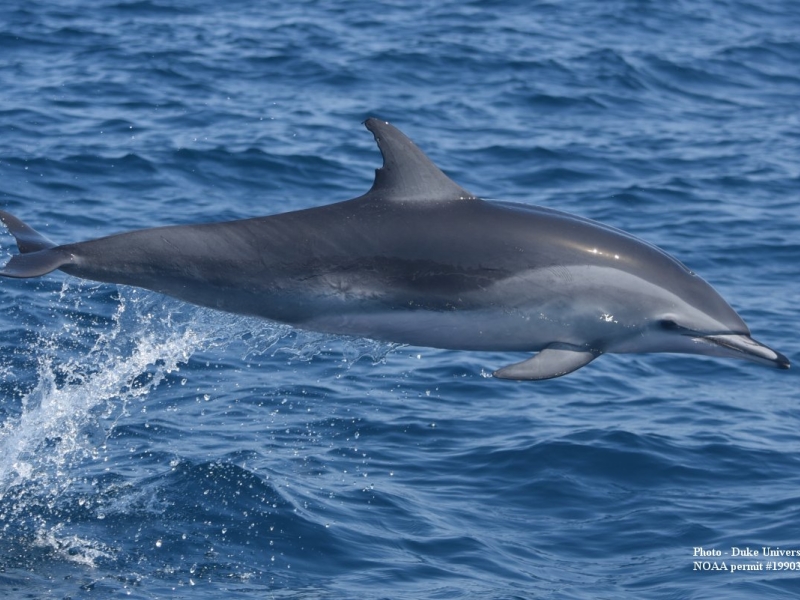
Banner day tagging odontocetes at Hatteras!
June 1, 2016
A busy field day in NC.